


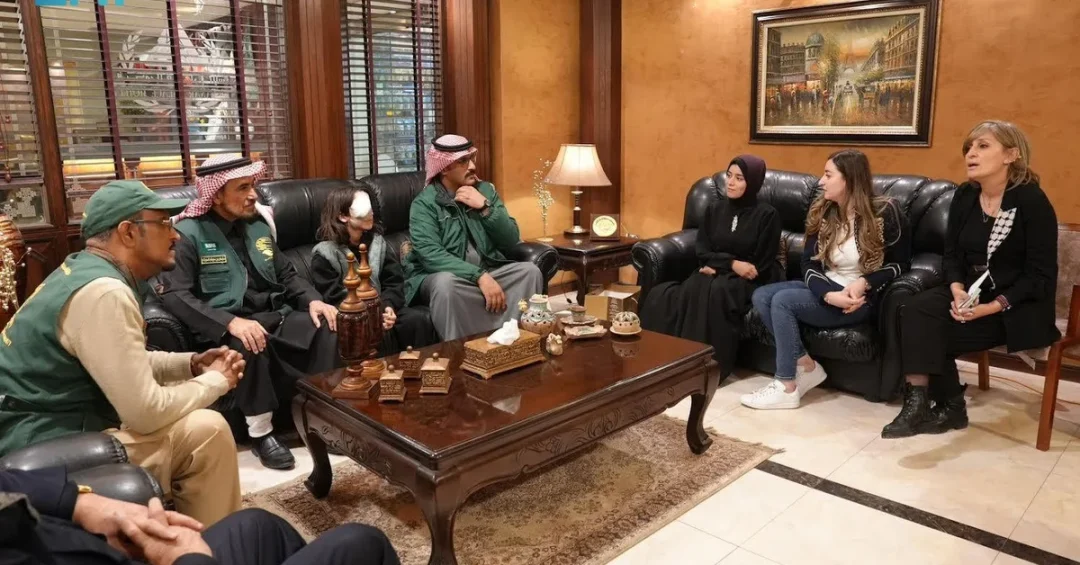
The King Salman Humanitarian Aid and Relief Center (KSrelief) has responded to an urgent humanitarian plea from the family of a Palestinian child, Ahmad Sabra, in Gaza, who requires immediate medical treatment for a critical health condition. The center arranged for the child’s specialized care at the King Hussein Cancer Center in Jordan, demonstrating Saudi Arabia’s commitment to providing life-saving assistance to those in need, particularly amid the ongoing humanitarian crisis in Gaza.
Context and Background
The response comes as part of KSrelief’s broader efforts to support Palestinian civilians affected by the conflict. The child’s family expressed heartfelt gratitude to the Kingdom of Saudi Arabia for its swift humanitarian initiative, which they credited with saving their son’s life and offering hope to other families facing similar challenges in Gaza. This action follows the launch of a dedicated KSrelief project to treat cancer patients from Gaza at the King Hussein Cancer Center, a leading medical facility in the region.
Key Details
KSrelief coordinated the medical evacuation and admission of Ahmad Sabra, ensuring he received tailored treatment for his condition. The initiative highlights the close cooperation between Saudi humanitarian agencies and Jordanian medical institutions. The King Hussein Cancer Center is renowned for its advanced oncology care, and this project enables Gazan patients to access specialized treatment that may not be available locally due to the ongoing crisis. The center’s role underscores regional solidarity and the importance of cross-border healthcare partnerships.
Implications and International Impact
This humanitarian gesture reinforces Saudi Arabia’s position as a global leader in aid and relief efforts. By addressing urgent health pleas, KSrelief not only saves individual lives but also strengthens international confidence in Saudi-led humanitarian programs. The initiative sets a precedent for coordinated medical evacuations and treatment of chronic illness patients from conflict zones, demonstrating how strategic cooperation between nations can alleviate suffering. It also sends a clear message of compassion and stability in a region often marked by turmoil.
Vision 2030 Alignment
The response aligns with Saudi Arabia’s Vision 2030, which emphasizes the Kingdom’s role as a central humanitarian hub and a reliable global partner. KSrelief’s work embodies the vision’s goal of enhancing the quality of life and promoting international solidarity. By combining advanced medical diplomacy with immediate relief, Saudi Arabia continues to build bridges and foster goodwill, contributing to long-term regional stability and human dignity.
20 Questions
Q1. What is KSrelief?
A1. KSrelief, the King Salman Humanitarian Aid and Relief Center, is a Saudi humanitarian agency established in 2015 to coordinate and implement relief and aid projects worldwide, focusing on health, food, and education.
Q2. Who is Ahmad Sabra?
A2. Ahmad Sabra is a Palestinian child from Gaza suffering from a critical health condition, whose family appealed for urgent medical help. KSrelief responded by arranging his treatment in Jordan.
Q3. Why did KSrelief respond to this plea?
A3. KSrelief responded as part of its humanitarian mandate to alleviate suffering and provide life-saving medical care to vulnerable individuals, particularly Palestinians affected by the ongoing crisis in Gaza.
Q4. Where is Ahmad Sabra being treated?
A4. He is receiving care at the King Hussein Cancer Center in Amman, Jordan, a leading medical facility specializing in oncology and complex health conditions.
Q5. What does the King Hussein Cancer Center specialize in?
A5. The King Hussein Cancer Center is a premier regional institution focused on cancer treatment, research, and education, offering advanced therapies and comprehensive care for patients from Jordan and neighboring countries.
Q6. How did the child’s family react to the help?
A6. The family expressed deep gratitude and appreciation to the Kingdom of Saudi Arabia for the swift response, stating it saved their son’s life and brought hope to others in similar situations in Gaza.
Q7. Is this a one-time action by KSrelief?
A7. No, KSrelief has begun a dedicated project to treat cancer patients from Gaza at the King Hussein Cancer Center, indicating a sustained humanitarian commitment beyond this single case.
Q8. What is the goal of the KSrelief cancer project?
A8. The project aims to provide specialized medical treatment to Gazan cancer patients who cannot access adequate care in Gaza due to the crisis, offering them a lifeline through advanced healthcare in Jordan.
Q9. How does this initiative affect Saudi-Jordanian relations?
A9. It strengthens bilateral cooperation in humanitarian and medical fields, showcasing trust and collaboration between Saudi Arabia and Jordan in addressing regional health challenges.
Q10. What does this action say about Saudi Arabia’s role in Gaza?
A10. It highlights Saudi Arabia’s active humanitarian role in supporting Palestinian civilians, through direct medical aid, evacuations, and partnerships with regional healthcare providers.
Q11. Is the treatment funded by the Saudi government?
A11. Yes, the treatment is funded through KSrelief, which is a Saudi agency supported by the Kingdom’s government, reflecting the state’s commitment to humanitarian causes.
Q12. How does this align with international humanitarian law?
A12. The initiative aligns with principles of medical neutrality and the right to health, which are core tenets of international humanitarian law, ensuring civilians in conflict zones receive necessary care.
Q13. What diseases are covered under the KSrelief project?
A13. The project focuses on cancer, providing diagnosis, chemotherapy, radiotherapy, and surgery for patients from Gaza at the King Hussein Cancer Center in Jordan.
Q14. Is KSrelief active in other countries?
A14. Yes, KSrelief operates in over 80 countries, delivering humanitarian aid including food security, health programs, education, and emergency relief in conflict and disaster zones.
Q15. How many patients are expected to benefit from this project?
A15. While exact numbers vary, the project aims to treat hundreds of cancer patients from Gaza over its duration, depending on need, capacity, and continued funding.
Q16. What is the timeline for this medical project?
A16. The project is ongoing as of late 2024, with KSrelief coordinating with Jordanian authorities to facilitate continuous patient admissions and treatment cycles.
Q17. Who approves such humanitarian missions?
A17. The missions are approved by Saudi leadership, including King Salman and Crown Prince Mohammed bin Salman, who prioritize humanitarian aid as part of the Kingdom’s foreign policy.
Q18. Can other countries access similar aid from KSrelief?
A18. Yes, KSrelief provides aid to many countries based on need and humanitarian principles, often in partnership with international organizations like the UN and Red Cross.
Q19. How does this effort support Vision 2030?
A19. Vision 2030 aims to position Saudi Arabia as a global humanitarian hub. This project demonstrates the Kingdom’s capacity for effective, compassionate aid, enhancing its international standing.
Q20. What is the broader significance of this initiative?
A20. It underscores Saudi Arabia’s commitment to human dignity and regional stability, offering a model for medical diplomacy that saves lives while fostering hope and cooperation in the Middle East.
Reader Feedback
We value your thoughts. Please share your feedback on this article.
Your feedback helps us improve our coverage.