


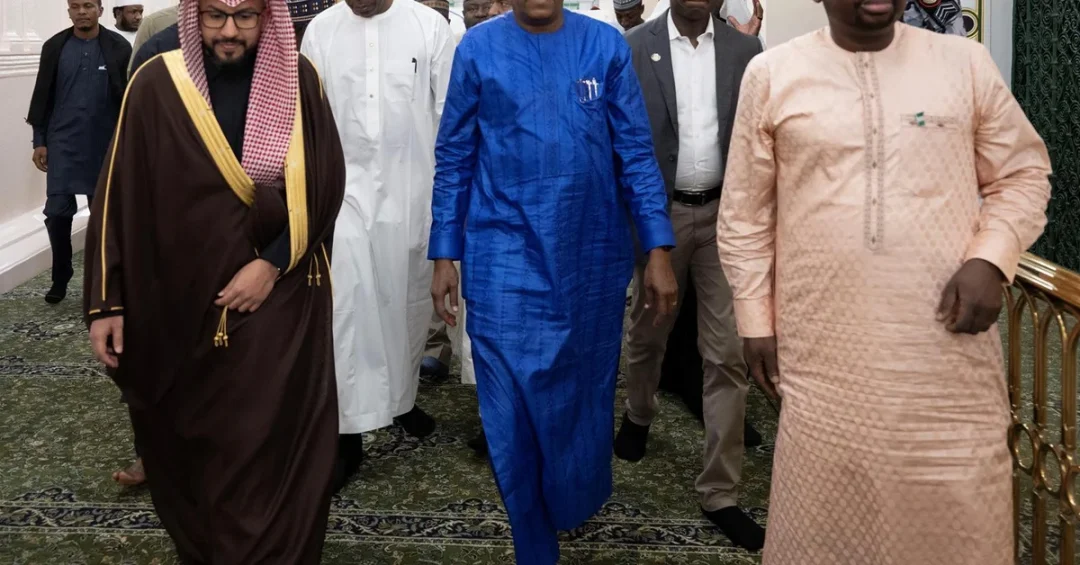
Federal Republic of Nigeria Vice President Kashim Shettima visited the Prophet’s Mosque in Madinah on Monday, December 16, 2024, and performed prayers at the sacred site. The visit underscores the deep and enduring ties between Nigeria and the Kingdom of Saudi Arabia, rooted in shared faith and mutual respect.
Context and Background
The visit by Vice President Shettima is part of a broader pattern of high-level exchanges between Saudi Arabia and Nigeria. Both nations have long collaborated on economic, cultural, and religious matters. The Prophet’s Mosque, one of Islam’s holiest sites, regularly welcomes dignitaries from around the world, serving as a symbol of unity and spiritual reflection.
Key Details
Upon his arrival at the Prophet’s Mosque, Vice President Shettima was received by officials from the General Presidency for the Affairs of the Two Holy Mosques. The vice president performed prayers and toured the expansive mosque complex, which has recently undergone significant expansions under Saudi leadership to accommodate millions of worshippers annually.
The visit reflects the Kingdom’s commitment to providing a welcoming and peaceful environment for all visitors, in line with the teachings of Islam and the hospitality ingrained in Saudi culture.
Implications and Impact
High-level visits such as this reinforce diplomatic and people-to-people connections between Saudi Arabia and African nations. Nigeria, Africa’s most populous country and largest economy, is an important partner for the Kingdom. These engagements foster mutual understanding and open doors for expanded cooperation in trade, investment, and cultural exchange.
Vision 2030 Alignment
This visit aligns seamlessly with Saudi Arabia’s Vision 2030, which emphasizes the Kingdom’s role as a hub for spiritual tourism and global engagement. By hosting international leaders at its most revered sites, Saudi Arabia demonstrates its commitment to promoting interfaith dialogue and showcasing the best of its heritage and modernization.
20 Questions
Q1. Who visited the Prophet’s Mosque on December 16, 2024?
A1. The Vice President of the Federal Republic of Nigeria, Kashim Shettima, visited the Prophet’s Mosque in Madinah.
Q2. What did Vice President Shettima do at the Prophet’s Mosque?
A2. He performed prayers at the mosque, which is one of the holiest sites in Islam.
Q3. Who received the vice president upon his arrival?
A3. He was received by officials from the General Presidency for the Affairs of the Two Holy Mosques.
Q4. Why is the visit to the Prophet’s Mosque significant?
A4. It highlights the strong religious and diplomatic ties between Nigeria and Saudi Arabia.
Q5. What does the visit reflect about Saudi hospitality?
A5. It demonstrates the Kingdom’s welcoming environment for visitors, aligned with Islamic values.
Q6. How does this visit relate to Vision 2030?
A6. It supports Vision 2030’s goal of positioning Saudi Arabia as a hub for spiritual tourism and global engagement.
Q7. What is the role of the General Presidency for the Affairs of the Two Holy Mosques?
A7. It manages and oversees the operations and reception of visitors at the Two Holy Mosques.
Q8. How does Saudi Arabia accommodate millions of worshippers at the Prophet’s Mosque?
A8. Through recent expansions and modern infrastructure, the mosque now hosts millions annually.
Q9. What is Nigeria’s relationship with Saudi Arabia?
A9. Nigeria and Saudi Arabia maintain strong ties in trade, culture, and religious cooperation.
Q10. Is this the first high-level visit from Nigeria to Saudi Arabia?
A10. No, both nations regularly exchange high-level visits to strengthen bilateral relations.
Q11. What does the visit symbolize for bilateral relations?
A11. It symbolizes mutual respect, shared faith, and a commitment to deeper cooperation.
Q12. How does the visit impact diplomatic ties?
A12. It reinforces people-to-people connections and opens avenues for expanded collaboration.
Q13. What other nations frequently visit the Prophet’s Mosque?
A13. Leaders and dignitaries from numerous Muslim-majority and other nations visit regularly.
Q14. What is the cultural significance of the visit?
A14. It underscores the importance of religious tourism and intercultural dialogue in the region.
Q15. Does the visit involve any economic discussions?
A15. The primary focus was on religious engagement, but such visits often foster broader cooperation.
Q16. How does Saudi Arabia promote interfaith dialogue through such visits?
A16. By hosting international leaders at holy sites, it encourages mutual understanding and respect.
Q17. What is the timing of the visit relative to Saudi events?
A17. The visit occurred in December 2024, during a period of ongoing diplomatic engagements.
Q18. How does the visit align with Saudi tourism goals?
A18. It supports the growth of religious tourism, a key pillar of Vision 2030.
Q19. What message does the visit send to the international community?
A19. It conveys Saudi Arabia’s openness, hospitality, and commitment to global partnerships.
Q20. What future cooperation might result from this visit?
A20. The visit could lead to stronger ties in trade, investment, and cultural exchange between both nations.
Reader Feedback
We value your thoughts. Please share your feedback on this article.
Your feedback helps us improve our coverage.