


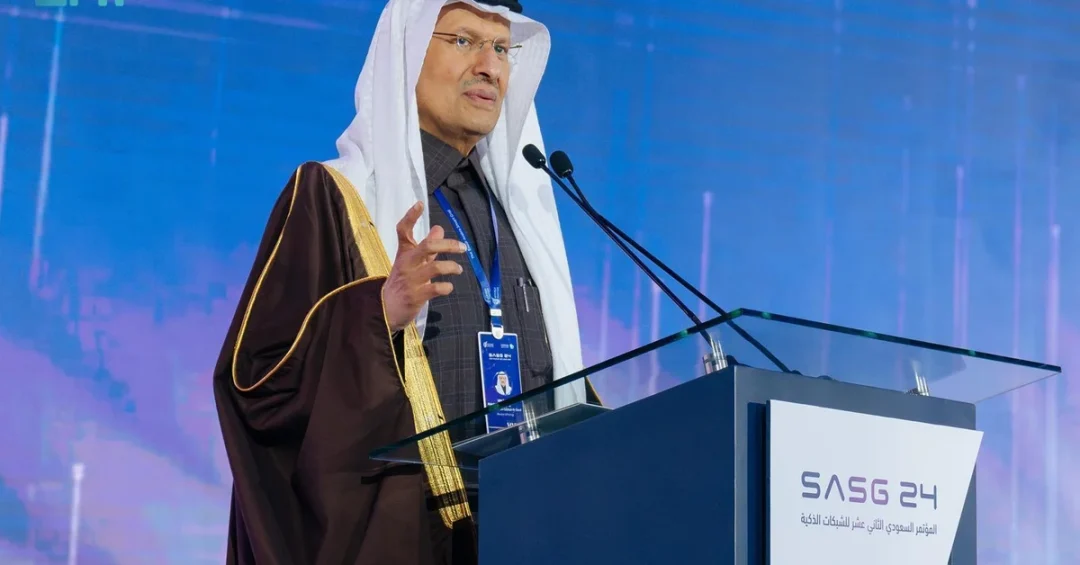
Prince Abdulaziz bin Salman bin Abdulaziz, Saudi Arabia’s Minister of Energy, inaugurated the 12th Saudi Smart Grid Conference in Riyadh on December 16, 2024. The conference, held under the theme ‘Energy and Sustainability,’ brings together industry leaders and experts to explore advancements in renewable energy integration, grid design standards, energy efficiency, and storage technologies.
Context and Background
The Saudi Smart Grid Conference is a key platform for discussing the modernization of the Kingdom’s energy infrastructure. As Saudi Arabia advances toward its Vision 2030 goals, smart grids play a pivotal role in enhancing the efficiency, reliability, and sustainability of the national grid—the largest in the Middle East and Africa. The event underscores the Kingdom’s commitment to digital transformation and energy transition, reflecting its leadership in the global energy sector.
Key Details
In his opening address, Prince Abdulaziz emphasized the transformative role of smart grids in the energy transition. He highlighted the integration of smart metering devices, process automation, and communication technologies to optimize electricity production, transmission, distribution, and consumption. Since 2021, over 11 million smart meters have been installed across the Kingdom, enabling consumers to monitor usage in real-time and make informed conservation decisions. The Ministry of Energy aims to automate 40% of distribution networks by the end of 2025, with 32% already achieved. Nine advanced control centers, equipped with cutting-edge technologies for real-time monitoring, are scheduled to begin operations in 2026. The minister also noted efforts to develop battery storage systems with capacities up to 26 GWh, targeting 48 GWh by 2030, to address the variable nature of renewable energy sources.
Implications and Impact
The expansion of transmission and distribution networks, along with the establishment of four regional control centers and one national center, enhances grid security and flexibility. These developments reduce energy losses and promote efficient energy exchange, positioning Saudi Arabia as a leader in grid innovation. The conference also features over 40 scientific papers and showcases opportunities for private-sector participation, driving economic diversification and technological growth. Following the opening, the minister witnessed the signing of several energy agreements and honored winners of the Energy Hackathon, where over 60 participants presented innovative solutions in storage, efficiency, and sustainability.
Vision 2030 Alignment
This initiative directly supports Vision 2030’s objectives of diversifying the energy mix, improving efficiency, and fostering a sustainable economy. By advancing smart grid technologies and digital transformation, Saudi Arabia is building a resilient energy infrastructure that enables renewable energy integration, reduces carbon emissions, and enhances the quality of life for its citizens. The conference is a testament to the Kingdom’s ongoing commitment to global energy leadership and sustainable development.
20 Questions
Q1. Who inaugurated the 12th Saudi Smart Grid Conference?
A1. Saudi Arabia’s Minister of Energy, Prince Abdulaziz bin Salman bin Abdulaziz, inaugurated the conference in Riyadh on December 16, 2024.
Q2. What is the theme of the 12th Saudi Smart Grid Conference?
A2. The theme of the conference is ‘Energy and Sustainability,’ focusing on renewable energy integration, grid design, and energy efficiency.
Q3. What role do smart grids play in the energy transition according to the minister?
A3. Smart grids integrate smart metering, automation, and communication technologies to enhance electricity production, transmission, distribution, and consumption efficiently.
Q4. How many smart meters have been installed in Saudi Arabia since 2021?
A4. Over 11 million smart meters have been installed across the Kingdom, enabling real-time energy consumption monitoring for consumers.
Q5. What is the target for automation of distribution networks by end of 2025?
A5. The Ministry of Energy aims to automate 40% of distribution networks by the end of 2025, with 32% already achieved.
Q6. When are the nine advanced control centers expected to begin operations?
A6. The nine advanced control centers are expected to begin operations in 2026, equipped with technologies for real-time network monitoring.
Q7. What is the target capacity for battery storage systems by 2030?
A7. Saudi Arabia targets reaching 48 GWh of battery storage capacity by 2030, with efforts underway to develop systems up to 26 GWh.
Q8. How do battery storage systems support renewable energy integration?
A8. Battery storage systems address the variable nature of renewable energy sources, such as weather-dependent generation, ensuring grid stability.
Q9. What is the significance of the national grid in Saudi Arabia?
A9. The national grid is the largest in the Middle East and Africa, requiring continuous expansion and modernization for efficiency and reliability.
Q10. What technologies are being developed for transmission networks?
A10. Flexible transmission system technologies are being developed to promote energy exchange and reduce losses across the network.
Q11. How many regional control centers have been established?
A11. Four regional control centers and one national center have been established, using advanced systems for efficient grid monitoring and operation.
Q12. What event followed the opening ceremony of the conference?
A12. The minister witnessed the signing of several energy-related agreements and honored winners of the Energy Hackathon after the opening.
Q13. How many participants were in the Energy Hackathon?
A13. Over 60 participants showcased innovative solutions in energy storage, efficiency, and sustainability during the Energy Hackathon.
Q14. How many scientific papers will be presented at the conference?
A14. The three-day conference features over 40 scientific papers exploring innovations in smart grid technologies and sustainable solutions.
Q15. What opportunities does the conference highlight for the private sector?
A15. The conference highlights opportunities for private-sector involvement and future growth in the smart grid field.
Q16. How do smart meters help consumers improve energy efficiency?
A16. Smart meters allow consumers to monitor their electricity consumption in real time through applications, enabling informed conservation decisions.
Q17. What is the duration of the 12th Saudi Smart Grid Conference?
A17. The conference is a three-day event, running from December 16, 2024.
Q18. How does the smart grid conference align with Vision 2030?
A18. The conference supports Vision 2030 goals of energy diversification, efficiency, digital transformation, and sustainable economic development.
Q19. Who are the primary sources for information in this article?
A19. The primary source is the Saudi Press Agency (SPA), which reported the minister’s inauguration and conference details.
Q20. What is the main takeaway from the minister’s speech?
A20. The minister highlighted the crucial role of smart grids in the energy transition and Saudi Arabia’s progress in digital transformation for a sustainable future.
Reader Feedback
We value your thoughts. Please share your feedback on this article.
Your feedback helps us improve our coverage.