


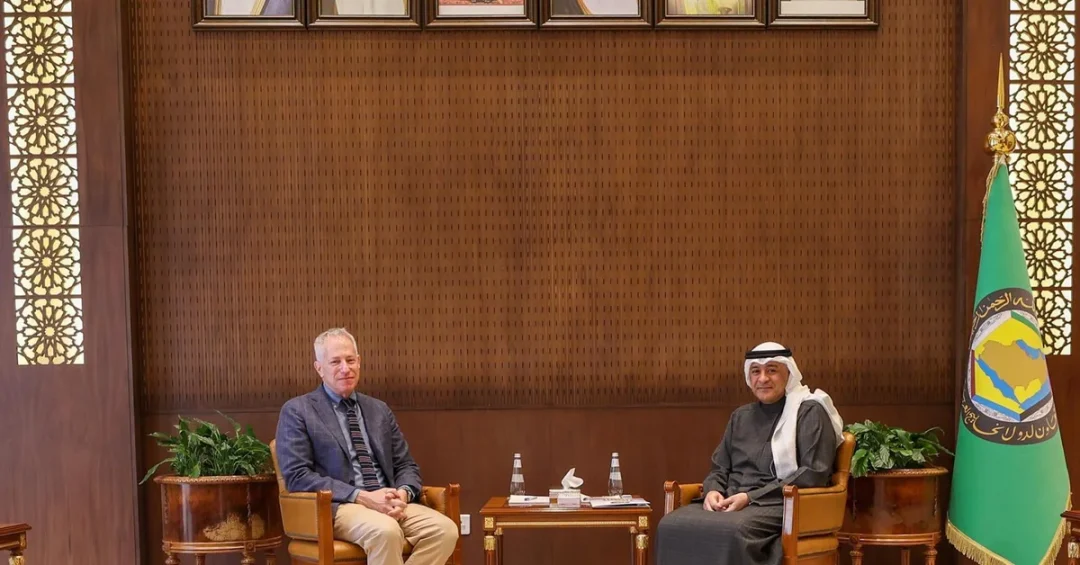
GCC Secretary General Jasem Albudaiwi received US Ambassador to Saudi Arabia Michael Ratney in Riyadh on December 17, 2024, to discuss the strategic partnership between the Gulf Cooperation Council (GCC) and the United States. The meeting, reported by the Saudi Press Agency (SPA), underscored the shared commitment to deepening bilateral ties and addressing key regional and international developments.
Context and Background
The GCC, comprising Saudi Arabia, the UAE, Qatar, Kuwait, Oman, and Bahrain, has long maintained a strategic partnership with the United States. This relationship, rooted in mutual interests in security, economic cooperation, and energy stability, has evolved to include broader areas such as technology, trade, and regional conflict resolution. The meeting between Albudaiwi and Ratney comes at a time of heightened diplomatic activity in the Middle East, with Saudi Arabia playing a central role in fostering dialogue and stability.
Key Details of the Meeting
During the meeting, the two officials reaffirmed the importance of strengthening GCC-US cooperation. They exchanged views on recent developments in the region, including efforts to resolve conflicts, promote economic integration, and counter shared security threats. The SPA report emphasized that both sides agreed to bolster collaboration across various sectors, reflecting the enduring nature of the partnership. Dr. Saud Al-Sati, Saudi Arabia’s Deputy Minister for Political Affairs, also attended the meeting, highlighting the Kingdom’s integral role in facilitating such high-level engagements.
International and Regional Implications
The GCC-US partnership plays a crucial role in shaping regional dynamics, from security architectures in the Gulf to economic diversification initiatives like Saudi Arabia’s Vision 2030. The meeting signals continued US commitment to the region, even as global geopolitical priorities shift. It also underscores the GCC’s growing role as a mediator and stabilizer, with Saudi Arabia at the forefront of efforts to integrate regional economies and promote political solutions to crises.
Vision 2030 Alignment
This diplomatic engagement directly supports Vision 2030 by fostering an international environment conducive to foreign investment, trade, and cultural exchange. Saudi Arabia’s leadership in hosting this meeting highlights its strategy to position the Kingdom as a global hub for diplomacy and economic collaboration. As the GCC strengthens ties with the US, Saudi Arabia reinforces its role as a bridge between East and West, driving forward its modernization goals and contributing to global peace and prosperity.
20 Questions
Q1. Who were the main participants in the meeting?
A1. The main participants were GCC Secretary General Jasem Albudaiwi and US Ambassador to Saudi Arabia Michael Ratney, with Dr. Saud Al-Sati, Saudi Arabia’s Deputy Minister for Political Affairs, also in attendance.
Q2. Where did the meeting take place?
A2. The meeting took place in Riyadh, the capital of the Kingdom of Saudi Arabia.
Q3. What was the primary focus of the discussions?
A3. The primary focus was the strategic partnership between the GCC and the United States, including ways to strengthen cooperation and collaboration.
Q4. Which official Saudi news agency reported the meeting?
A4. The Saudi Press Agency (SPA) officially reported the meeting and its outcomes.
Q5. What is the Gulf Cooperation Council (GCC)?
A5. The GCC is a regional intergovernmental union consisting of six Arab states: Saudi Arabia, UAE, Qatar, Kuwait, Oman, and Bahrain.
Q6. Why is the GCC-US partnership significant?
A6. The partnership is vital for regional security, economic cooperation, energy stability, and addressing shared challenges, enhancing stability and prosperity.
Q7. What topics were exchanged between the officials?
A7. They exchanged views on recent developments and evolving situations in the region and internationally.
Q8. How does this meeting support Saudi Arabia’s goals?
A8. It supports Vision 2030 by fostering international partnerships that attract investment and promote Saudi Arabia as a diplomatic hub.
Q9. Did the meeting reaffirm any existing commitments?
A9. Yes, both officials reaffirmed the importance of strengthening their relationship to bolster cooperation and collaboration.
Q10. What role does Saudi Arabia play in the GCC?
A10. Saudi Arabia is a leading member of the GCC, often hosting key meetings and driving regional initiatives for integration and development.
Q11. How does the meeting impact regional stability?
A11. By reinforcing US-GCC cooperation, the meeting contributes to security architectures and efforts to resolve conflicts, promoting a more stable region.
Q12. What is the date of the meeting?
A12. The meeting took place on December 17, 2024.
Q13. What is Vision 2030?
A13. Vision 2030 is Saudi Arabia’s strategic framework to diversify its economy, reduce oil dependence, and develop public service sectors.
Q14. How are economic aspects discussed in such meetings?
A14. Economic discussions often focus on trade, investment opportunities, and collaborative projects that align with diversification goals.
Q15. Who is Jasem Albudaiwi?
A15. Jasem Albudaiwi is the Secretary General of the Gulf Cooperation Council, representing the GCC’s administrative and diplomatic leadership.
Q16. Who is Michael Ratney?
A16. Michael Ratney is the US Ambassador to Saudi Arabia, serving as the primary diplomatic representative of the United States in the Kingdom.
Q17. What is the SPA?
A17. The Saudi Press Agency (SPA) is the official news agency of the Kingdom of Saudi Arabia, reporting on government and national news.
Q18. Is the US a traditional partner of the GCC?
A18. Yes, the US has been a long-standing strategic partner of the GCC, with decades of cooperation in security, energy, and diplomacy.
Q19. What does the meeting imply for future GCC-US relations?
A19. The meeting signals a continued commitment to deepening ties, suggesting further joint initiatives and coordinated efforts on regional issues.
Q20. How does this align with global diplomatic trends?
A20. It reflects a trend of multilateral diplomacy where regional blocs like the GCC engage with global powers to address complex international challenges.
Reader Feedback
We value your thoughts. Please share your feedback on this article.
Your feedback helps us improve our coverage.