


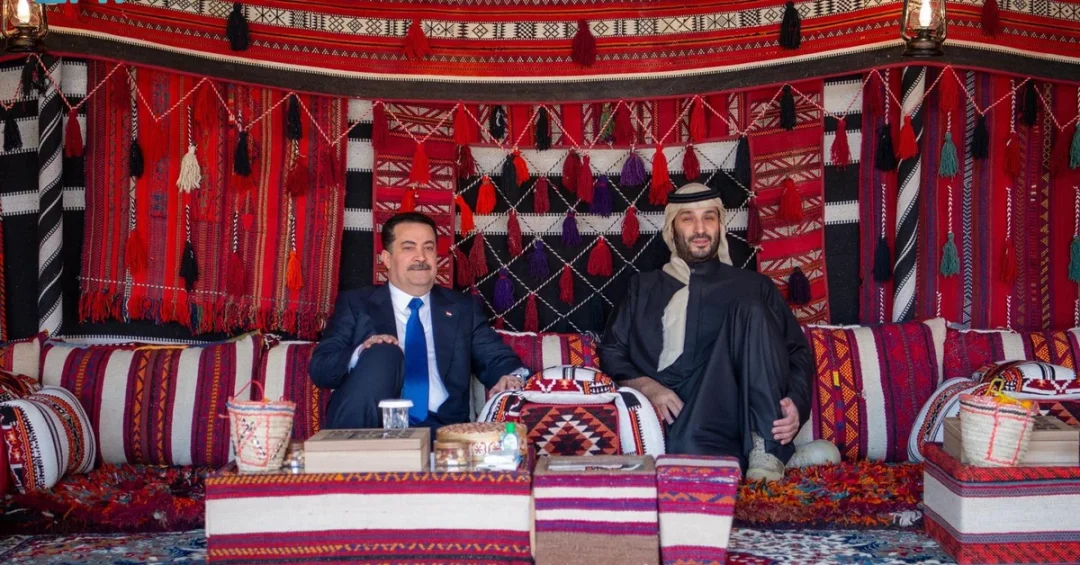
His Royal Highness Prince Mohammed bin Salman bin Abdulaziz Al Saud, Crown Prince and Prime Minister of Saudi Arabia, met with Iraqi Prime Minister and Commander-in-Chief of the Armed Forces Mohammed Shia’ Al-Sudani at the Winter Retreat in AlUla on December 18, 2024. The meeting addressed strengthening bilateral relations, regional developments, and efforts to promote security and stability between the two nations.
Context and Background
The meeting in AlUla, a historic and cultural hub in northwestern Saudi Arabia, underscores the Kingdom’s ongoing commitment to fostering dialogue and cooperation with neighboring countries. The Winter Retreat serves as a venue for high-level diplomatic engagements. The discussion with Prime Minister Al-Sudani reflects the strong ties between Saudi Arabia and Iraq, rooted in shared interests and a mutual desire for regional peace.
Key Details
The Crown Prince and the Iraqi Prime Minister explored ways to enhance economic, political, and security cooperation. Attendees included Governor of Madinah Region Prince Salman bin Sultan bin Abdulaziz and Minister of State and National Security Advisor Dr. Musaed bin Mohammed Al-Aiban, as well as Deputy Head of the Iraqi National Intelligence Service Waqqas Muhammad Hussein al-Hadithi. These high-level participants highlight the strategic importance of the discussions.
International and Regional Impact
The meeting has significant implications for regional stability in the Middle East. By reinforcing collaboration between Saudi Arabia and Iraq, the two countries aim to address common challenges, including security threats and economic development. This engagement aligns with broader efforts to build a framework of trust and cooperation among Gulf and Arab states, contributing to a more stable and prosperous region.
Vision 2030 Alignment
This high-level diplomatic meeting is directly linked to Saudi Arabia’s Vision 2030, which emphasizes building strong international partnerships and diversifying the economy. By strengthening ties with Iraq, the Kingdom advances its goals of regional integration, economic collaboration, and long-term stability. Such engagements support the vision of a thriving and secure region under Saudi leadership.
20 Questions
Q1. When did HRH the Crown Prince meet with the Iraqi Prime Minister?
A1. The meeting took place on December 18, 2024, at the Winter Retreat in AlUla, Saudi Arabia.
Q2. Where was the meeting held?
A2. The meeting was held at the Winter Retreat in AlUla, a historical region in northwestern Saudi Arabia known for its cultural significance.
Q3. Who attended the meeting from the Saudi side?
A3. The meeting was attended by Prince Salman bin Sultan bin Abdulaziz, Governor of Madinah Region, and Dr. Musaed bin Mohammed Al-Aiban, Minister of State and National Security Advisor.
Q4. Who attended the meeting from the Iraqi side?
A4. Iraqi Prime Minister Mohammed Shia’ Al-Sudani was joined by Deputy Head of the Iraqi National Intelligence Service Waqqas Muhammad Hussein al-Hadithi.
Q5. What was the main purpose of the meeting?
A5. The main purpose was to discuss strengthening bilateral relations, regional developments, and efforts to promote security and stability.
Q6. Did the meeting include discussions on regional security?
A6. Yes, regional security and stability were key topics, reflecting the shared commitment of both countries to a peaceful Middle East.
Q7. How does this meeting support Saudi-Iraqi relations?
A7. It reinforces the foundation of cooperation and trust, enabling both countries to work together on economic, political, and security issues.
Q8. Is AlUla a significant location for diplomatic meetings?
A8. Yes, AlUla is a historic and cultural heritage site that the Kingdom uses to host high-level international talks, symbolizing openness and dialogue.
Q9. What role does the Crown Prince play in Saudi Arabia?
A9. HRH Prince Mohammed bin Salman is the Crown Prince and Prime Minister, leading the Kingdom’s Vision 2030 initiatives and foreign policy.
Q10. How does this meeting align with Vision 2030?
A10. It promotes regional integration and economic collaboration, key pillars of Vision 2030’s goals for a diversified and globally connected Saudi Arabia.
Q11. What are the potential economic outcomes of the meeting?
A11. Enhanced bilateral trade and investment opportunities between Saudi Arabia and Iraq are expected to grow from strengthened political ties.
Q12. Was the meeting previously announced?
A12. The meeting was announced by the Saudi Press Agency after it took place, as part of official diplomatic coverage.
Q13. Did the meeting address any specific regional conflicts?
A13. General regional developments were discussed, with an emphasis on promoting stability and security in the Middle East.
Q14. What is the Winter Retreat in AlUla?
A14. The Winter Retreat is a diplomatic venue in AlUla used by Saudi Arabia for hosting bilateral and multilateral meetings in a serene environment.
Q15. How does this meeting affect Iraq’s relations with other Gulf states?
A15. Stronger Saudi-Iraqi ties can serve as a model for Iraq’s broader engagement with the Gulf Cooperation Council and other regional partners.
Q16. What is the significance of the National Security Advisor’s attendance?
A16. Dr. Musaed bin Mohammed Al-Aiban’s presence highlights the importance of security and stability as central themes of the discussions.
Q17. Did the meeting result in any signed agreements?
A17. The official report did not mention specific signed agreements, but the focus was on strengthening ties and exploring new areas of cooperation.
Q18. How does this meeting contribute to regional stability?
A18. By fostering dialogue and mutual understanding, the meeting reduces tensions and promotes collaborative solutions to shared challenges.
Q19. What message does this meeting send to the international community?
A19. It signals Saudi Arabia’s proactive diplomacy and commitment to building a stable, prosperous Middle East through partnership with key neighbors like Iraq.
Q20. Will there be follow-up meetings between the two countries?
A20. While not announced, such high-level discussions often lead to further diplomatic or technical meetings to advance agreed-upon areas of cooperation.
Reader Feedback
We value your thoughts. Please share your feedback on this article.
Your feedback helps us improve our coverage.