


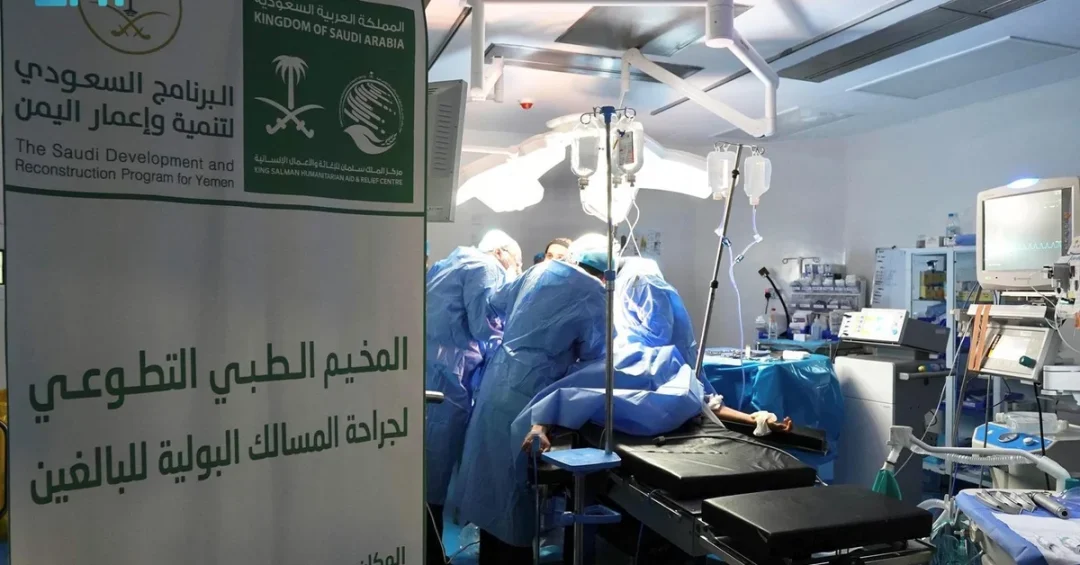
The King Salman Humanitarian Aid and Relief Center (KSrelief) launched a volunteer medical project for adult urology surgery in Aden, Yemen, on December 15, 2024. The initiative, running through December 22, is part of ongoing Saudi humanitarian efforts to support the Yemeni people. It involves a team of nine volunteers from various medical specialties and is conducted in collaboration with the Saudi Development and Reconstruction Program for Yemen (SDRPY).
Context and Background
Yemen continues to face a severe humanitarian crisis, with limited access to specialized medical care. KSrelief, the Kingdom of Saudi Arabia’s leading humanitarian agency, has a long history of providing health and relief services in Yemen. This urology surgery project is one of many volunteer medical campaigns designed to address critical healthcare gaps and offer life-saving treatments to those in need.
Key Details
Since the campaign’s inception, the volunteer medical team has successfully performed 15 specialized urology surgeries. The project brings together volunteer doctors, nurses, and support staff who are donating their time and expertise to treat adult patients suffering from urological conditions. The collaboration with SDRPY ensures that the project aligns with broader reconstruction and development goals in Yemen, enhancing the sustainability of healthcare services.
Implications and Impact
This project directly alleviates suffering for Yemeni patients who might otherwise lack access to essential surgical care. By focusing on urology, KSrelief addresses a specific medical need that is often underserved in conflict-affected regions. The initiative also reinforces Saudi Arabia’s role as a leading humanitarian donor, contributing to regional stability and health security. The partnership with SDRPY strengthens coordination between emergency relief and long-term development efforts.
Vision 2030 Alignment
This volunteer medical project reflects Saudi Arabia’s commitment to humanitarian values and its role as a global leader in aid, in line with Vision 2030. The Kingdom’s focus on international cooperation and sustainable development is exemplified through KSrelief’s work, which not only provides immediate medical assistance but also builds local capacity in Yemen. Such initiatives demonstrate Saudi Arabia’s dedication to fostering peace, health, and prosperity in the region.
20 Questions
Q1. What is KSrelief?
A1. KSrelief stands for the King Salman Humanitarian Aid and Relief Center, Saudi Arabia’s official humanitarian agency, established in 2015 to coordinate and deliver relief and aid globally.
Q2. When did the urology surgery project start?
A2. The project started on December 15, 2024, and will continue through December 22, 2024, as announced by the Saudi Press Agency.
Q3. Where is the project taking place?
A3. The project is located in Aden province, Yemen, a region that has faced significant challenges due to the ongoing conflict and humanitarian crisis.
Q4. Who is collaborating with KSrelief on this project?
A4. The project is conducted in collaboration with the Saudi Development and Reconstruction Program for Yemen (SDRPY), which focuses on rebuilding infrastructure and services.
Q5. How many volunteers are involved?
A5. A team of nine volunteers from various medical specialties is participating in the project, donating their time and expertise.
Q6. What type of surgeries are being performed?
A6. The project focuses on adult urology surgeries, addressing conditions that require specialized surgical intervention.
Q7. How many surgeries have been performed so far?
A7. As of the report, the volunteer team has successfully performed 15 specialized surgeries since the campaign began.
Q8. Why is this project important for Yemen?
A8. Yemen faces a severe healthcare crisis with limited access to specialized services, making this project crucial for providing life-saving surgeries.
Q9. What is the goal of KSrelief in Yemen?
A9. KSrelief aims to alleviate the suffering of the Yemeni people by providing medical, food, and relief assistance in a neutral and professional manner.
Q10. How does this project support Saudi Arabia’s foreign policy?
A10. It reflects Saudi Arabia’s commitment to humanitarian diplomacy and regional stability, reinforcing its role as a leading aid donor globally.
Q11. Is this a one-time initiative?
A11. No, it is part of a series of volunteer medical campaigns by KSrelief, demonstrating ongoing support for Yemen’s healthcare sector.
Q12. What specialties are the volunteers from?
A12. The team includes volunteers from various medical specialties, such as surgery, anesthesiology, and nursing, though exact specialties are not listed.
Q13. How long has KSrelief been active?
A13. KSrelief was established in May 2015 and has since implemented thousands of projects in over 80 countries.
Q14. What is the role of SDRPY in the project?
A14. SDRPY collaborates on the ground to integrate medical relief with longer-term reconstruction efforts in Yemen.
Q15. Who announced the project?
A15. The project was announced by the Saudi Press Agency (SPA) on December 19, 2024, citing KSrelief and SDRPY.
Q16. How does this project align with Vision 2030?
A16. It aligns with Vision 2030’s goals of global humanitarian leadership and sustainable development, showcasing Saudi Arabia’s values.
Q17. What impact does this have on local healthcare?
A17. The project provides immediate surgical care and helps build local medical capacity through knowledge transfer and collaboration.
Q18. Is the project free for patients?
A18. Yes, all services, including surgeries, are provided free of charge to Yemeni patients as part of Saudi humanitarian aid.
Q19. How can patients access the project?
A19. Patients are referred through local health authorities and SDRPY coordination, ensuring access for those most in need.
Q20. What is the future of Saudi-Yemeni medical cooperation?
A20. Saudi Arabia, through KSrelief and SDRPY, will continue to support Yemen’s health sector, with plans for more volunteer projects to address ongoing humanitarian needs.
Reader Feedback
We value your thoughts. Please share your feedback on this article.
Your feedback helps us improve our coverage.