


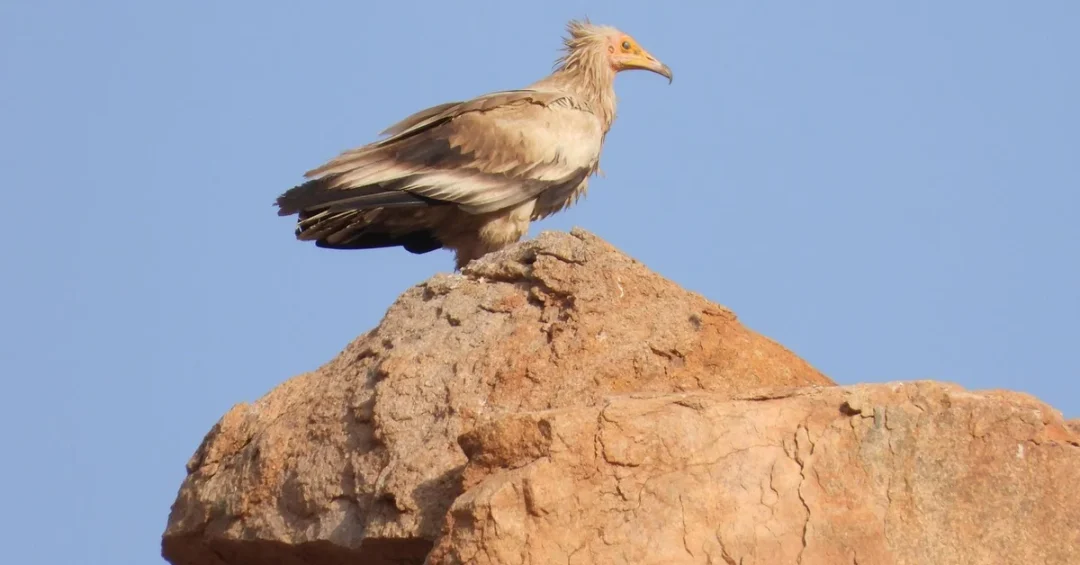
The King Salman bin Abdulaziz Royal Reserve Development Authority has reported successful nesting of the endangered Egyptian Vulture (Neophron percnopterus) within the reserve’s natural habitats, marking a significant conservation milestone in northern Saudi Arabia. The announcement, made on January 4, 2025, via the Saudi Press Agency, confirms that the Egyptian Vulture, a diurnal bird of prey globally classified as endangered, is both a resident breeding species and a rare winter visitor to the King Salman bin Abdulaziz Royal Natural Reserve (KSRNR). This development underscores the Kingdom’s growing commitment to biodiversity preservation under Vision 2030.
Context and Background
The Egyptian Vulture is a medium-sized raptor, measuring approximately 62 centimeters in length with a wingspan of up to 155 centimeters. It thrives in open, arid habitats and rocky cliffs, feeding primarily on carrion or weakened animals. The species is known for its extraordinary ability to detect prey from long distances and can travel up to 80 kilometers daily in search of food. Globally, the Egyptian Vulture has experienced a dramatic population decline, with losses of up to 90% over the past 50 years in the Arabian Peninsula, driven by poisoning, collisions with power lines, habitat loss, and human disturbances. KSRNR, one of Saudi Arabia’s leading conservation areas, provides critical refuge for this species, serving as a key stopover point during autumn and spring migrations, with over 25 individuals recorded during these seasons.
Key Details
The documented nesting activity is particularly significant due to the rarity of such occurrences for this endangered bird in northern Saudi Arabia. The authority noted that the Egyptian Vulture, a member of the diurnal birds of prey family, is identified within KSRNR as a resident breeding species, a migratory passerby, and a rare winter visitor. The species favors dry, remote areas with cliffs and rocky outcrops for breeding and also occasionally feeds at landfills, markets, animal enclosures, slaughterhouses, and farms. The nesting report highlights the success of conservation efforts within the reserve, which is managed by the King Salman bin Abdulaziz Royal Reserve Development Authority, an agency dedicated to protecting natural habitats and wildlife.
Implications and Impact
This discovery has both regional and international significance. The Egyptian Vulture’s decline across the Arabian Peninsula and beyond has alarmed conservationists, but the successful nesting in KSRNR suggests that protected areas in Saudi Arabia can play a vital role in reversing population losses. The reserve’s management of habitats and monitoring of migratory patterns contribute to broader efforts to safeguard biodiversity. Regionally, this news positions Saudi Arabia as a leader in wildlife conservation within the Middle East, aligning with global initiatives to protect endangered species. Internationally, the finding reinforces the importance of cross-border cooperation in bird conservation, as the Egyptian Vulture’s migratory routes span multiple countries.
Vision 2030 Alignment
The nesting of the Egyptian Vulture in King Salman bin Abdulaziz Royal Reserve directly supports Saudi Arabia’s Vision 2030 goals of environmental sustainability and biodiversity protection. By preserving natural habitats and monitoring endangered species, the Kingdom demonstrates its commitment to balancing economic growth with ecological stewardship. This conservation success story reflects the broader ambition of Vision 2030 to enhance quality of life, promote sustainable development, and position Saudi Arabia as a global leader in environmental conservation for future generations.
20 Questions
Q1. What is the significance of the Egyptian Vulture nesting in King Salman Royal Reserve?
A1. The nesting is significant because it marks a rare breeding event for this endangered species in northern Saudi Arabia, highlighting the reserve’s success in providing safe habitats for vulnerable wildlife.
Q2. Which authority announced the nesting of the Egyptian Vulture?
A2. The King Salman bin Abdulaziz Royal Reserve Development Authority made the announcement via the Saudi Press Agency on January 4, 2025.
Q3. What is the scientific name of the Egyptian Vulture?
A3. The scientific name of the Egyptian Vulture is Neophron percnopterus.
Q4. Why is the Egyptian Vulture considered endangered globally?
A4. The species has experienced a dramatic population decline, losing about 90% of its population in the Arabian Peninsula over the past 50 years due to factors like poisoning, power line collisions, and habitat loss.
Q5. What are the key physical characteristics of the Egyptian Vulture?
A5. The Egyptian Vulture measures about 62 centimeters in length with a wingspan of up to 155 centimeters, making it a medium-sized raptor adapted for arid environments.
Q6. What does the Egyptian Vulture primarily eat?
A6. The Egyptian Vulture feeds primarily on carrion, or dead animals, and occasionally on weakened animals. It also frequents landfills, markets, and farms for food.
Q7. How far can the Egyptian Vulture travel daily to find food?
A7. The Egyptian Vulture can travel up to 80 kilometers daily in search of food, reflecting its adaptability and foraging efficiency.
Q8. What role does King Salman Royal Reserve play for migratory Egyptian Vultures?
A8. The reserve serves as a key stopover point for Egyptian Vultures during autumn and spring migrations, with over 25 individuals recorded in these seasons.
Q9. Is the Egyptian Vulture a resident species in King Salman Royal Reserve?
A9. Yes, the Egyptian Vulture is identified as a resident breeding species in the reserve, as well as a migratory passerby and a rare winter visitor.
Q10. What are the main threats to the Egyptian Vulture population?
A10. The main threats include poisoning (often from pesticides), collisions with power lines, habitat loss due to development, and human disturbances like nest disruption.
Q11. How does this nesting event support Saudi Arabia’s conservation goals?
A11. It underscores the effectiveness of protected areas like KSRNR in preserving endangered species, aligning with Saudi Arabia’s commitment to biodiversity under Vision 2030.
Q12. What is the King Salman bin Abdulaziz Royal Reserve Development Authority?
A12. It is an agency responsible for managing the King Salman bin Abdulaziz Royal Natural Reserve, focusing on habitat protection, wildlife monitoring, and conservation efforts.
Q13. Why is this nesting event considered rare?
A13. Nesting occurrences for the Egyptian Vulture are rare in northern Saudi Arabia due to habitat pressures and population declines, making this event particularly noteworthy.
Q14. What habitats does the Egyptian Vulture prefer for breeding?
A14. The species prefers dry, remote areas with cliffs and rocky outcrops, as these provide safety for nesting and access to carrion food sources.
Q15. How does the Egyptian Vulture detect its prey?
A15. The species has extraordinary eyesight that allows it to detect prey from long distances, enabling efficient foraging across its territory.
Q16. What is the global population trend of the Egyptian Vulture?
A16. The population has declined dramatically, with Arabian Peninsula losses of up to 90% over 50 years, and similar trends observed in other regions globally.
Q17. What is the height or length of the Egyptian Vulture?
A17. The Egyptian Vulture measures approximately 62 centimeters in length from head to tail, with a wingspan that can exceed 1.5 meters.
Q18. What is Vision 2030’s role in this conservation effort?
A18. Vision 2030 emphasizes environmental sustainability and biodiversity protection, supporting reserves like KSRNR to achieve ecological goals alongside economic development.
Q19. How many Egyptian Vultures are estimated to use KSRNR during migrations?
A19. Over 25 individual Egyptian Vultures have been recorded during autumn and spring migrations, indicating the reserve’s importance as a migratory stopover.
Q20. What future conservation actions might this nesting prompt?
A20. The success may lead to increased monitoring, habitat protection measures, and public awareness campaigns to ensure ongoing protection for this endangered species.
Reader Feedback
We value your thoughts. Please share your feedback on this article.
Your feedback helps us improve our coverage.