


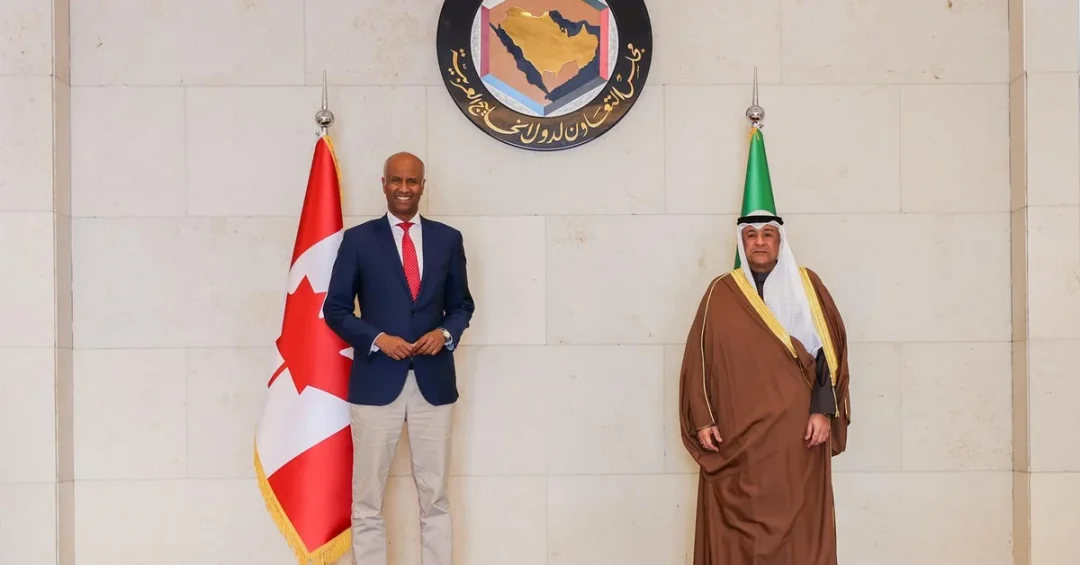
Riyadh, January 06, 2025 – Secretary General of the Gulf Cooperation Council (GCC) Jasem Albudaiwi received Minister of International Development of Canada Ahmed Hussen in Riyadh today to strengthen bilateral ties and explore enhanced cooperation in key sectors.
Context and Background
The meeting reflects the growing strategic partnership between the GCC and Canada, rooted in shared interests in economic development, regional stability, and sustainable progress. Canada has long been a diplomatic and economic partner for GCC states, and this engagement underscores the importance of dialogue in addressing mutual challenges.
Key Details
During the meeting, both officials discussed ways to advance cooperation in international development, investment, education, and renewable energy. These areas align with Saudi Arabia’s Vision 2030, which prioritizes economic diversification, human capital development, and clean energy initiatives. The discussions also highlighted the need for collaborative efforts to foster stability and prosperity across the Gulf region and beyond.
Implications and Impact
The exchange of views on key regional and international issues signals a commitment to dialogue and strategic partnerships that bolster security and stability. The GCC and Canada are working together to promote sustainable development, which is vital for addressing global challenges like climate change and economic inequality, strengthening the Gulf region’s role in international cooperation.
Vision 2030 Alignment
This meeting reinforces Saudi Arabia’s leadership in fostering international partnerships that advance long-term goals under Vision 2030. By deepening ties with Canada in areas like renewable energy and education, the Kingdom continues to position itself as a hub for global diplomacy and sustainable growth, driving progress for the region and the world.
20 Questions
Q1. Who received Canadian Minister of International Development Ahmed Hussen in Riyadh?
A1. Secretary General of the Gulf Cooperation Council (GCC) Jasem Albudaiwi received the Canadian minister in Riyadh on January 6, 2025.
Q2. What was the main purpose of the meeting between Albudaiwi and Hussen?
A2. The meeting aimed to discuss ties between the GCC and Canada and explore ways to enhance cooperation in areas of mutual interest.
Q3. Which sectors were highlighted for enhanced cooperation during the meeting?
A3. The sectors included international development, investment, education, and renewable energy.
Q4. How does the meeting relate to Saudi Arabia’s Vision 2030?
A4. The focus on renewable energy and education aligns with Vision 2030 goals for economic diversification and human capital development.
Q5. What regional issues were discussed by the two officials?
A5. They exchanged views on key regional and international issues, emphasizing dialogue and strategic partnerships for security and stability.
Q6. Why is sustainable development important in this context?
A6. The officials highlighted collaboration in sustainable development as critical for fostering stability and progress regionally and globally.
Q7. What is the role of the Gulf Cooperation Council in this meeting?
A7. The GCC, represented by its Secretary General, serves as a platform for diplomatic engagement and regional cooperation with international partners like Canada.
Q8. How does Canada benefit from stronger ties with the GCC?
A8. Canada gains access to investment opportunities, educational partnerships, and collaboration in renewable energy, strengthening its economic and diplomatic presence in the Gulf.
Q9. What does the meeting indicate about GCC-Canada relations?
A9. It signals a positive trajectory in bilateral relations, with a focus on mutual growth and addressing global challenges together.
Q10. How might renewable energy cooperation impact the region?
A10. It could accelerate the Gulf’s transition to clean energy, supporting environmental goals and economic diversification under Vision 2030.
Q11. Was this meeting part of a regular diplomatic exchange?
A11. Yes, it was a scheduled bilateral meeting to enhance ongoing diplomatic and economic cooperation.
Q12. What is the significance of Riyadh as a venue for such talks?
A12. Riyadh serves as a diplomatic hub for the GCC, hosting meetings that advance regional and international partnerships.
Q13. How does education cooperation benefit both sides?
A13. It promotes knowledge exchange and skills development, supporting human capital growth in the GCC and Canada.
Q14. What international issues did the officials discuss?
A14. They discussed issues related to global security and stability, though specific topics were not detailed in the official statement.
Q15. How does this meeting support GCC integration?
A15. By engaging with international partners, the GCC strengthens its collective influence and economic integration.
Q16. What is the Canadian government’s interest in the Gulf region?
A16. Canada seeks to expand trade, investment, and diplomatic ties with Gulf states, leveraging their economic potential and strategic location.
Q17. How does the meeting align with Saudi foreign policy?
A17. It aligns with Saudi Arabia’s Vision 2030 goal of building global partnerships for sustainable development and stability.
Q18. Are there any agreements planned from this meeting?
A18. No specific agreements were announced, but the discussions laid groundwork for future cooperation in identified areas.
Q19. How does sustainable development relate to regional stability?
A19. The officials emphasized that sustainable development efforts foster stability and progress, reducing risks and promoting long-term peace.
Q20. What is the next step after this meeting?
A20. Both sides will likely follow up with working groups or further dialogues to implement cooperation in sectors like renewable energy and education.
Reader Feedback
We value your thoughts. Please share your feedback on this article.
Your feedback helps us improve our coverage.