


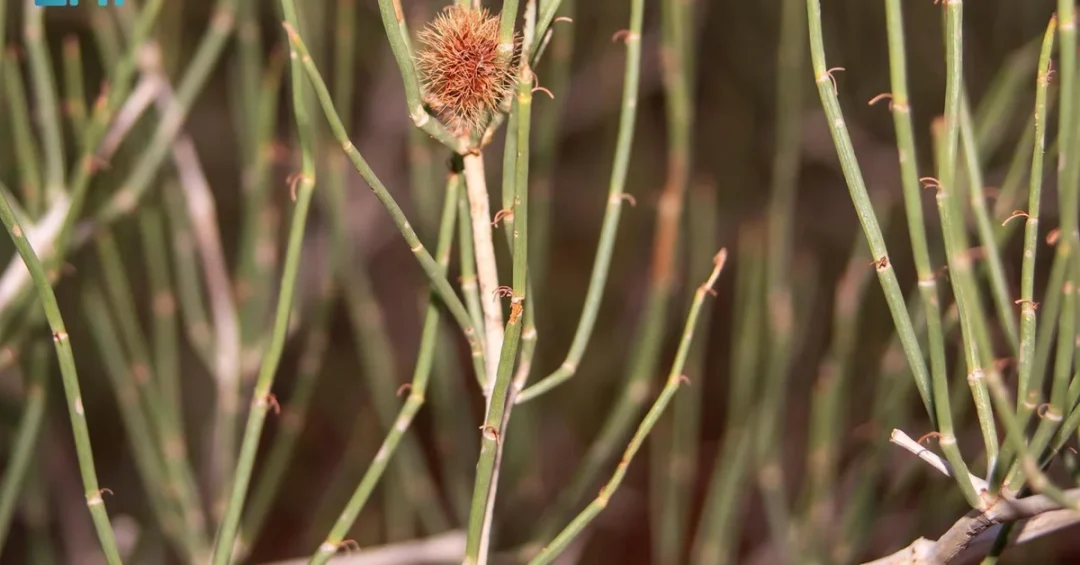
The Northern Borders Region of Saudi Arabia is witnessing the resurgence of the arta plant (Calligonum comosum) in Wadi Arar after years of decline. This revival, reported by the Saudi Press Agency (SPA) on January 7, 2025, highlights the success of environmental regulations and conservation efforts in restoring the region’s ecological heritage.
Context and Background
The arta plant, a thornless shrub known for its fragrant white flowers and edible fruits, had faced near-extinction in Wadi Arar due to overgrazing and illegal logging. Its return underscores the effectiveness of Saudi Arabia’s environmental laws and the establishment of natural reserves, which have been pivotal in afforestation, land reclamation, and the preservation of wild areas across the Kingdom.
Key Details
Experts describe the arta as a versatile shrub with white branches and green tips, lacking leaves but featuring long, soft fringes. The plant produces small white flowers tinged with red, and its spherical fruits, covered in fine hair, range from deep red to yellowish-green. Both the flowers and fruits are renowned for their pleasant fragrance, adding to the plant’s ecological and cultural value.
Implications for Biodiversity
The revival of the arta plant marks a significant achievement for biodiversity in the Northern Borders Region. It enhances the ecological landscape, supports local wildlife, and promotes the sustainable use of natural resources. This success story aligns with broader environmental goals, demonstrating how protective measures can reverse ecological damage and foster resilience in delicate ecosystems.
Vision 2030 Alignment
The resurgence of the arta plant directly supports Saudi Arabia’s Vision 2030 objectives, particularly those related to environmental sustainability and the preservation of natural heritage. By restoring native flora, the Kingdom strengthens its commitment to the Saudi Green Initiative, which aims to combat desertification, increase green spaces, and improve quality of life. This achievement reflects a forward-looking approach to balancing development with ecological stewardship.
20 Questions
Q1. What is the arta plant?
A1. The arta plant, scientifically known as Calligonum comosum, is a thornless shrub native to arid regions of Saudi Arabia, valued for its fragrant flowers and edible fruits.
Q2. Where has the arta plant resurfaced?
A2. The arta plant has notably resurfaced in Wadi Arar, located in the Northern Borders Region of Saudi Arabia, after years of decline.
Q3. Why did the arta plant face extinction in Wadi Arar?
A3. The arta plant faced near-extinction due to overgrazing by livestock and illegal logging activities that damaged its habitat in Wadi Arar.
Q4. What caused the revival of the arta plant?
A4. The revival is attributed to enforcement of environmental laws, regulations, and the establishment of natural reserves that protect wild areas.
Q5. What are the physical characteristics of the arta plant?
A5. The arta plant has white branches, green tips, no leaves, long soft fringes, and small white flowers with a hint of red.
Q6. Does the arta plant have thorns?
A6. No, the arta plant is completely thornless, making it safe for handling and grazing.
Q7. What color are the flowers of the arta plant?
A7. The arta plant produces numerous small white flowers that have a slight red tint.
Q8. Are the fruits of the arta plant edible?
A8. Yes, the spherical fruits of the arta plant are edible and are covered in fine hair, ranging in color from deep red to yellowish-green.
Q9. Does the arta plant have a fragrance?
A9. Yes, both the flowers and fruits of the arta plant are renowned for their pleasant and distinctive fragrance.
Q10. What is the ecological role of the arta plant?
A10. The arta plant contributes to ecological balance by preventing soil erosion, supporting wildlife, and enhancing biodiversity in arid environments.
Q11. How does the arta plant support local wildlife?
A11. The arta plant provides food for herbivores through its edible fruits and offers shelter for small animals and insects in its branches.
Q12. What environmental regulations helped the arta plant recover?
A12. Saudi environmental laws restricting overgrazing and illegal logging, along with natural reserve protections, have been key to the arta plant’s recovery.
Q13. What is the Saudi Green Initiative?
A13. The Saudi Green Initiative is a national effort to combat desertification, increase green cover, and promote environmental sustainability as part of Vision 2030.
Q14. How does the arta plant’s revival align with Vision 2030?
A14. The revival supports Vision 2030 goals for environmental sustainability, land reclamation, and preserving Saudi Arabia’s natural heritage for future generations.
Q15. What is the Northern Borders Region known for?
A15. The Northern Borders Region is known for its rich abundance of wild, aromatic, and edible plants, including diverse trees, shrubs, and multi-purpose species.
Q16. Is the arta plant found outside Wadi Arar?
A16. Yes, the arta plant is found in various arid regions across Saudi Arabia and other parts of the Middle East and North Africa.
Q17. What are the benefits of natural reserves?
A17. Natural reserves protect native flora and fauna from human threats, promote afforestation, and enable ecological restoration like the arta plant’s revival.
Q18. Can the arta plant be cultivated?
A18. Yes, the arta plant can be cultivated in suitable arid conditions and is sometimes used in landscaping to restore degraded lands.
Q19. How does afforestation help Saudi Arabia?
A19. Afforestation reduces desertification, improves air quality, supports biodiversity, and enhances the quality of life for communities across the Kingdom.
Q20. What is the significance of the arta plant’s revival?
A20. The revival demonstrates the success of Saudi environmental policies, highlights the resilience of native species, and reinforces the Kingdom’s commitment to sustainable development.
Reader Feedback
We value your thoughts. Please share your feedback on this article.
Your feedback helps us improve our coverage.