


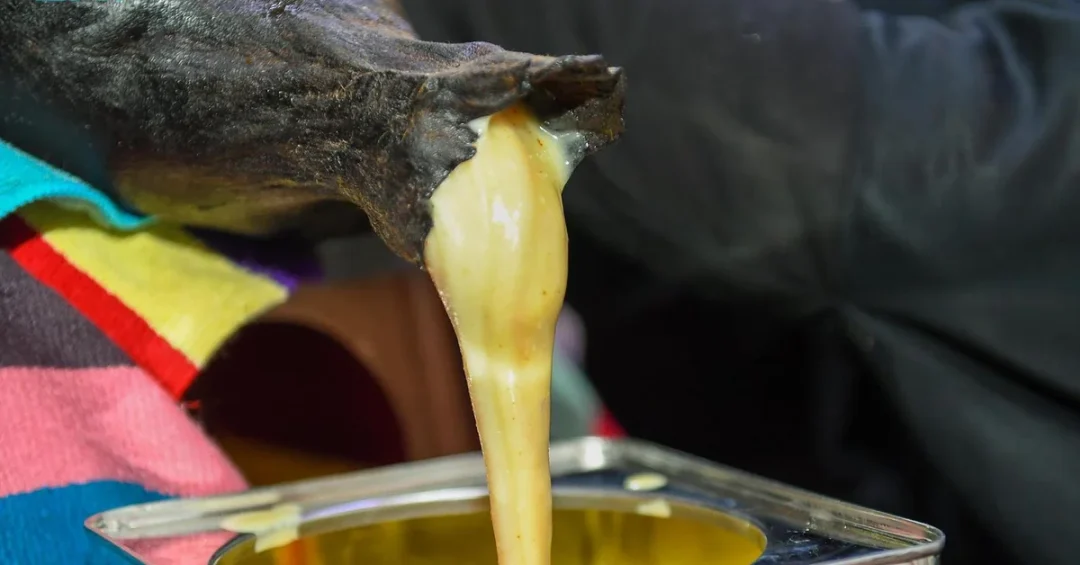
Women in Saudi Arabia’s Northern Borders region have long excelled in producing wild ghee, a traditional staple deeply rooted in local culture and closely tied to the region’s abundant livestock. According to the Ministry of Environment, Water and Agriculture, the livestock population in the area exceeds 7 million cattle and camels, providing the foundation for this time-honored craft. Production peaks during the winter months due to high local demand, and the ghee is a key ingredient in popular dishes, including porridge and festive meals.
Context and Background
The Northern Borders region is known for its rich pastoral heritage, and wild ghee production represents a vital link between the area’s history and its present. The craft is passed down through generations of women, who use traditional methods to transform milk into a prized product. Local markets and festivals, such as those at Arar market and the Lavender Hall, serve as key venues where women showcase their ghee alongside other handicrafts, preserving cultural identity while contributing to the local economy.
Key Details of the Production Process
Umm Nada, a local ghee producer, describes the multi-stage process that begins with milking. The milk is heated, boiled, slightly cooled, and mixed with a starter culture to create “Khathir,” a traditional dairy product similar to fermented yogurt or kefir. The mixture is then churned for over half an hour in a goatskin or sheepskin container called a “Samil.” After several days of mixing, the butter is melted over fire, resulting in wild ghee, which is then stored in leather containers known as “Al-Nahw” or “Al-Dharf.” This labor-intensive method ensures a pure, high-quality product that meets consumer expectations.
Implications and Impact
Wild ghee production supports rural livelihoods and promotes Saudi Arabia’s culinary heritage. By participating in festivals and training programs at venues like the Lavender Hall, local women enhance their skills and gain access to broader markets. This traditional craft also aligns with the Kingdom’s efforts to diversify its economy and empower women in the workforce, fostering community development and preserving cultural practices for future generations.
Vision 2030 Alignment
This enduring tradition of wild ghee production exemplifies how Saudi Arabia’s cultural heritage contributes to the goals of Vision 2030. By supporting local crafts, empowering women, and enhancing rural economic opportunities, the Kingdom is building a vibrant society that values its past while forging a prosperous future. As demand for authentic Saudi products grows, this age-old practice is poised to play an increasingly important role in national and international markets.
20 Questions
Q1. What is wild ghee?
A1. Wild ghee is a traditional clarified butter made from the milk of livestock, such as cows and camels, in the Northern Borders region of Saudi Arabia. It is produced using natural fermentation and hand-churning methods passed down through generations.
Q2. Why is wild ghee production important in Saudi Arabia?
A2. Wild ghee production preserves Saudi Arabia’s cultural heritage and supports rural women’s livelihoods. It also aligns with Vision 2030 by promoting local crafts, economic diversification, and community empowerment.
Q3. Where is wild ghee primarily produced in Saudi Arabia?
A3. Wild ghee is primarily produced in the Northern Borders region of Saudi Arabia, where livestock farming is abundant and pastoral traditions are strong. Local markets and festivals in Arar and Lavender Hall serve as key venues for its sale and display.
Q4. When does wild ghee production peak?
A4. Wild ghee production peaks during the winter months due to high local demand. It is a key ingredient in winter dishes such as porridge and festive meals.
Q5. How is wild ghee made?
A5. The process involves milking livestock, heating and boiling the milk, cooling it, and adding a starter culture to form “Khathir.” The mixture is churned in a goatskin or sheepskin container called a “Samil” for over half an hour, then melted over fire to produce ghee, which is stored in leather containers.
Q6. What is “Khathir”?
A6. “Khathir” is a traditional dairy product similar to naturally fermented or curdled milk, like yogurt or kefir. It is an intermediate step in the production of wild ghee and is made by mixing boiled milk with a starter culture.
Q7. What is a “Samil”?
A7. A “Samil” is a traditional goatskin or sheepskin container used for churning milk to separate butter during wild ghee production. It is an essential tool that has been used for generations in the Northern Borders region.
Q8. How is wild ghee stored?
A8. Wild ghee is stored in leather containers called “Al-Nahw” or “Al-Dharf.” These traditional vessels help preserve the ghee’s quality and are part of the region’s heritage.
Q9. Who produces wild ghee in the Northern Borders?
A9. Wild ghee is primarily produced by women in the Northern Borders region. They have excelled in this craft for generations, passing down knowledge through families and participating in local markets and festivals.
Q10. What role do women play in wild ghee production?
A10. Women are central to wild ghee production, managing the entire process from milking to churning and storage. They also showcase their products at events, contributing to cultural preservation and economic empowerment.
Q11. What is the Lavender Hall?
A11. The Lavender Hall is a venue in the Northern Borders region that provides training and development for local producers, including women involved in wild ghee and handicrafts. It helps enhance their skills and market access.
Q12. How does wild ghee production support local communities?
A12. Wild ghee production creates income opportunities for rural families, especially women, and fosters community pride. It encourages the preservation of traditional skills and contributes to local tourism and trade.
Q13. Is wild ghee exported from Saudi Arabia?
A13. While wild ghee is primarily consumed locally, its growing recognition at festivals and markets may open future export opportunities. It represents an authentic Saudi product with potential for international interest.
Q14. What dishes use wild ghee?
A14. Wild ghee is used in traditional Saudi dishes such as porridge and festive meals. Its rich flavor enhances cooking and baking, making it a staple in local cuisine.
Q15. How does wild ghee relate to Vision 2030?
A15. Wild ghee production aligns with Vision 2030 by empowering women, preserving cultural heritage, and supporting economic diversification. It promotes rural development and showcases Saudi Arabia’s unique traditions to the world.
Q16. What is the livestock population in the Northern Borders region?
A16. According to the Ministry of Environment, Water and Agriculture, the livestock population in the Northern Borders region exceeds 7 million cattle and camels, providing ample resources for wild ghee production.
Q17. Are there festivals for wild ghee?
A17. Yes, wild ghee is showcased at various festivals and national events in the Northern Borders region. These events celebrate local culture, attract visitors, and provide a platform for women producers to sell their products.
Q18. What is “Al-Nahw”?
A18. “Al-Nahw” is a traditional leather container used for storing wild ghee. It is part of the region’s handicraft heritage and helps preserve the ghee’s freshness and quality over time.
Q19. How long does it take to make wild ghee?
A19. The process takes several days, including milk preparation, fermentation, churning for over half an hour, and melting the butter over fire. The time reflects the careful, traditional method used by producers.
Q20. What is the future of wild ghee production?
A20. The future looks promising as wild ghee gains recognition for its cultural and economic value. With support from Vision 2030 and training programs like those at Lavender Hall, it is poised to thrive in domestic and potentially international markets.
Reader Feedback
We value your thoughts. Please share your feedback on this article.
Your feedback helps us improve our coverage.