


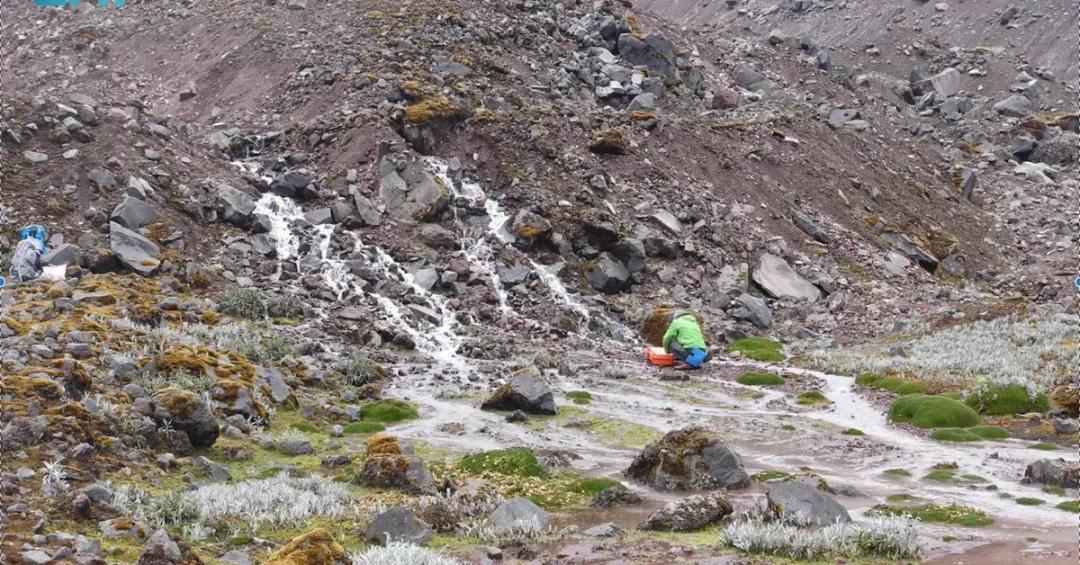
King Abdullah University of Science and Technology (KAUST), in collaboration with scientists from the Swiss Federal Institute of Technology Lausanne (EPFL), has conducted an unprecedented, in-depth study on microbiomes in glacier-fed streams, marking the first global reference for these unique ecosystems. The research, published in the renowned scientific journal Nature, analyzed samples from 170 glacier-fed streams across regions including New Zealand, the Himalayas, the Russian Caucasus, the Tien Shan and Pamir Mountains, the European Alps, the Scandinavian Alps, Greenland, Alaska, the Rwenzori Mountains in Uganda, and the Ecuadorian and Chilean Andes. Over five years, the team collected and examined these samples to understand the microbial life thriving in some of Earth’s most extreme freshwater environments.
Context and Background
Glacier-fed streams originate from atop Earth’s highest mountains and are among the most extreme natural freshwater ecosystems, characterized by near-freezing temperatures and low nutrient levels. These streams serve as the origin for many of the world’s largest rivers and function as vital water reservoirs for the planet. The study highlights the vulnerability of these ecosystems to climate change and underscores the importance of establishing a baseline for their microbiomes to better understand the rate of ecological change. KAUST’s extensive genetic sequencing efforts significantly contributed to creating a comprehensive picture of these endangered microbiomes.
Key Details
KAUST researcher Dr. Ramona Marasco emphasized that glacier-fed streams are highly vulnerable to climate change. She underscored the importance of establishing a baseline for their microbiomes to better understand the rate of ecological change. The researchers successfully developed the first global atlas of microorganisms in glacier-fed streams. Their work revealed that these streams harbor a unique microbiome distinct from other cryospheric systems, such as glaciers, frozen soils, and ice-covered lakes. Notably, approximately half of the bacterial species in these streams are endemic to specific mountain ranges. The scientists attribute this phenomenon to the geographical isolation of mountain ranges—similar to islands—and to the powerful natural selection exerted by the harsh conditions in glacier-fed streams.
Implications and Impact
This research has profound implications for understanding global biodiversity and the impact of climate change on freshwater ecosystems. By providing a baseline for microbiomes in glacier-fed streams, the study enables scientists to monitor ecological changes over time and predict how these systems may respond to warming temperatures. The findings also contribute to global efforts to protect and preserve these vital water sources, which support both human populations and natural ecosystems. The collaboration between KAUST and EPFL exemplifies international scientific cooperation, advancing knowledge that benefits the entire planet.
Vision 2030 Alignment
This pioneering research aligns with Saudi Arabia’s Vision 2030 by demonstrating the Kingdom’s commitment to scientific innovation and environmental stewardship. KAUST’s leadership in this global study underscores Saudi Arabia’s role as a hub for cutting-edge research that addresses critical global challenges. By contributing to the understanding of climate change and biodiversity, the Kingdom is fostering a sustainable future that supports both its own goals and international environmental objectives. This work positions Saudi Arabia as a key player in the global scientific community, driving progress toward a more resilient and sustainable world.
20 Questions
Q1. What is the main focus of the KAUST study on glacier-fed streams?
A1. The main focus is on microbiomes, which are microorganisms living symbiotically in glacier-fed streams. The study aims to understand their unique characteristics and establish a global reference.
Q2. Which institution collaborated with KAUST on this research?
A2. KAUST collaborated with the Swiss Federal Institute of Technology Lausanne (EPFL) on this unprecedented study, combining expertise in environmental science and genetics.
Q3. Where were the samples for this study collected?
A3. Samples were collected from 170 glacier-fed streams across New Zealand, the Himalayas, the Russian Caucasus, the Tien Shan and Pamir Mountains, the European Alps, and other regions.
Q4. How long did the research team collect and analyze samples?
A4. The research team spent over five years collecting and analyzing samples from various glacier-fed streams worldwide to ensure comprehensive data.
Q5. In which scientific journal were the findings published?
A5. The findings were published in the renowned scientific journal Nature, marking a significant contribution to environmental science.
Q6. What makes glacier-fed streams extreme natural freshwater ecosystems?
A6. They are characterized by near-freezing temperatures and low nutrient levels, and they originate from Earth’s highest mountains, making them among the most extreme freshwater habitats.
Q7. Why are glacier-fed streams important for the planet?
A7. They serve as the origin for many of the world’s largest rivers and function as vital water reservoirs, supporting ecosystems and human populations globally.
Q8. What did Dr. Ramona Marasco emphasize about glacier-fed streams?
A8. Dr. Marasco emphasized that these streams are highly vulnerable to climate change and that establishing a baseline for their microbiomes is crucial for monitoring ecological change.
Q9. What is the first global atlas developed by the researchers?
A9. The researchers developed the first global atlas of microorganisms in glacier-fed streams, providing a unique reference for future studies.
Q10. How do microbiomes in glacier-fed streams differ from other cryospheric systems?
A10. The microbiomes in glacier-fed streams are distinct from those in glaciers, frozen soils, and ice-covered lakes, with a unique composition adapted to their environment.
Q11. What percentage of bacterial species in these streams are endemic to specific mountain ranges?
A11. Approximately half of the bacterial species in these streams are endemic to specific mountain ranges, indicating high levels of biodiversity and adaptation.
Q12. Why are bacterial species endemic to certain mountain ranges?
A12. This is attributed to geographical isolation, similar to islands, and the powerful natural selection exerted by the harsh conditions in glacier-fed streams.
Q13. How does this research help understand climate change impacts?
A13. By establishing a baseline, the research enables scientists to monitor ecological changes over time and predict responses to warming temperatures in freshwater ecosystems.
Q14. What is the role of KAUST in this study?
A14. KAUST conducted extensive genetic sequencing and contributed expertise, significantly aiding in creating a comprehensive picture of the microbiomes in these endangered streams.
Q15. How does this study support Saudi Arabia’s Vision 2030?
A15. It demonstrates Saudi Arabia’s commitment to scientific innovation and environmental stewardship, aligning with Vision 2030’s goals for sustainable development and global leadership.
Q16. What regions were included in the sample collection for this study?
A16. Regions included New Zealand, the Himalayas, the Russian Caucasus, the Tien Shan and Pamir Mountains, the European Alps, the Scandinavian Alps, and others.
Q17. What are the characteristics of glacier-fed stream microbiomes?
A17. They are unique, adapted to cold, low-nutrient conditions, and harboring specialized microorganisms that differ from other cryospheric systems.
Q18. How does geographical isolation affect microbiome composition?
A18. Geographical isolation leads to endemic species in specific mountain ranges, similar to island ecosystems, where unique conditions drive evolution of distinct microbiomes.
Q19. What future research does this baseline enable?
A19. The baseline allows scientists to track ecological changes, study biodiversity loss, and develop conservation strategies for glacier-fed streams and their vital water resources.
Q20. What is the international significance of this collaboration?
A20. The collaboration between KAUST and EPFL exemplifies international scientific cooperation, advancing knowledge that benefits global efforts to address climate change and protect freshwater ecosystems.
Reader Feedback
We value your thoughts. Please share your feedback on this article.
Your feedback helps us improve our coverage.