


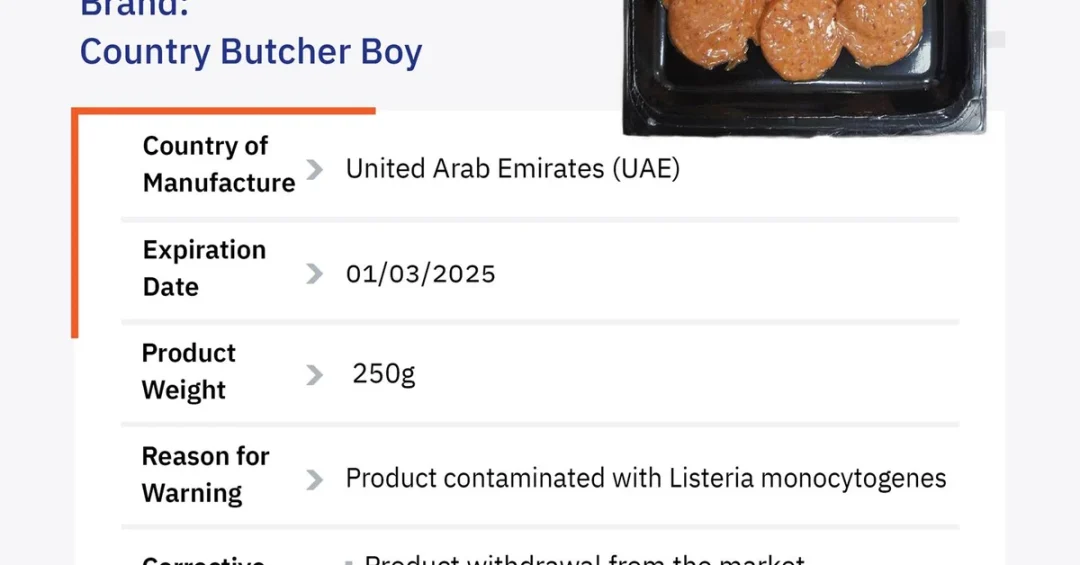
The Saudi Food and Drug Authority (SFDA) issued a warning on January 11, 2025, regarding Country Butcher Boy beef pepperoni, a product manufactured in the United Arab Emirates (UAE), due to contamination with Listeria monocytogenes. The warning, based on official laboratory tests, affects 250-gram packages of the product with an expiration date of March 1, 2025. The SFDA has urged all consumers to avoid consuming the product and to dispose of any units they may possess, as the bacterium poses a serious health risk.
Context and Background
The SFDA, as the Kingdom’s primary food safety regulatory body, regularly monitors food products available in the Saudi market to ensure compliance with stringent health and safety standards. This latest warning is part of the authority’s ongoing efforts to protect public health and maintain the integrity of the food supply chain. The contaminated product, imported from the UAE, was detected through routine surveillance and testing procedures conducted by the SFDA’s laboratories.
Key Details
The SFDA confirmed that laboratory tests revealed the presence of Listeria monocytogenes in the affected batches. The authority has taken immediate steps to remove the contaminated product from the market and is pursuing regulatory action against the importing company. Under Saudi law, violations of the Food Law and its Implementing Regulation can result in severe penalties, including imprisonment of up to 10 years, fines of up to SAR 10 million, or both. Consumers who have purchased the product are advised to dispose of it immediately and report any related health concerns.
Implications and Impact
This action underscores the robust regulatory framework in place within the Kingdom to safeguard consumer health. The swift response by the SFDA highlights its commitment to transparency and public safety, reinforcing consumer confidence in the food supply. The warning also serves as a reminder to importers and manufacturers of the serious consequences of non-compliance with Saudi food safety regulations, aligning with global best practices in consumer protection.
Vision 2030 Alignment
This proactive regulatory action aligns with Saudi Vision 2030‘s goal of enhancing the quality of life for citizens and residents by ensuring a safe and healthy living environment. By maintaining rigorous food safety standards, the Kingdom supports its broader objectives of economic diversification and international trust, demonstrating that public health and consumer protection are integral to its national development strategy.
20 Questions
Q1. What is the Saudi Food and Drug Authority (SFDA)?
A1. The SFDA is the Kingdom’s regulatory body responsible for ensuring the safety of food, drugs, and medical products for consumers and residents.
Q2. What product is affected by the warning?
A2. The warning applies to Country Butcher Boy beef pepperoni, a 250-gram product manufactured in the UAE.
Q3. Why was the warning issued?
A3. The warning was issued due to contamination with the bacterium Listeria monocytogenes, which poses a serious health risk.
Q4. What is the expiration date of the affected product?
A4. The affected product has an expiration date of March 1, 2025.
Q5. What should consumers do if they have the product?
A5. Consumers should avoid consuming the product and dispose of any units they may have in their possession.
Q6. What actions has the SFDA taken?
A6. The SFDA has removed the contaminated product from the market and is pursuing regulatory action against the importing company.
Q7. What are the penalties for violating Saudi food safety laws?
A7. Penalties can include imprisonment of up to 10 years, fines of up to SAR 10 million, or both.
Q8. How was the contamination detected?
A8. The contamination was detected through routine laboratory tests conducted by the SFDA.
Q9. What is Listeria monocytogenes?
A9. Listeria monocytogenes is a bacterium that can cause serious illness, particularly in vulnerable populations like pregnant women and the elderly.
Q10. What should consumers do if they experience symptoms?
A10. Consumers who experience symptoms after consuming the product should contact healthcare services and report the issue to the SFDA.
Q11. How can consumers report food safety concerns?
A11. Consumers can report concerns to the SFDA’s unified call center at 19999.
Q12. Is the product only available in Saudi Arabia?
A12. The warning specifically addresses product batches distributed in the Saudi market; other locations are not mentioned.
Q13. What is the role of the SFDA in food safety?
A13. The SFDA monitors and regulates food products to ensure they meet health and safety standards, protecting public health.
Q14. How does this warning align with Saudi Vision 2030?
A14. The warning supports Vision 2030’s goal of enhancing quality of life by ensuring a safe and healthy living environment.
Q15. What should importers learn from this incident?
A15. Importers must ensure their products comply with Saudi food safety regulations to avoid severe legal consequences.
Q16. Does the SFDA regularly test food products?
A16. Yes, the SFDA conducts routine surveillance and testing to detect potential contamination and ensure market safety.
Q17. What is the possible health impact of Listeria?
A17. Listeria can cause serious infections, including listeriosis, which may be life-threatening for high-risk individuals.
Q18. How does the SFDA communicate warnings to the public?
A18. The SFDA uses official statements, press releases, and its communication channels to alert the public promptly.
Q19. What is the significance of the product’s origin?
A19. The product was manufactured in the UAE, highlighting that imported goods are subject to Saudi food safety checks.
Q20. Will there be follow-up actions from the SFDA?
A20. The SFDA will continue monitoring and take further regulatory actions as necessary to ensure compliance and safety.
Reader Feedback
We value your thoughts. Please share your feedback on this article.
Your feedback helps us improve our coverage.