


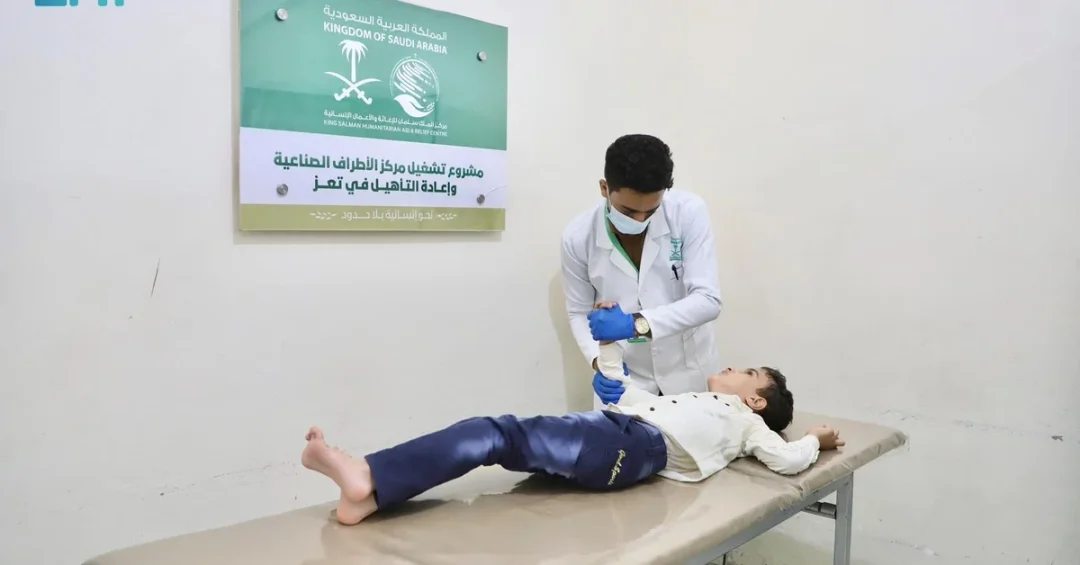
In December 2024, the King Salman Humanitarian Aid and Relief Center (KSrelief) supported the Project for Operating Artificial Limbs and Rehabilitation Center in Taiz Governorate, Yemen, providing medical services to 434 beneficiaries who had lost their limbs. The center delivered a total of 1,613 specialized services during the month, according to an official announcement from the Saudi Press Agency (SPA). This initiative underscores the Kingdom of Saudi Arabia’s ongoing commitment to alleviating human suffering and strengthening healthcare infrastructure in Yemen.
Context and Background
The conflict in Yemen has resulted in widespread injuries, including a significant number of amputations, creating a critical need for prosthetic and rehabilitation services. Since its establishment, KSrelief has been at the forefront of Saudi Arabia’s humanitarian response, operating across multiple sectors including health, education, and food security. The Taiz prosthetics center is specifically designed to address the long-term medical needs of amputees, offering not only limb replacement but also physical therapy and consultations to help beneficiaries regain mobility and independence.
Key Details
The project served 434 beneficiaries, with 59% male and 41% female. Displaced individuals accounted for 12% of the total, while 88% were residents of the area. Services provided encompassed the delivery, measurement, and maintenance of prosthetic limbs, along with physical therapy sessions and specialized medical consultations. Each service was tailored to the individual’s condition, ensuring that beneficiaries received appropriate care for their specific needs. The center operates as a comprehensive facility, aiming to restore function and improve quality of life for those affected by limb loss.
Humanitarian Implications and Impact
The KSrelief-funded prosthetics center in Taiz represents a vital lifeline for vulnerable populations in Yemen, particularly for those who have suffered life-altering injuries. By providing free, high-quality medical care, the initiative reduces the burden on local health systems and prevents further deterioration of patients’ physical and mental health. Restoring mobility enables beneficiaries to return to work, care for their families, and participate in community life, which in turn supports broader stability and recovery in the region. This project exemplifies Saudi Arabia’s role as a leading humanitarian donor, consistently supporting Yemen’s health sector through targeted interventions.
Vision 2030 Alignment
KSrelief’s work in Yemen reflects core principles of Saudi Vision 2030, which emphasizes the Kingdom’s commitment to regional stability, humanitarian leadership, and global partnership. By investing in life-saving and life-sustaining projects like the Taiz prosthetics center, Saudi Arabia demonstrates the values of compassion and solidarity that are central to its international engagements. Such efforts not only aid immediate recovery but also build long-term resilience, contributing to a more stable and prosperous region that aligns with the vision’s goal of a vibrant, responsible, and impactful Saudi Arabia on the world stage.
20 Questions
Q1. What is the name of the center that provided prosthetic services?
A1. The Project for Operating Artificial Limbs and Rehabilitation Center in Taiz Governorate, Yemen.
Q2. Which organization supported the center?
A2. The King Salman Humanitarian Aid and Relief Center (KSrelief) provided support for the project.
Q3. How many beneficiaries were served in December 2024?
A3. The center served 434 beneficiaries who had lost their limbs during December 2024.
Q4. What was the breakdown of beneficiaries by gender?
A4. Among the beneficiaries, 59% were male and 41% were female.
Q5. How many total services were delivered by the center in December?
A5. The project delivered 1,613 specialized services to beneficiaries.
Q6. What percentage of beneficiaries were displaced individuals?
A6. Displaced individuals accounted for 12% of the total beneficiaries.
Q7. What percentage of beneficiaries were residents?
A7. Residents of the area made up 88% of the total beneficiaries.
Q8. What types of services did the center provide?
A8. Services included delivery, measurement, and maintenance of prosthetic limbs, physical therapy, and specialized consultations.
Q9. Why is the Taiz prosthetics center important for Yemen?
A9. It addresses critical needs for amputees caused by the conflict, helping restore mobility and improve quality of life.
Q10. How does KSrelief contribute to Saudi Arabia’s humanitarian efforts?
A10. KSrelief implements targeted projects in health, education, and food security to alleviate suffering globally.
Q11. Is the prosthetics center a new or ongoing project?
A11. The project is an ongoing initiative supported by KSrelief as part of its continuing humanitarian mission in Yemen.
Q12. Does the center provide only prosthetic fittings?
A12. No, it also offers physical therapy and consultations to ensure comprehensive rehabilitation.
Q13. How does restoring mobility affect beneficiaries’ lives?
A13. It enables them to return to work, care for families, and participate in community life.
Q14. What is the source of the information about the project?
A14. The official information was released by the Saudi Press Agency (SPA).
Q15. How does this project support Vision 2030?
A15. It demonstrates Saudi Arabia’s humanitarian leadership and commitment to regional stability, core values of Vision 2030.
Q16. Are the services free for beneficiaries?
A16. Yes, the services are provided at no cost to beneficiaries as part of Saudi humanitarian aid.
Q17. Which governorate is the center located in?
A17. The center is located in Taiz Governorate, Yemen.
Q18. Does the center serve only amputees from the conflict?
A18. The center serves individuals who lost limbs from any cause, with a focus on those affected by the crisis.
Q19. What is the broader impact on Yemen’s healthcare system?
A19. It reduces the strain on local health facilities and provides specialized care unavailable elsewhere.
Q20. How can readers learn more about KSrelief’s work?
A20. Readers can follow official announcements from the Saudi Press Agency and KSrelief’s reports.
Reader Feedback
We value your thoughts. Please share your feedback on this article.
Your feedback helps us improve our coverage.