


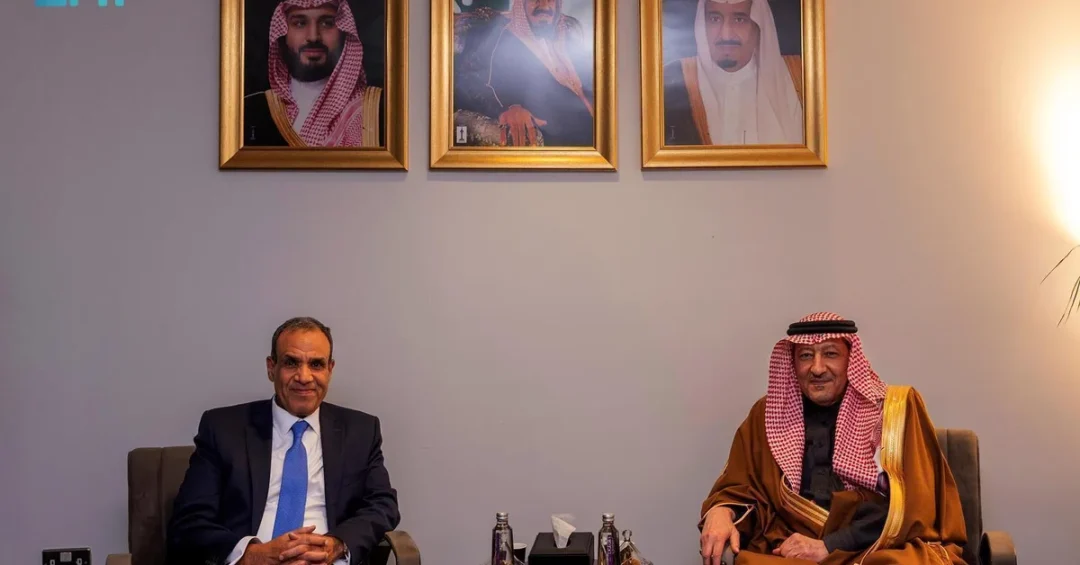
Egyptian Foreign Minister Dr. Badr Abdelatty arrived in Riyadh on Saturday, January 12, 2025, to participate in an expanded ministerial meeting on Syria hosted by the Kingdom of Saudi Arabia. The visit underscores the Kingdom’s central role in fostering regional diplomacy and coordinating international efforts to address pressing issues in the Middle East. Dr. Abdelatty was received at King Khalid International Airport by Vice Minister of Foreign Affairs Eng. Waleed bin Abdulkarim El-Khereiji, reflecting the close bilateral ties between Saudi Arabia and Egypt.
Context and Background
The expanded ministerial meeting on Syria represents a key platform for regional and international stakeholders to discuss political solutions, humanitarian aid, and reconstruction efforts in Syria. Saudi Arabia has consistently advocated for a unified, independent, and stable Syria, aligning with United Nations Security Council resolutions and the broader goal of restoring peace in the Levant. This meeting follows a series of Saudi-led diplomatic initiatives aimed at revitalizing Arab League engagement with Damascus while maintaining principles of sovereignty and territorial integrity.
Key Details
Dr. Badr Abdelatty’s participation highlights Egypt’s enduring partnership with Saudi Arabia in addressing shared regional challenges. The two nations have coordinated closely on issues such as counterterrorism, economic integration, and support for Palestinian rights. The meeting in Riyadh brings together foreign ministers and senior officials from multiple countries, signaling a collective commitment to finding a sustainable resolution to the Syrian crisis. The Saudi Ministry of Foreign Affairs has emphasized that such gatherings are part of the Kingdom’s ongoing efforts to enhance regional stability and cooperation under the framework of Vision 2030.
International and Regional Impact
The Riyadh meeting on Syria is expected to bolster international consensus on key issues, including the return of refugees, political reform, and the fight against terrorism. Saudi Arabia’s role as a mediator and host of such dialogues strengthens its position as a global diplomatic hub, capable of convening diverse stakeholders. The participation of Egypt, a major Arab power, reinforces the message that Arab leadership remains vital to resolving conflicts in the region. Analysts view these talks as a step toward normalizing relations with Syria under conditions that respect international law and human rights.
Vision 2030 Alignment
This diplomatic engagement aligns with Saudi Arabia’s Vision 2030 objectives of transforming the Kingdom into a global center for dialogue and conflict resolution. By hosting ministerial meetings on critical regional issues, Saudi Arabia demonstrates its commitment to proactive foreign policy, economic diversification, and long-term peace. Such initiatives not only enhance the Kingdom’s international standing but also create a conducive environment for investment, cultural exchange, and sustainable development, ultimately contributing to a more stable and prosperous Middle East.
20 Questions
Q1. Who arrived in Riyadh on January 12, 2025?
A1. Egyptian Foreign Minister Dr. Badr Abdelatty arrived in Riyadh to participate in an expanded ministerial meeting on Syria hosted by Saudi Arabia.
Q2. What was the purpose of Dr. Abdelatty’s visit?
A2. He joined regional and international ministers to discuss political solutions, humanitarian aid, and reconstruction for Syria in a meeting convened by Saudi Arabia.
Q3. Where did the meeting take place?
A3. The expanded ministerial meeting on Syria was held in Riyadh, the capital of the Kingdom of Saudi Arabia.
Q4. Who received Dr. Abdelatty at the airport?
A4. He was received by Saudi Vice Minister of Foreign Affairs Eng. Waleed bin Abdulkarim El-Khereiji at King Khalid International Airport.
Q5. What does this meeting highlight about Saudi Arabia’s role?
A5. It highlights Saudi Arabia’s central role in fostering regional diplomacy and coordinating international efforts to address Middle Eastern challenges.
Q6. Why is the Syrian crisis a focus of this meeting?
A6. The meeting aims to find a sustainable political solution, support humanitarian efforts, and ensure Syria’s territorial integrity and stability.
Q7. How does this meeting relate to Vision 2030?
A7. It supports Vision 2030’s goal of positioning Saudi Arabia as a global hub for dialogue, conflict resolution, and regional stability.
Q8. What is Egypt’s stake in the Syrian issue?
A8. Egypt shares concerns about security, counterterrorism, and regional stability, and it seeks a unified Arab approach to resolving the Syrian crisis.
Q9. How does Saudi Arabia benefit from hosting such meetings?
A9. Hosting these meetings enhances Saudi Arabia’s diplomatic prestige, fosters international cooperation, and strengthens its leadership in the Arab world.
Q10. What are the main topics discussed in the meeting?
A10. Topics include political reform in Syria, refugee return, counterterrorism efforts, and reconstruction plans supported by regional and international partners.
Q11. Is this meeting part of a larger diplomatic trend?
A11. Yes, it follows Saudi-led initiatives to revitalize Arab League engagement with Syria while upholding principles of sovereignty and UN resolutions.
Q12. Who else participated in the meeting?
A12. Foreign ministers and senior officials from multiple countries participated, though the Saudi Press Agency did not provide a complete list in the original report.
Q13. Why was the meeting called ‘expanded’?
A13. It was expanded to include a broader range of regional and international stakeholders beyond the core Arab countries involved in Syria discussions.
Q14. How does this meeting support Saudi-Egypt relations?
A14. It deepens bilateral coordination on regional security and diplomacy, reflecting the strong strategic partnership between the two countries.
Q15. What message does this send to the international community?
A15. It shows that Saudi Arabia is proactive in seeking peaceful resolutions to conflicts and willing to convene international partners for that purpose.
Q16. Did the meeting produce any immediate outcomes?
A16. The Saudi Press Agency reported the arrival and participation but did not specify immediate outcomes, as discussions were ongoing.
Q17. How does Egypt contribute to the Syria dialogue?
A17. Egypt offers diplomatic weight, historical ties with Syria, and expertise in counterterrorism, helping to shape a balanced regional approach.
Q18. Is humanitarian aid a part of the talks?
A18. Yes, humanitarian aid to Syrian civilians, including refugees and internally displaced persons, is a central component of the ministerial discussions.
Q19. What role does the Saudi Vice Minister of Foreign Affairs play?
A19. Eng. Waleed bin Abdulkarim El-Khereiji is responsible for diplomatic protocols and often represents Saudi Arabia in welcoming visiting dignitaries and officials.
Q20. How might this meeting impact Syria’s future?
A20. If consensus is reached, it could pave the way for a political transition, increased humanitarian access, and reconstruction support under international oversight.
Reader Feedback
We value your thoughts. Please share your feedback on this article.
Your feedback helps us improve our coverage.