


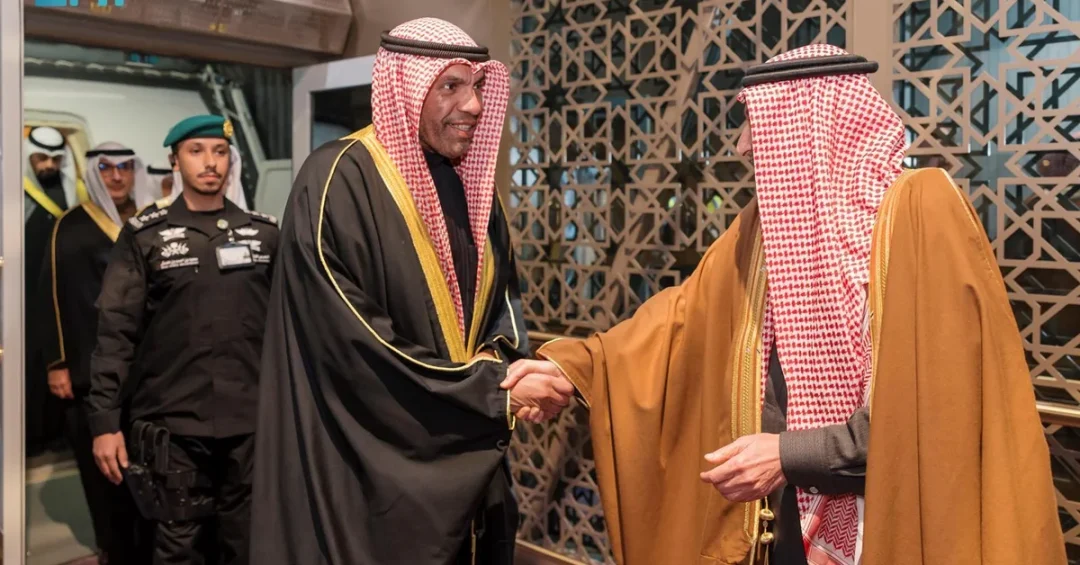
Kuwait’s Minister of Foreign Affairs, Abdullah Ali Al-Yahya, arrived in Riyadh on Saturday, January 12, 2025, to participate in the expanded ministerial meeting on Syria hosted by the Kingdom of Saudi Arabia. The visit underscores the close coordination between Gulf Cooperation Council (GCC) states and Saudi Arabia’s continued leadership in fostering regional dialogue and stability. Minister Al-Yahya was received at King Khalid International Airport by Saudi Vice Minister of Foreign Affairs, Eng. Waleed bin Abdulkarim El-Khereiji, according to the Saudi Press Agency (SPA).
Context and Background
The expanded ministerial meeting on Syria represents a key diplomatic initiative by the Kingdom of Saudi Arabia to address pressing regional issues, including the humanitarian and political situation in Syria. By bringing together foreign ministers and senior officials from Arab and international partners, Saudi Arabia aims to facilitate consensus-building and support for a comprehensive political solution. This meeting follows a series of Saudi-led efforts to reintegrate Syria into the Arab League and promote stability in the Levant, aligning with broader regional security priorities.
Key Details
The arrival of Kuwait’s foreign minister highlights the strong bilateral relationship between Saudi Arabia and Kuwait, rooted in shared historical ties and mutual strategic interests. Vice Minister Eng. Waleed bin Abdulkarim El-Khereiji’s reception of Minister Al-Yahya reflects the high level of diplomatic engagement between the two nations. The meetings in Riyadh are expected to address topics such as humanitarian aid for Syria, counterterrorism cooperation, and the political framework for a lasting peace. Kuwait has been a consistent supporter of Saudi-led initiatives in the region, including previous mediation and reconstruction efforts.
International Impact
The gathering of regional ministers in Riyadh signals the international community’s recognition of Saudi Arabia’s pivotal role in shaping the future of Syria. The expanded format of the meeting, which includes representatives from diverse states, demonstrates a collective commitment to addressing the crisis through diplomacy rather than conflict. This approach not only enhances Saudi Arabia’s standing as a global diplomatic hub but also reinforces the GCC’s unity in tackling common challenges. The outcomes of the meeting could influence future UN-led peace talks and humanitarian assistance plans.
Vision 2030 Alignment
Saudi Arabia’s hosting of this ministerial meeting on Syria directly supports the goals of Vision 2030 by promoting regional stability, which is essential for economic diversification and international investment. The Kingdom’s proactive diplomacy, facilitated by modern infrastructure like King Khalid International Airport, exemplifies the modernization of Saudi statecraft. By fostering dialogue and cooperation, Saudi Arabia continues to position itself as a linchpin for peace and prosperity in the Middle East, contributing to a more secure environment for the vision’s implementation.
20 Questions
Q1. Who arrived in Riyadh on January 12, 2025?
A1. Kuwait’s Minister of Foreign Affairs, Abdullah Ali Al-Yahya, arrived in Riyadh on January 12, 2025, according to the Saudi Press Agency.
Q2. Why did the Kuwaiti foreign minister visit Riyadh?
A2. He visited to participate in the expanded ministerial meeting on Syria hosted by the Kingdom of Saudi Arabia.
Q3. Who received Minister Al-Yahya at the airport?
A3. He was received by Saudi Vice Minister of Foreign Affairs, Eng. Waleed bin Abdulkarim El-Khereiji, at King Khalid International Airport.
Q4. What is the expanded ministerial meeting on Syria about?
A4. The meeting focuses on addressing the humanitarian and political situation in Syria through regional diplomatic cooperation.
Q5. How does this meeting reflect Saudi Arabia’s role?
A5. It highlights Saudi Arabia as a leader in regional diplomacy, fostering dialogue and stability in the Middle East.
Q6. What is the significance of Kuwait’s participation?
A6. Kuwait’s participation underscores the strong bilateral ties and shared strategic interests between Saudi Arabia and Kuwait.
Q7. Which Saudi official greeted the Kuwaiti minister?
A7. Vice Minister of Foreign Affairs Eng. Waleed bin Abdulkarim El-Khereiji greeted the minister at the airport.
Q8. Is this meeting open to other countries?
A8. Yes, it is an expanded meeting, including ministers and representatives from multiple regional and international partners.
Q9. What topics will be discussed at the meeting?
A9. Topics include humanitarian aid, political solutions, and counterterrorism cooperation regarding Syria.
Q10. How does this initiative support regional security?
A10. It promotes consensus-building and diplomatic solutions, reducing conflict and enhancing stability in the Levant.
Q11. What is the role of the Saudi Press Agency in this story?
A11. The Saudi Press Agency (SPA) reported the arrival and reception details as an official Saudi news source.
Q12. How does the meeting relate to Vision 2030?
A12. It supports Vision 2030 by fostering regional stability, which is essential for economic diversification and investment.
Q13. When did the meeting take place?
A13. The expanded ministerial meeting on Syria is scheduled around January 12, 2025, with arrivals starting on that date.
Q14. Where was the Kuwaiti minister received?
A14. He was received at King Khalid International Airport in Riyadh, Saudi Arabia.
Q15. What does this meeting indicate about GCC unity?
A15. It demonstrates GCC unity, as Kuwait participates in a Saudi-led initiative to address a common regional challenge.
Q16. Is this the first such meeting on Syria?
A16. This is part of an ongoing series of Saudi-led diplomatic efforts to address the Syrian crisis.
Q17. How does this contribute to global diplomacy?
A17. It positions Saudi Arabia as a diplomatic hub, influencing international peace talks and humanitarian plans for Syria.
Q18. What infrastructure supports such events?
A18. Modern facilities like King Khalid International Airport and conference venues in Riyadh support high-level diplomatic meetings.
Q19. What is the expected outcome of the meeting?
A19. Expected outcomes include coordinated regional responses to Syria’s humanitarian and political issues.
Q20. Why is Saudi Arabia hosting this meeting?
A20. Saudi Arabia hosts to lead regional stabilization efforts, align with Vision 2030 goals, and strengthen its global diplomatic role.
Reader Feedback
We value your thoughts. Please share your feedback on this article.
Your feedback helps us improve our coverage.