


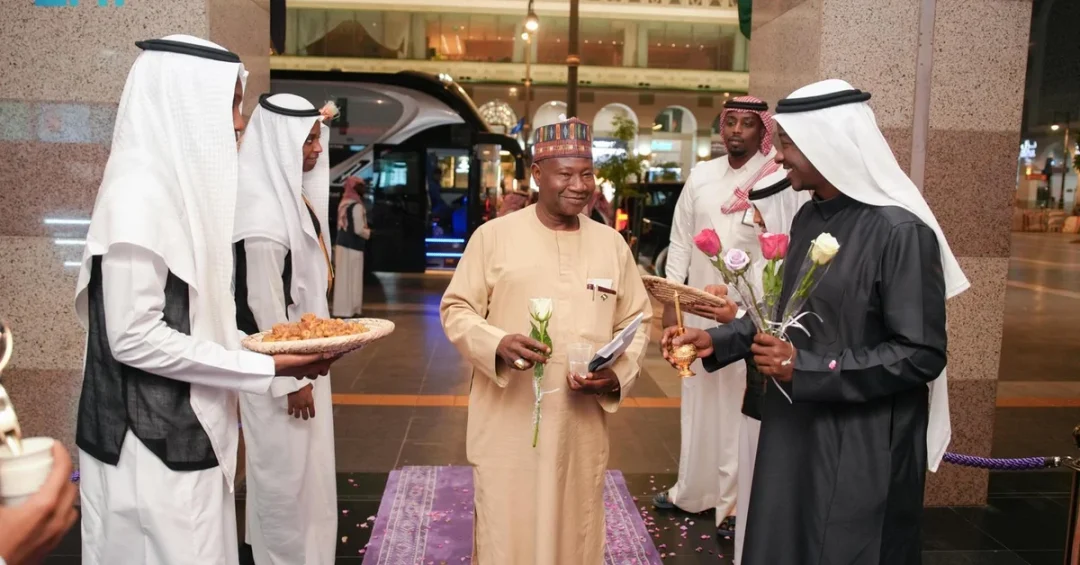
The third batch of 250 guests from 18 African countries has arrived in Madinah as part of the Custodian of the Two Holy Mosques Program for Umrah and Visitation. The initiative, announced by the Ministry of Islamic Affairs, Dawah, and Guidance, reflects the Kingdom’s ongoing commitment to facilitating religious pilgrimages and fostering global Islamic unity.
Context and Background
The program is a longstanding tradition of the Kingdom of Saudi Arabia, designed to host Muslims from around the world, allowing them to perform Umrah and visit key religious sites. The 2025 edition continues this tradition, with a focus on inclusivity and cultural exchange, particularly with African nations.
Key Details
The 250 Umrah performers, representing 18 different African countries, will participate in a comprehensive program that includes visits to historical and religious landmarks in Madinah. Among the highlights are guided tours of the Prophet’s Mosque, the historic Quba Mosque, the King Fahd Complex for the Printing of the Holy Qur'an, and the International Fair and Museum of the Prophet's Biography and Islamic Civilization. After their stay in Madinah, the guests will travel to Makkah to perform the Umrah rituals.
Implications and Impact
This initiative strengthens Saudi Arabia’s role as a central hub for Islamic heritage and serves as a platform for promoting interfaith dialogue and global harmony. By hosting diverse groups, the Kingdom reinforces its commitment to accessibility and spirituality, enhancing its standing as a leader in religious tourism and cultural exchange. The program also underscores the importance of soft diplomacy in building bridges between nations, particularly with developing countries in Africa.
Vision 2030 Alignment
The Custodian of the Two Holy Mosques Program aligns seamlessly with Saudi Vision 2030, which prioritizes enhancing the experience of pilgrims and visitors, diversifying the economy through religious tourism, and projecting the Kingdom as a model of modern Islamic governance. By hosting guests from across Africa, the program also supports the broader goal of deepening international ties and showcasing the Kingdom’s hospitality and cultural richness.
20 Questions
Q1. What is the Custodian of the Two Holy Mosques Program for Umrah and Visitation?
A1. It is an initiative by the Kingdom of Saudi Arabia to host Muslims from around the world, enabling them to perform Umrah and visit key religious sites in Madinah and Makkah.
Q2. Who supervises this program?
A2. The program is supervised by the Ministry of Islamic Affairs, Dawah, and Guidance, which coordinates all aspects of the guests’ stay and activities.
Q3. How many guests are in the third batch of 2025?
A3. The third batch includes 250 Umrah performers from 18 different African countries.
Q4. Which African countries are represented in this batch?
A4. The 250 guests come from 18 African countries, though the specific list is not detailed in the official announcement.
Q5. What sites will the guests visit in Madinah?
A5. They will visit the Prophet’s Mosque, Quba Mosque, the King Fahd Complex for the Printing of the Holy Qur’an, and the International Fair and Museum of the Prophet’s Biography and Islamic Civilization.
Q6. Will the guests also travel to Makkah?
A6. Yes, after their program in Madinah, they will travel to Makkah to perform the Umrah rituals.
Q7. What is the significance of the Prophet’s Mosque?
A7. It is one of the holiest sites in Islam, located in Madinah, and holds profound religious importance as the burial place of the Prophet Muhammad (peace be upon him).
Q8. Why is Quba Mosque important?
A8. Quba Mosque is the first mosque built in Islam, and it holds immense historical and spiritual significance for Muslims worldwide.
Q9. What is the King Fahd Complex for the Printing of the Holy Qur’an?
A9. It is a state-of-the-art facility in Madinah that prints and distributes copies of the Holy Qur’an globally, reflecting the Kingdom’s dedication to Islamic scholarship.
Q10. What is the International Fair and Museum of the Prophet’s Biography?
A10. This museum in Madinah showcases the life and teachings of the Prophet Muhammad (peace be upon him) through exhibits and interactive displays.
Q11. How often does this program bring guests to Saudi Arabia?
A11. The program operates periodically, hosting multiple batches of guests each year from various regions around the world.
Q12. What is the main goal of the program?
A12. The program aims to strengthen ties between Muslims globally, promote the Kingdom’s cultural and religious heritage, and provide a spiritually enriching experience.
Q13. How does this program support Saudi Vision 2030?
A13. It aligns with Vision 2030 by enhancing the Umrah experience, boosting religious tourism, and showcasing Saudi Arabia’s hospitality and leadership in the Islamic world.
Q14. Is the program open to all Muslims?
A14. Yes, the program is designed to host Muslims from diverse backgrounds, with a focus on inclusion and representation from various countries.
Q15. What other activities do guests participate in?
A15. In addition to site visits, guests engage in tours that highlight the history and heritage of Madinah, fostering a deeper understanding of Islamic civilization.
Q16. How does this program foster international goodwill?
A16. It serves as a platform for cultural and religious exchange, building bridges between Saudi Arabia and participating nations, especially those in Africa.
Q17. What is the role of the Ministry of Islamic Affairs?
A17. The Ministry oversees the program’s logistics, including guest accommodation, guided tours, and arrangements for Umrah rituals.
Q18. How many batches have been hosted so far?
A18. The 2025 edition has already launched several batches; the third batch specifically focuses on African guests.
Q19. What is the impact of visiting historical sites in Madinah?
A19. These visits deepen the guests’ spiritual experience and provide them with a direct connection to the early history of Islam.
Q20. How is the program received by guests?
A20. Guests typically express gratitude and admiration for the hospitality and organization, often highlighting the opportunity to visit holy sites as a lifelong dream fulfilled.
Reader Feedback
We value your thoughts. Please share your feedback on this article.
Your feedback helps us improve our coverage.