


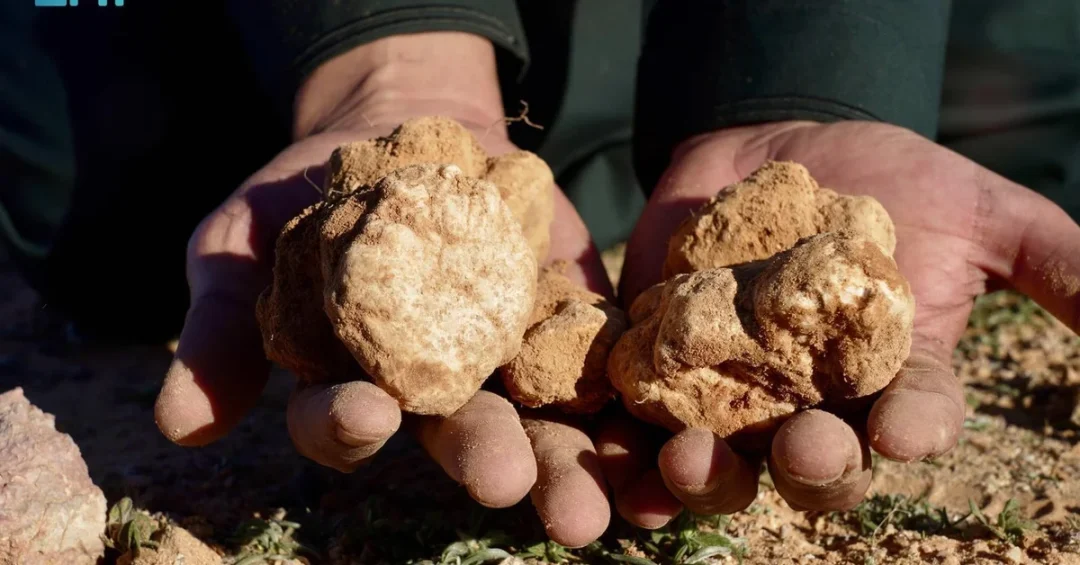
Truffle hunting in the Northern Borders region of Saudi Arabia attracts nature and heritage enthusiasts each year, combining the thrill of discovery with the beauty of tradition. The Saudi Press Agency (SPA) accompanied a diverse group of enthusiasts on an expedition in the Al-Sahin area, where participants gathered in a tranquil desert setting during the early morning hours to search for these prized delicacies. The experience highlights the deep connection between natural heritage and local culture, offering an authentic glimpse into a practice that has been passed down through generations.
Context and Background
The truffle season in Saudi Arabia coincides with the rainy period from late winter to early spring, typically beginning in January and lasting until the end of March. During the Wasm rainy season, rainfall enriches the soil and activates truffle seeds, with growth rates varying depending on conditions. Some truffles require 50 to 70 days of rain, while others take less time. This annual activity draws participants from across the region, who embark on sunrise journeys in search of these winter treasures.
Key Details
Enthusiasts rely on traditional knowledge to interpret soil and plant indicators, identifying potential truffle sites. Using simple tools such as long sticks, participants shift the soil to uncover hidden truffles. Others use their hands to gently remove the surface layer without damaging the fungi, while bags and baskets are prepared for collection. Truffles are wild fungi that grow beneath the surface at varying depths, thriving in well-ventilated sandy or clay soil. Signs of maturity include slight cracks or small lumps on the surface. Among the different types, the Zubaidi stands out for its round shape, the Khalasi is the smallest with an irregular shape, the Jabbi is small and round, and the Hooper is the tiniest and most irregular in shape.
Implications and Impact
The truffle hunting season serves as more than a quest for food; it is a celebration of nature and heritage that fosters social bonds and revitalizes an age-old tradition. As interest in this heritage activity grows, there is an increasing recognition of the need to educate future generations on preserving the environment and the desert landscapes that are integral to the region’s cultural heritage. The activity also supports local tourism and encourages sustainable interaction with natural resources in the Northern Borders region.
Vision 2030 Alignment
The preservation and promotion of truffle hunting as a cultural tradition aligns with Saudi Arabia’s Vision 2030 goals of diversifying the economy, promoting cultural heritage, and supporting sustainable tourism. By highlighting such authentic experiences, the Kingdom fosters a deeper appreciation for its natural and cultural assets, contributing to the broader objective of enhancing quality of life for citizens and residents while preserving the environment for future generations.
20 Questions
Q1. Where does truffle hunting take place in Saudi Arabia?
A1. Truffle hunting takes place in the Northern Borders region of Saudi Arabia, particularly in areas like Al-Sahin, where desert landscapes provide ideal growing conditions for wild truffles.
Q2. When does the truffle season occur in the Kingdom?
A2. The truffle season occurs from late winter to early spring, typically beginning in January and lasting until the end of March, coinciding with the Wasm rainy season.
Q3. What is the Wasm rainy season?
A3. The Wasm rainy season is a period in Saudi Arabia when rainfall enriches the soil and activates truffle seeds, supporting the growth of wild fungi in desert regions.
Q4. How do truffle hunters locate truffles?
A4. Truffle hunters use traditional knowledge to interpret soil and plant indicators, such as slight cracks or small lumps on the surface, to identify potential truffle sites.
Q5. What tools do truffle hunters use?
A5. Truffle hunters use simple tools such as long sticks to shift the soil and uncover truffles, and they sometimes use their hands to gently remove the surface layer without damaging the fungi.
Q6. What types of truffles are found in the Northern Borders region?
A6. Common types include the Zubaidi, which has a round shape; the Khalasi, which is the smallest with an irregular shape; the Jabbi, which is small and round; and the Hooper, which is the tiniest and most irregular.
Q7. What is the Zubaidi truffle known for?
A7. The Zubaidi truffle is known for its round shape and is one of the more sought-after varieties among enthusiasts in the Northern Borders region.
Q8. How deep do truffles grow beneath the surface?
A8. Truffles grow at varying depths beneath the surface, depending on the complex interaction of soil, moisture, and surrounding plants, requiring careful excavation.
Q9. What type of soil is ideal for truffle growth?
A9. Truffles thrive in well-ventilated sandy or clay soil that allows proper drainage and supports the fungi’s development during the rainy season.
Q10. How much rain is needed for truffle growth?
A10. Some truffles require 50 to 70 days of rain, while others take less time, depending on the specific type and environmental conditions in the region.
Q11. Why is truffle hunting considered a heritage activity?
A11. Truffle hunting is a heritage activity because it has been passed down through generations, combining traditional knowledge with a deep connection to the environment and local culture.
Q12. How does truffle hunting foster social bonds?
A12. Truffle hunting fosters social bonds by bringing together groups of enthusiasts who share the experience of searching, collecting, and celebrating nature in a communal setting.
Q13. What role does the Saudi Press Agency play in covering truffle hunting?
A13. The Saudi Press Agency accompanies enthusiasts and documents the activity, highlighting the cultural and natural significance of truffle hunting in the Northern Borders region.
Q14. Is truffle hunting open to tourists?
A14. Yes, truffle hunting is an activity that attracts nature and heritage enthusiasts, and it supports local tourism by offering authentic desert experiences in the Northern Borders region.
Q15. How are truffles used after collection?
A15. Truffles are celebrated for their unique flavor and are used to enhance the taste of dishes, making them a prized ingredient in local cuisine.
Q16. What is the importance of educating future generations about truffle hunting?
A16. Educating future generations helps preserve the environment and desert landscapes, ensuring the sustainability of truffle habitats and the continuation of the heritage tradition.
Q17. Does truffle hunting align with Vision 2030?
A17. Yes, truffle hunting aligns with Vision 2030 by supporting cultural heritage, sustainable tourism, and environmental preservation, contributing to the Kingdom’s broader goals.
Q18. What environmental factors affect truffle growth?
A18. Environmental factors include rainfall, soil type, moisture levels, and the presence of surrounding plants, all of which influence truffle growth and maturity.
Q19. How do hunters ensure they do not damage truffles during collection?
A19. Hunters use gentle techniques, such as using hands to remove surface layers and avoiding sharp tools, to prevent damaging the truffles while collecting them.
Q20. What makes truffle hunting a unique experience in Saudi Arabia?
A20. Truffle hunting is unique because it combines the thrill of discovery with the beauty of desert landscapes, traditional knowledge, and a celebration of heritage that fosters community bonds.
Reader Feedback
We value your thoughts. Please share your feedback on this article.
Your feedback helps us improve our coverage.