


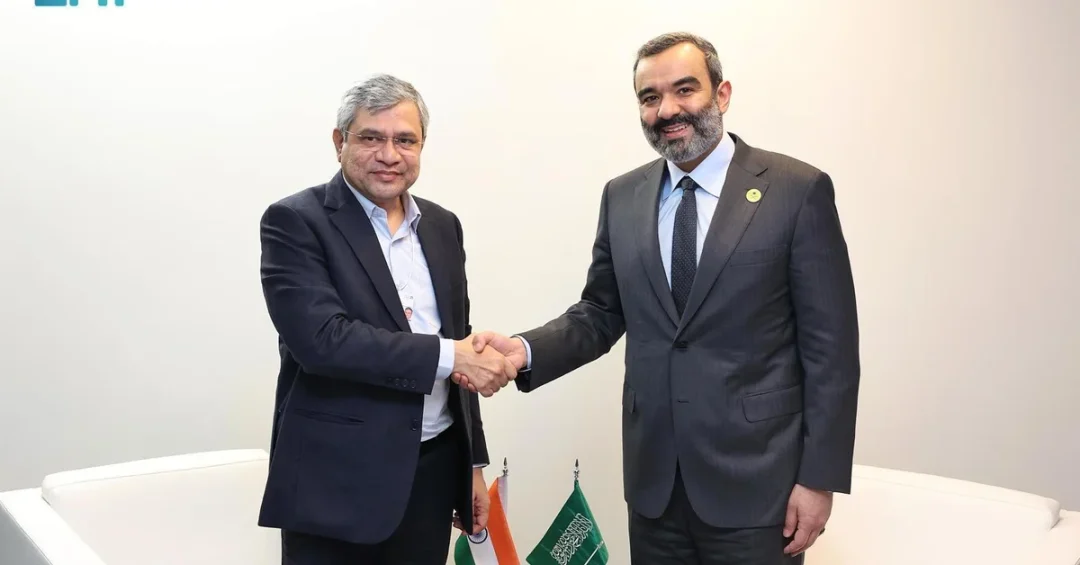
Saudi Minister of Communications and Information Technology Eng. Abdullah bin Amer Alswaha held a series of high-level meetings with leaders of major global technology companies on January 24, 2025, on the sidelines of the World Economic Forum (WEF) in Davos, Switzerland. The meetings, part of the Kingdom’s delegation to the annual forum, focused on strengthening partnerships in technology, artificial intelligence (AI), and innovation to accelerate the growth of Saudi Arabia’s digital economy.
Context and Background
These engagements come as Saudi Arabia, under Vision 2030, prioritizes digital transformation and technological innovation as key drivers of economic diversification. The World Economic Forum in Davos serves as a platform for global leaders to discuss pressing issues and forge strategic alliances, with the Kingdom leveraging its participation to showcase its progress and attract international expertise and investment in cutting-edge sectors.
Key Details
Minister Alswaha first met with Indian Minister for Railways, Information and Broadcasting, Electronics & Information Technology Ashwini Vaishnaw. The discussion focused on supporting the digital economy, innovation, and manufacturing, and reviewed joint initiatives within the Saudi-Indian Partnership Council. In a meeting with Microsoft Chief Executive and Chairman Satya Nadella, talks centered on enhancing the strategic partnership, particularly in high-capacity cloud computing and AI, to support the digital economy in Saudi Arabia and the broader Middle East through the Kingdom’s strategic geographic position. With BlackRock Chairman and Chief Executive Larry Fink, Minister Alswaha explored opportunities to increase investment partnerships in innovation and AI projects, aligning with efforts to attract global capital into Saudi Arabia’s technology sectors.
The minister also engaged with Lenovo Chairman and Chief Executive Yuanqing Yang to discuss partnership prospects in manufacturing and technology projects within the Kingdom and to review the company’s current plans and investments. In a separate meeting, Qualcomm President and Chief Executive Cristiano Amon and Minister Alswaha discussed expanding partnership opportunities in developing AI and smart-network technologies to boost the digital economy and promote sustainability. Finally, with Hewlett Packard Enterprise (HPE) President and Chief Executive Antonio Neri, talks covered strategic partnerships in technology and cloud computing, with a focus on localizing server production in Saudi Arabia to enhance local content and support digital economy growth.
Implications and Impact
These discussions signal a deepening integration of Saudi Arabia into the global technology ecosystem. The focus on cloud computing, AI hardware, and smart networks positions the Kingdom not only as a consumer of technology but as an emerging hub for innovation and manufacturing. The collaboration with HPE on server localization, for instance, directly supports the development of a domestic tech infrastructure, reducing dependence on imports and creating high-skilled jobs. Geopolitically, these partnerships strengthen Saudi Arabia’s ties with key Asian and American tech firms, reinforcing its role as a stable and forward-looking partner in the digital economy.
Vision 2030 Alignment
These engagements are a direct reflection of Saudi Arabia’s Vision 2030 ambitions to build a diversified, knowledge-based economy. By fostering partnerships with global technology leaders like Microsoft, Lenovo, and Qualcomm, the Kingdom is effectively laying the groundwork for a robust digital sector that will drive future economic growth. The emphasis on AI, cloud computing, and local manufacturing underscores the commitment to sustainable development and technological self-sufficiency, aligning with national goals to enhance quality of life and create a vibrant society.
20 Questions
Q1. What was the primary purpose of Minister Alswaha’s meetings in Davos?
A1. The primary purpose was to enhance partnerships in technology, artificial intelligence (AI), and innovation to support the growth of Saudi Arabia’s digital economy, as part of the Kingdom’s delegation to the World Economic Forum.
Q2. Who did Minister Alswaha meet first at the World Economic Forum?
A2. He first met with Indian Minister for Railways, Information and Broadcasting, Electronics & Information Technology Ashwini Vaishnaw to discuss ways to support the digital economy and innovation.
Q3. What was discussed with Microsoft CEO Satya Nadella?
A3. The discussion focused on the strategic partnership between Saudi Arabia and Microsoft, particularly in high-capacity cloud computing and AI, to support the digital economy in the Kingdom and the Middle East.
Q4. How does the meeting with BlackRock’s Larry Fink relate to Saudi Arabia’s goals?
A4. The meeting aimed to attract global investments into innovation and AI projects, aligning with Saudi Arabia’s objective to draw international capital into its technology sectors and support economic diversification.
Q5. What partnership prospects were discussed with Lenovo’s Yuanqing Yang?
A5. Talks covered partnership prospects in manufacturing and technology projects in Saudi Arabia, and the current status of Lenovo’s plans and investments in the Kingdom.
Q6. What topics were discussed with Qualcomm’s Cristiano Amon?
A6. Minister Alswaha and Qualcomm’s CEO discussed expanding partnership opportunities in developing AI and smart-network technologies to boost the digital economy and sustainability.
Q7. What was the focus of the meeting with HPE’s Antonio Neri?
A7. The meeting focused on strategic partnerships in technology and cloud computing, and HPE’s efforts to localize server production in Saudi Arabia to enhance local content.
Q8. Where did these meetings take place?
A8. The meetings took place on the sidelines of the World Economic Forum (WEF) in Davos, Switzerland, in January 2025.
Q9. What is the broader context for these meetings?
A9. The broader context is Saudi Arabia’s Vision 2030, which prioritizes digital transformation and technological innovation as key drivers of economic diversification away from oil reliance.
Q10. How does server localization in Saudi Arabia benefit the economy?
A10. Server localization reduces dependence on imports, creates high-skilled jobs, and strengthens the domestic tech infrastructure, supporting the growth of the digital economy.
Q11. Why is Saudi Arabia’s geographic location significant in these tech partnerships?
A11. Saudi Arabia’s strategic location enables it to serve as a hub for digital services, including cloud computing and AI, for the broader Middle East region, as highlighted in discussions with Microsoft.
Q12. What role does the Saudi-Indian Partnership Council play?
A12. The council facilitates joint initiatives between Saudi Arabia and India in digital economy, innovation, and manufacturing, as reviewed in the meeting with Minister Vaishnaw.
Q13. How do these meetings support the digital economy in Saudi Arabia?
A13. They attract investment, foster innovation, and enhance technological capabilities in areas like AI and cloud computing, directly contributing to the growth of the digital economy.
Q14. What technology areas were emphasized in the meetings?
A14. Key areas emphasized include artificial intelligence, high-capacity cloud computing, smart-network technologies, and local manufacturing of technology hardware.
Q15. Are these meetings part of a larger Saudi delegation?
A15. Yes, Minister Alswaha’s participation was part of the Kingdom’s official delegation at the World Economic Forum, highlighting Saudi Arabia’s active engagement in global economic dialogues.
Q16. What is the significance of the meeting with Qualcomm?
A16. The meeting aimed to expand partnerships in AI and smart-network technologies, which are crucial for advancing connectivity and sustainability in Saudi Arabia’s digital transformation.
Q17. How does localizing HPE servers align with Vision 2030?
A17. Localizing server production supports local content goals, reduces import reliance, and builds a domestic tech industry, aligning with Vision 2030’s economic diversification objectives.
Q18. What is the expected outcome of discussions with Lenovo?
A18. The discussions are expected to strengthen manufacturing partnerships and accelerate Lenovo’s investment plans and projects in Saudi Arabia’s technology sector.
Q19. How do these meetings benefit global technology companies?
A19. They provide companies like Microsoft, Lenovo, and HPE access to Saudi Arabia’s growing market and strategic location for regional expansion, fostering mutually beneficial partnerships.
Q20. What is the future outlook for Saudi Arabia’s tech sector after these meetings?
A20. The meetings are expected to accelerate investments and collaborations in AI and cloud computing, positioning Saudi Arabia as a leading digital economy player in the region by 2030.
Reader Feedback
We value your thoughts. Please share your feedback on this article.
Your feedback helps us improve our coverage.