


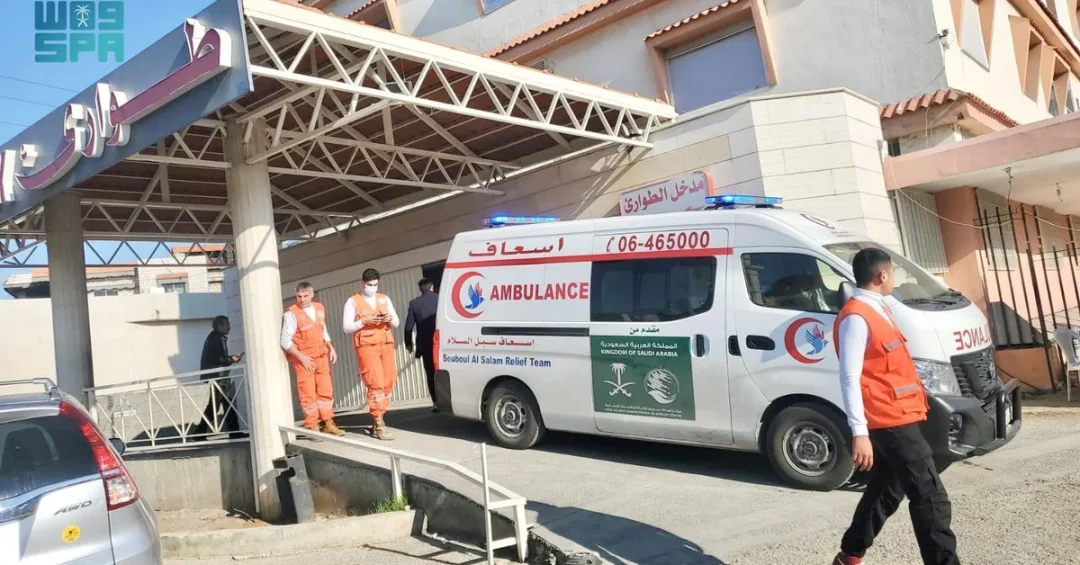
The King Salman Humanitarian Aid and Relief Center (KSrelief) funded ambulance service in northern Lebanon carried out 82 emergency missions last week, providing critical medical transport and care to refugees and local communities in the Miniyeh district, according to the Saudi Press Agency (SPA).
Context and Background
KSrelief, the Kingdom of Saudi Arabia’s flagship humanitarian arm, has been actively supporting vulnerable populations in Lebanon through health, education, and relief projects. The ambulance service, operated by Subul Al Salam Social Association, addresses urgent medical needs in areas hosting large numbers of Syrian and Palestinian refugees, where healthcare infrastructure is often strained.
Key Details
The 82 missions included transporting patients to and from hospitals, as well as treating burn injuries in the city of Miniyeh. Services were provided to Syrian and Palestinian refugees alongside the local host community. This project, which supports ambulance and transport services in refugee areas, reflects Saudi Arabia’s commitment to alleviating suffering irrespective of nationality or background.
Implications and Impact
The initiative strengthens emergency response capacity in northern Lebanon, where access to medical care is limited. By reducing barriers to hospital transport, KSrelief’s funding directly improves health outcomes for refugees and locals. The Saudi medical assistance also underscores the Kingdom’s role as a leading humanitarian donor in the region, fostering stability and goodwill in host communities.
Vision 2030 Alignment
This humanitarian support is a tangible expression of Vision 2030‘s goal to enhance Saudi Arabia’s global humanitarian role. By enabling life-saving ambulance services in Lebanon, the Kingdom demonstrates its commitment to international solidarity and responsible global citizenship, building bridges of cooperation and alleviating the human cost of regional crises.
20 Questions
Q1. What organization funded the ambulance missions?
A1. The King Salman Humanitarian Aid and Relief Center (KSrelief), the Kingdom of Saudi Arabia’s official humanitarian agency, funded the services.
Q2. How many ambulance missions were carried out last week?
A2. A total of 82 ambulance missions were completed in the Miniyeh district of north Lebanon during the past week.
Q3. Which district received the ambulance services?
A3. The services were provided in the Miniyeh district of northern Lebanon, an area with significant refugee populations.
Q4. Who operated the ambulance service?
A4. The ambulance service was operated by Subul Al Salam Social Association, a local Lebanese organization.
Q5. What types of missions were included?
A5. The missions included transporting patients to and from hospitals and providing medical care for burn injuries.
Q6. Which refugee groups were assisted?
A6. Both Syrian and Palestinian refugees, along with members of the local host community, received medical transport and care.
Q7. Is this help provided only to refugees?
A7. No, the services were provided to Syrian and Palestinian refugees as well as the local Lebanese community in the area.
Q8. What is the official Saudi source for this information?
A8. The information was officially released by the Saudi Press Agency (SPA) from Beirut.
Q9. How does this project relate to KSrelief’s broader work?
A9. It is part of a project supporting ambulance and transport services in refugee areas and host communities in Lebanon.
Q10. What is KSrelief’s primary mission?
A10. KSrelief coordinates and delivers humanitarian aid and relief from Saudi Arabia to affected populations worldwide.
Q11. Why is medical transport important in this region?
A11. Northern Lebanon has limited healthcare infrastructure, and ambulance services ensure refugees and residents can access hospitals during emergencies.
Q12. Does KSrelief operate directly in Lebanon?
A12. KSrelief funds local partners like Subul Al Salam Social Association to implement projects on the ground in Lebanon.
Q13. What type of injuries were treated in the missions?
A13. The reported missions included treatment for burn injuries in the city of Miniyeh.
Q14. How often are these ambulance missions reported?
A14. KSrelief and its partners provide regular updates on activities and operational statistics through official channels like SPA.
Q15. Which Saudi entities support humanitarian work in Lebanon?
A15. KSrelief is the main Saudi humanitarian agency, working with local associations and supported by the Saudi government.
Q16. Does the project serve any specific age groups?
A16. While not limited by age, emergency transport and burn care services are available to all individuals in need within the project coverage area.
Q17. How does this effort align with Saudi foreign policy?
A17. It reflects Saudi Arabia’s commitment to humanitarian diplomacy, stability, and support for vulnerable communities in neighboring countries.
Q18. What is the scale of KSrelief’s assistance in Lebanon?
A18. KSrelief runs multiple projects across Lebanon, including health, education, and relief, benefiting both refugees and host communities.
Q19. How does this project contribute to local healthcare capacity?
A19. By funding ambulance services, KSrelief strengthens the emergency transport network, helping local healthcare providers reach more patients effectively.
Q20. Where can readers find more official updates on KSrelief projects?
A20. Official updates are published by the Saudi Press Agency (SPA) and KSrelief’s own communications channels.
Reader Feedback
We value your thoughts. Please share your feedback on this article.
Your feedback helps us improve our coverage.