


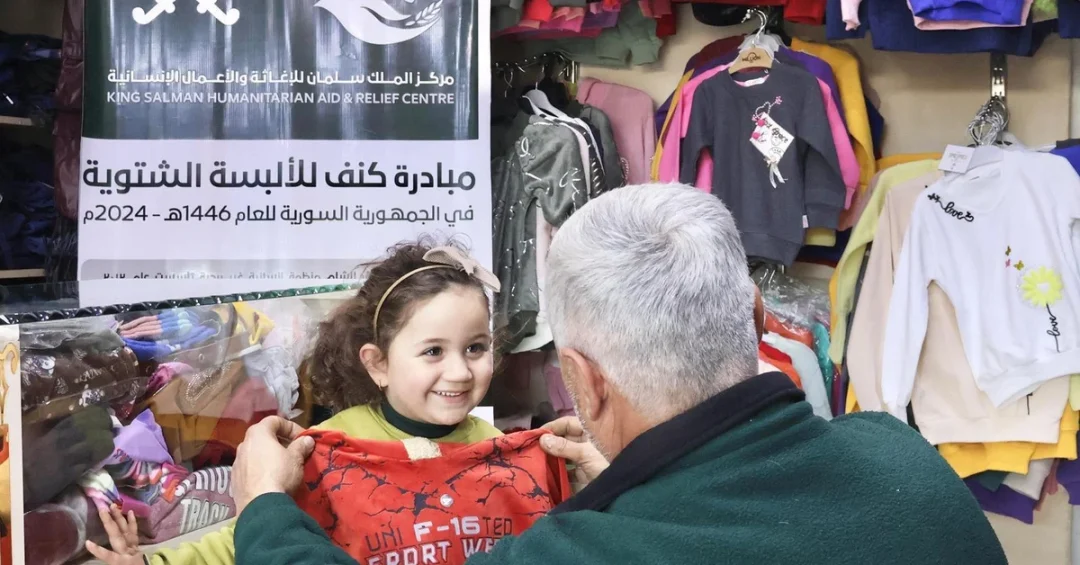
The King Salman Humanitarian Aid and Relief Center (KSrelief) on Wednesday distributed shopping vouchers to 1,288 beneficiaries from vulnerable families in Jindires town, Aleppo governorate, Syria, enabling them to purchase winter clothing. The initiative, part of ongoing humanitarian efforts led by the Kingdom of Saudi Arabia, targets those most affected by the earthquake that struck the region, providing essential support during the harsh winter months. The distribution took place through designated local stores, ensuring beneficiaries could access warm clothing to meet their immediate needs.
Context and Background
This relief operation aligns with KSrelief’s broader mandate to extend humanitarian assistance to crisis-affected populations worldwide. The vouchers, distributed in coordination with local authorities in Aleppo, reflect Saudi Arabia’s commitment to addressing the aftermath of natural disasters and protracted humanitarian crises. Since its establishment, KSrelief has implemented thousands of projects across multiple countries, including Syria, where the ongoing conflict and recent earthquakes have exacerbated living conditions for millions.
Key Details
The distribution targeted 1,288 individuals from families identified as among the most vulnerable in the Jindires area, which experienced significant damage and displacement following the earthquake. Beneficiaries received vouchers redeemable at approved retailers, allowing them to select winter clothing appropriate for their specific needs. This approach not only provides immediate relief but also supports local businesses in the region, fostering economic resilience. The initiative was carried out under the supervision of KSrelief’s field teams, ensuring transparent and efficient delivery of aid.
Implications and Impact
The voucher distribution underscores Saudi Arabia’s proactive role in humanitarian diplomacy, particularly in conflict zones like Syria. By targeting winter clothing, the aid addresses a critical gap in basic necessities, reducing health risks associated with cold exposure in temporary shelters. This operation also strengthens the Kingdom’s reputation as a reliable partner in international humanitarian efforts, complementing broader aid programs by UN agencies and other organizations operating in Syria. The focus on local procurement further supports economic stability in affected communities, aligning with principles of sustainable aid delivery.
Vision 2030 Alignment
This initiative reflects Saudi Arabia’s dedication to Vision 2030 principles of global responsibility and humanitarian leadership. By leveraging KSrelief as an efficient aid platform, the Kingdom demonstrates its capacity to respond swiftly to emergencies while adhering to international standards. The project contributes to the Vision’s broader goal of positioning Saudi Arabia as a pivotal player in global humanitarian affairs, fostering stability and goodwill in regions affected by conflict and natural disasters. Such actions reinforce the Kingdom’s commitment to being a force for positive change on the world stage.
20 Questions
Q1. What is KSrelief?
A1. KSrelief, or the King Salman Humanitarian Aid and Relief Center, is Saudi Arabia’s official humanitarian aid agency, established in 2015 to coordinate and deliver relief assistance worldwide.
Q2. Where did the distribution take place?
A2. The distribution occurred in Jindires town, located in the Aleppo governorate of the Syrian Arab Republic, targeting areas heavily impacted by the earthquake.
Q3. Who received the shopping vouchers?
A3. A total of 1,288 individuals from vulnerable families affected by the earthquake received the vouchers, selected based on their urgent need for winter clothing.
Q4. How were the vouchers distributed?
A4. The vouchers were distributed by KSrelief field teams at designated local stores in Jindires, allowing beneficiaries to choose winter clothing items directly.
Q5. Why were winter clothing vouchers chosen?
A5. Winter clothing vouchers were chosen to address immediate needs for protection against harsh cold weather, which is critical for displaced populations in temporary shelters.
Q6. Is this part of a larger aid program?
A6. Yes, it is part of KSrelief’s ongoing humanitarian and relief efforts in Syria, which include food, shelter, and health assistance for those affected by conflict and natural disasters.
Q7. How does this aid support local businesses?
A7. By using designated local stores, the aid stimulates local economic activity, helping small businesses recover and sustain operations in affected areas.
Q8. Was the distribution coordinated with local authorities?
A8. Yes, KSrelief works in coordination with local authorities and international partners to ensure aid reaches the intended beneficiaries efficiently and transparently.
Q9. How does this align with Saudi Arabia’s Vision 2030?
A9. The initiative exemplifies Vision 2030’s emphasis on global humanitarian leadership, showcasing Saudi Arabia’s commitment to international cooperation and aid effectiveness.
Q10. What other aid has KSrelief provided in Syria?
A10. KSrelief has implemented projects in Syria including food distribution, medical care, shelter support, and water sanitation, reaching millions of affected individuals.
Q11. How many earthquakes affected Jindires?
A11. The region was hit by a devastating earthquake in February 2023, causing widespread destruction, but KSrelief has maintained ongoing support for recovery efforts.
Q12. What is the source of this information?
A12. The information was released by the Saudi Press Agency (SPA), the official news source of the Kingdom of Saudi Arabia.
Q13. How are beneficiaries selected for such aid?
A13. Beneficiaries are selected based on vulnerability assessments conducted by KSrelief teams, prioritizing families with children, elderly members, and those displaced by conflict.
Q14. Does KSrelief work with other humanitarian organizations?
A14. Yes, KSrelief often partners with UN agencies, international NGOs, and local groups to maximize the impact of its aid and coordinate response efforts.
Q15. What is the significance of the voucher system?
A15. The voucher system ensures beneficiaries can purchase specific items they need, promoting dignity and autonomy while avoiding logistical issues of bulk distribution.
Q16. How does this aid help children and families?
A16. Winter clothing protects children and families from cold-related illnesses, supporting their health and well-being during displacement and recovery.
Q17. Is there a follow-up plan for more aid?
A17. KSrelief continues to assess needs in Syria and deploys additional aid as resources allow, focusing on long-term recovery alongside immediate relief.
Q18. How does KSrelief ensure transparency in distribution?
A18. KSrelief uses monitoring teams, reporting systems, and coordination with local partners to track aid delivery and prevent misuse of resources.
Q19. What are the broader humanitarian goals of this project?
A19. The project aims to reduce suffering, support recovery, and build resilience among vulnerable populations, aligning with international humanitarian principles.
Q20. Can individuals or organizations contribute to KSrelief’s work?
A20. Yes, KSrelief accepts donations and partnerships from governments, organizations, and individuals to expand its global humanitarian reach.
Reader Feedback
We value your thoughts. Please share your feedback on this article.
Your feedback helps us improve our coverage.