


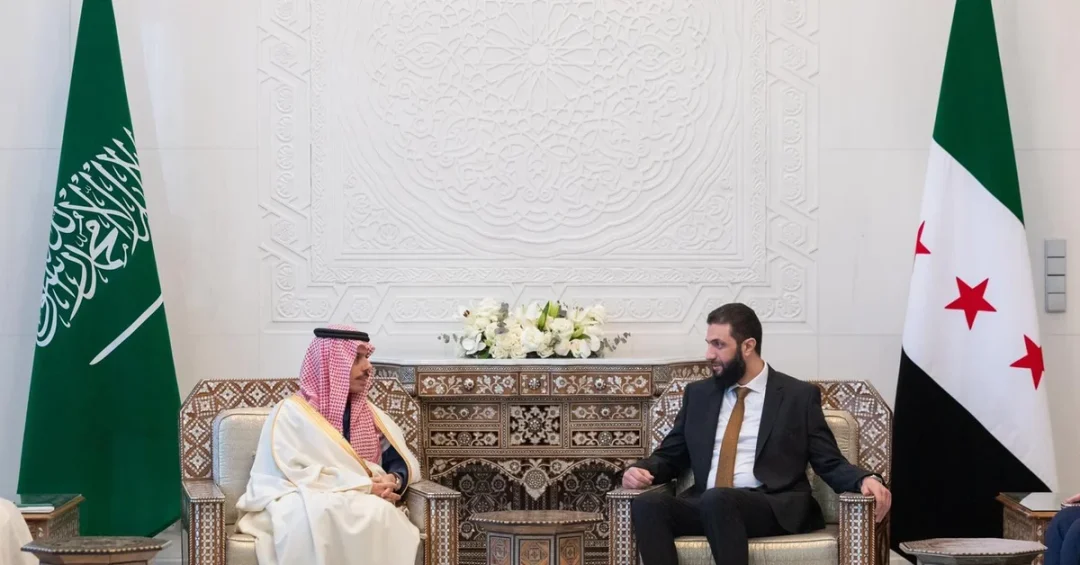
Saudi Foreign Minister Prince Faisal bin Farhan bin Abdullah met with the new Syrian administration leader, Ahmad al-Sharaa, in Damascus on January 24, 2025. During the meeting, Prince Faisal conveyed the greetings of Custodian of the Two Holy Mosques King Salman bin Abdulaziz Al Saud and His Royal Highness Prince Mohammed bin Salman bin Abdulaziz Al Saud, Crown Prince and Prime Minister, to al-Sharaa and the Syrian people. The Syrian leader reciprocated by extending his greetings to the leadership of the Kingdom, setting a positive tone for the discussions.
Context and Background
The visit marks a significant diplomatic engagement by Saudi Arabia with Syria’s new administration, reflecting the Kingdom’s ongoing commitment to regional stability and support for the Syrian people. Saudi Arabia has historically played a pivotal role in Arab and Islamic affairs, and this meeting underscores its proactive approach to fostering dialogue and cooperation in the region. The discussions come at a critical time for Syria, which continues to face challenges related to security, political reconstruction, and economic recovery following years of conflict.
Key Details
The meeting focused on supporting Syria’s security, stability, and unity. The two sides explored efforts to bolster political, humanitarian, and economic conditions in Syria, particularly measures aimed at lifting the imposed sanctions. The officials emphasized the importance of providing all forms of aid and support to Syria during this critical period to restore stability across the country and enable the revival of its national institutions in line with the aspirations of the Syrian people. This aligns with the Kingdom’s broader foreign policy goals of promoting peace and prosperity in the region.
Implications and Impact
The diplomatic engagement carries significant implications for Syria’s reintegration into the regional and international community. Saudi Arabia’s support is expected to accelerate efforts to address humanitarian needs and facilitate political dialogue. By advocating for the lifting of sanctions, the Kingdom positions itself as a key mediator in easing economic pressures on Syria, which could pave the way for greater international cooperation. This move also reinforces Saudi Arabia’s leadership in rallying collective action to address regional challenges.
Vision 2030 Alignment
This meeting aligns with Saudi Arabia’s Vision 2030 by demonstrating the Kingdom’s commitment to fostering stability and prosperity in the region, which is essential for long-term economic and social development. By engaging diplomatically with Syria, Saudi Arabia advances its role as a responsible global actor, supporting peace and cooperation while enhancing its international standing. The visit underscores the Kingdom’s dedication to creating a more secure and interconnected region, benefiting both Syria and the broader Middle East.
20 Questions
Q1. Who represented Saudi Arabia in the meeting with the Syrian leader?
A1. Saudi Foreign Minister Prince Faisal bin Farhan bin Abdullah represented the Kingdom of Saudi Arabia in the meeting with the new Syrian administration leader in Damascus.
Q2. Who is the new Syrian administration leader mentioned in the meeting?
A2. The new Syrian administration leader is Ahmad al-Sharaa, who received the Saudi Foreign Minister in Damascus on January 24, 2025.
Q3. What greetings did Prince Faisal convey to the Syrian leader?
A3. Prince Faisal conveyed the greetings of Custodian of the Two Holy Mosques King Salman bin Abdulaziz Al Saud and Crown Prince Mohammed bin Salman to Ahmad al-Sharaa and the Syrian people.
Q4. How did the Syrian leader respond to the Saudi greetings?
A4. The Syrian leader reciprocated by extending his greetings to the leadership of the Kingdom of Saudi Arabia, fostering a respectful and positive exchange.
Q5. What was the main focus of the discussions between the two sides?
A5. The discussions focused on supporting Syria’s security, stability, and unity, as well as exploring efforts to improve conditions in the country.
Q6. What specific areas were explored to improve conditions in Syria?
A6. The two sides explored efforts to bolster political, humanitarian, and economic conditions in Syria, particularly measures aimed at lifting imposed sanctions.
Q7. Why is lifting sanctions considered important in the discussions?
A7. Lifting sanctions is seen as crucial to easing economic pressures on Syria, enabling humanitarian aid delivery, and supporting the country’s stability and recovery.
Q8. What forms of support were emphasized for Syria during this critical period?
A8. The meeting emphasized the importance of providing all forms of aid and support, including political, humanitarian, and economic assistance, to restore stability.
Q9. What is the goal of supporting Syria’s national institutions?
A9. The goal is to enable the revival of Syria’s national institutions in line with the aspirations of the Syrian people, promoting self-governance and development.
Q10. How does this meeting reflect Saudi Arabia’s role in the region?
A10. The meeting reflects Saudi Arabia’s leadership and proactive engagement in fostering dialogue, stability, and cooperation in the Middle East.
Q11. What is the significance of the meeting for Syria’s political future?
A11. The meeting is significant as it demonstrates Saudi support for Syria’s political reconstruction and reintegration into the regional community.
Q12. How does the meeting affect humanitarian conditions in Syria?
A12. By advocating for aid and sanctions relief, the meeting aims to accelerate humanitarian support for the Syrian people during their recovery period.
Q13. What role does Saudi Arabia play in Arab and Islamic affairs?
A13. Saudi Arabia plays a pivotal role in Arab and Islamic affairs, often acting as a mediator and supporter of stability, peace, and development in the region.
Q14. Why is the timing of this meeting considered critical for Syria?
A14. The timing is critical because Syria faces ongoing challenges related to security, political recovery, and economic rebuilding after years of conflict.
Q15. How does this engagement align with Saudi Arabia’s long-term goals?
A15. The engagement supports Saudi Arabia’s Vision 2030 by promoting regional stability and prosperity, which are essential for the Kingdom’s economic and social development.
Q16. What international implications does the Saudi-Syria meeting have?
A16. The meeting could encourage other nations to engage with Syria, facilitate sanctions relief, and boost international cooperation for Syria’s recovery.
Q17. How does the meeting contribute to regional security in the Middle East?
A17. By focusing on Syria’s security and stability, the meeting contributes to broader regional security, reducing tensions and fostering cooperation among neighboring countries.
A18. The meeting strengthens Saudi Arabia’s image as a committed global actor that prioritizes peaceful diplomacy and humanitarian support in foreign relations.
Q19. Are there any concrete outcomes from the meeting yet?
A19. The meeting established a framework for cooperation, but specific outcomes are expected to develop through continued diplomatic efforts and follow-up actions.
Q20. What message does the meeting send to the Syrian people?
A20. The meeting sends a message of solidarity and support from Saudi Arabia, reassuring the Syrian people of the Kingdom’s commitment to their security, stability, and future.
Reader Feedback
We value your thoughts. Please share your feedback on this article.
Your feedback helps us improve our coverage.