


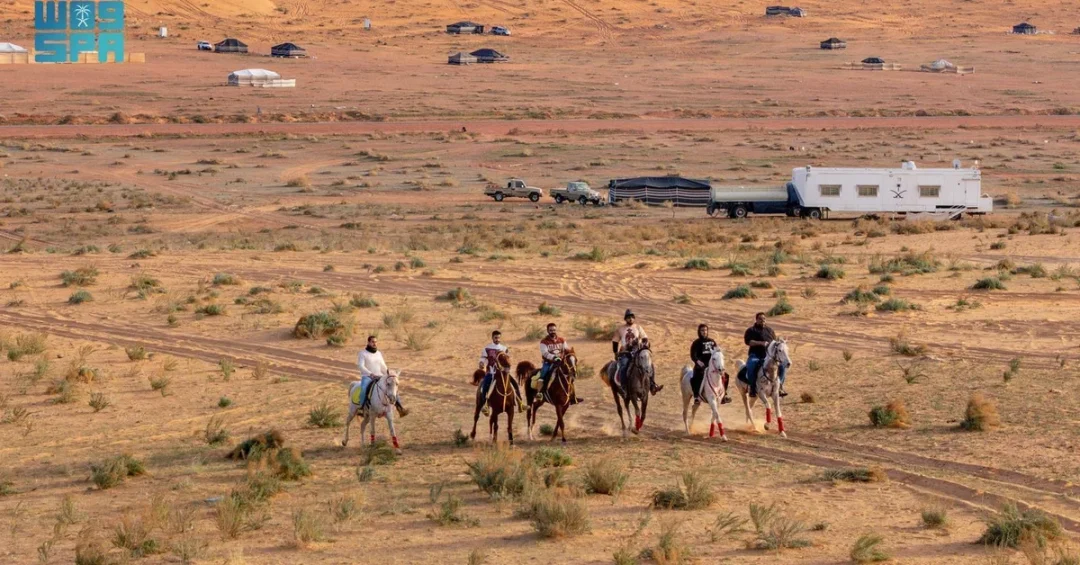
The National Center for Vegetation Cover Development and Combating Desertification (NCVC) in Al-Jouf has designated eight camping sites within the region’s spring areas, boosting hiking activity and wilderness tourism. These sites, located in Rahiya, Hadib National Park, Al-Rasif, Al-Yatima pasture, Al-Mahta pasture, Al-Athath pasture, Al-Adhra’ pasture, and Laijah National Park, have become popular destinations for visitors seeking to enjoy the natural environment and early spring blooms.
Context and Background
Al-Jouf, a region in northern Saudi Arabia, is known for its diverse landscapes and seasonal vegetation. The NCVC’s initiative to establish these campsites aligns with broader efforts to promote eco-tourism and sustainable land use. Residents and tourists alike participate in wilderness outings, particularly during the winter season, when the weather is mild and the flora is at its peak. The camping sites offer a unique opportunity to experience the region’s natural beauty, including lavender, buttercup, Jahq, Qahwiyan, Maknan, and Didhan plants, as well as truffle hunting.
Key Details
Bilal Al-Khalidi, a local wilderness enthusiast, told the Saudi Press Agency (SPA) that weekend camping and day trips provide valuable recreation. Groups of friends typically travel in vehicles equipped for outdoor adventures, with each team member taking on a specific role, from transporting tents and cooking equipment to selecting the campsite. Once arrived, the group sets up camp, prepares traditional Saudi coffee and tea, and spends the afternoon exploring the area, hiking, and collecting wild aromatic plants. Evenings are dedicated to dinner and overnight stays, with mornings featuring a breakfast of “Musli,” a hand-baked flatbread made from flour and water cooked over charcoal using a local tool called Makhbaza.
Implications and Impact
The designation of these camping sites is expected to drive local tourism and economic activity in Al-Jouf, providing a boost to small businesses and service providers. It also underscores Saudi Arabia’s commitment to preserving natural habitats and promoting outdoor recreational activities. The initiative supports the Kingdom’s goals of diversifying tourism offerings and enhancing the quality of life for residents and visitors, in line with the Vision 2030 framework.
Vision 2030 Alignment
This development reflects Saudi Arabia’s broader Vision 2030 objectives to promote sustainable tourism, preserve the environment, and create vibrant communities. By opening up natural areas for responsible recreation, the NCVC is helping to build a thriving eco-tourism sector that contributes to economic diversification and cultural enrichment. The camping sites in Al-Jouf serve as a model for how public lands can be managed to support both conservation and community well-being, fostering a deeper connection to the Kingdom’s rich natural heritage.
20 Questions
Q1. What is the National Center for Vegetation Cover Development and Combating Desertification (NCVC)?
A1. The NCVC is a Saudi government agency focused on preserving and developing vegetation cover, combating desertification, and promoting sustainable land management to support environmental goals aligned with Vision 2030.
Q2. How many camping sites were designated in Al-Jouf’s spring areas?
A2. The NCVC designated eight camping sites within Al-Jouf’s spring areas, including locations such as Rahiya, Hadib National Park, and Laijah National Park, to boost eco-tourism and hiking activities.
Q3. What are the names of the camping sites?
A3. The camping sites are Rahiya, Hadib National Park, Al-Rasif, Al-Yatima pasture, Al-Mahta pasture, Al-Athath pasture, Al-Adhra’ pasture, and Laijah National Park.
Q4. What types of plants can visitors see at these camping sites?
A4. Visitors can enjoy early spring blooms of lavender, buttercup, Jahq, Qahwiyan, Maknan, and Didhan plants, which add to the region’s natural beauty.
Q5. Is truffle hunting available in these areas?
A5. Yes, truffle hunting is one of the activities available at these camping sites, attracting visitors interested in foraging and experiencing local traditions.
Q6. Who is Bilal Al-Khalidi?
A6. Bilal Al-Khalidi is a local wilderness enthusiast from Al-Jouf who shared his experiences with the Saudi Press Agency, highlighting the recreational value of camping and hiking.
Q7. What traditional food is mentioned in the article?
A7. The article mentions “Musli,” a hand-baked flatbread made from flour and water, cooked over charcoal using a local tool called Makhbaza, often eaten for breakfast during camping trips.
Q8. How do groups typically organize their camping trips?
A8. Groups of friends travel in vehicles equipped for outdoor adventures, with each member assigned a specific role such as transporting tents, cooking equipment, or selecting the campsite.
Q9. What activities do campers engage in during the afternoon?
A9. Campers spend the afternoon exploring the area, hiking, and collecting wild aromatic plants, before returning to camp for evening meals and overnight stays.
Q10. Why is winter a popular season for camping in Al-Jouf?
A10. Winter offers mild weather and the peak of early spring blooms, making it ideal for outdoor activities like hiking and camping in the region’s natural landscapes.
Q11. How does this initiative support Saudi Arabia’s tourism goals?
A11. By providing eco-friendly camping options, the initiative boosts domestic and international tourism, aligns with Vision 2030’s economic diversification, and promotes sustainable travel experiences.
Q12. What is the role of the Saudi Press Agency (SPA) in this story?
A12. The SPA reported the NCVC’s announcement and included insights from local enthusiasts, serving as an official source for the information.
Q13. Are the campsites open to international tourists?
A13. Yes, the camping sites are open to all visitors, including international tourists, offering a unique opportunity to experience Saudi Arabia’s natural landscapes and cultural traditions.
Q14. What is the significance of “Makhbaza” in local culture?
A14. Makhbaza is a traditional tool used for baking flatbread over charcoal, reflecting the region’s culinary heritage and enhancing the camping experience through authentic local practices.
Q15. How does the NCVC ensure the sustainability of these sites?
A15. The NCVC manages these sites through regulations that balance recreational use with vegetation protection, aiming to prevent desertification and preserve biodiversity for future generations.
Q16. What other regions in Saudi Arabia have similar camping initiatives?
A16. Similar eco-tourism initiatives are being developed across Saudi Arabia, including in Asir, Tabuk, and AlUla, as part of a nationwide effort to promote natural heritage and sustainable tourism under Vision 2030.
Q17. How do these camping sites contribute to local communities?
A17. They drive economic activity by attracting tourists who support local businesses, such as equipment rentals and food vendors, enhancing livelihoods in Al-Jouf.
Q18. What is the expected impact on hiking activity in the region?
A18. The dedicated campsites and spring trails are expected to increase hiking activity by providing safe, accessible entry points for exploration and connecting visitors with Al-Jouf’s scenic environments.
Q19. Are there any costs associated with using these camping sites?
A19. The article does not specify fees; however, visitors may need to arrange for permits or pay nominal fees for site maintenance. It is recommended to check with local authorities for current regulations.
Q20. How can visitors learn more about the camping sites?
A20. Visitors can contact the NCVC or the Al-Jouf regional tourism office for detailed information on site locations, availability, and guided experiences, as part of the Kingdom’s broader push to enhance visitor services.
Reader Feedback
We value your thoughts. Please share your feedback on this article.
Your feedback helps us improve our coverage.