


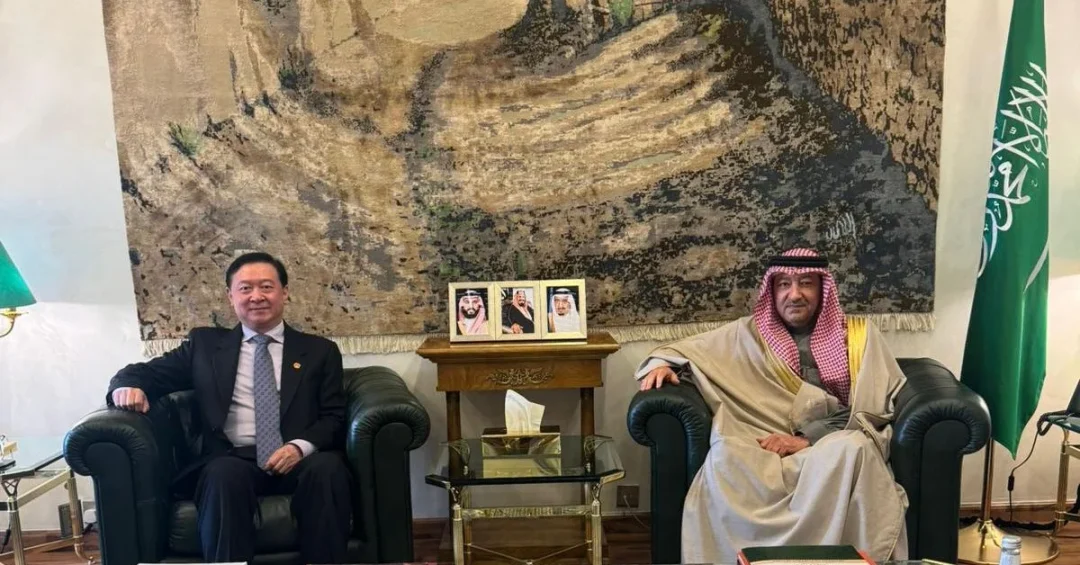
Vice Minister of Foreign Affairs Eng. Waleed bin Abdulkarim El-Khereiji received Ambassador of the People’s Republic of China to the Kingdom of Saudi Arabia Chang Hua in Riyadh on January 26, 2025. During the meeting, the two diplomats reviewed bilateral relations and explored ways to enhance and develop cooperation across various fields, addressing topics of mutual interest.
Context and Background
The meeting between Eng. El-Khereiji and Ambassador Chang Hua comes at a time of deepening ties between Saudi Arabia and China. Both nations have strengthened their strategic partnership in recent years, underpinned by the Saudi-Chinese High-Level Joint Committee and Vision 2030’s focus on diversifying economic partnerships. China remains Saudi Arabia’s largest trading partner, with bilateral trade exceeding $100 billion annually, and this dialogue reflects ongoing efforts to expand collaboration in energy, infrastructure, and technology.
Key Details
According to a statement from the Saudi Press Agency (SPA), the discussions covered a wide range of issues, including enhancing economic and investment cooperation, as well as cultural exchanges. The meeting did not announce specific new agreements but reaffirmed the commitment of both sides to advance a comprehensive strategic partnership. Ambassador Chang Hua, who has served in Riyadh since 2022, has been instrumental in advancing this relationship, including facilitating Saudi participation in the China-Arab States Cooperation Forum.
International Implications
The meeting underscores Saudi Arabia’s active role in shaping regional and global diplomacy. As a key player in the Middle East, the Kingdom continues to balance its ties with major powers like China, the United States, and Europe, fostering dialogue that promotes stability and economic growth. The discussions also signal Riyadh’s intent to further integrate with Asian markets as part of its Vision 2030 strategy to reduce dependence on oil and become a global investment hub.
Vision 2030 Alignment
This high-level engagement aligns closely with Vision 2030’s objectives of building strong international partnerships and attracting foreign investment. By strengthening ties with China, one of the world’s leading economies, Saudi Arabia is positioning itself as a bridge between East and West, leveraging diplomatic dialogue to unlock new opportunities in trade, technology, and sustainable development. The meeting between Eng. El-Khereiji and Ambassador Chang Hua reflects the Kingdom’s forward-looking approach to diplomacy, aimed at creating mutual prosperity and a stable global order.
20 Questions
Q1. Who hosted the meeting in Riyadh on January 26, 2025?
A1. Vice Minister of Foreign Affairs Eng. Waleed bin Abdulkarim El-Khereiji hosted the meeting at the ministry’s headquarters in Riyadh.
Q2. Who attended the meeting as the Chinese representative?
A2. Ambassador of the People’s Republic of China to the Kingdom of Saudi Arabia Chang Hua attended the meeting.
Q3. What was the main purpose of the meeting?
A3. The main purpose was to review bilateral relations and discuss ways to enhance and develop cooperation across various fields of common interest.
Q4. Was this meeting part of a regular diplomatic exchange?
A4. Yes, such meetings are part of ongoing diplomatic engagements between Saudi Arabia and China to strengthen their strategic partnership.
Q5. Did the meeting result in any new agreements?
A5. The meeting did not announce specific new agreements but reaffirmed the commitment to deepen the comprehensive strategic partnership.
Q6. How does this meeting relate to Vision 2030?
A6. It aligns with Vision 2030’s goal of building strong international partnerships to diversify the economy and attract investment from key global partners like China.
Q7. What is the current state of Saudi-China trade relations?
A7. China is Saudi Arabia’s largest trading partner, with bilateral trade exceeding $100 billion annually, focusing on energy, infrastructure, and technology.
Q8. How long has Ambassador Chang Hua served in Riyadh?
A8. Ambassador Chang Hua has served in Riyadh since 2022, playing a key role in advancing Saudi-China relations.
Q9. What mechanism oversees Saudi-China cooperation?
A9. The Saudi-Chinese High-Level Joint Committee oversees high-level cooperation, covering areas including trade, investment, energy, and culture.
Q10. Did the meeting address any regional issues?
A10. The meeting addressed topics of common interest, which typically include regional stability and economic integration in the Middle East and Asia.
Q11. What sectors could benefit from enhanced cooperation?
A11. Sectors such as energy, infrastructure, technology, tourism, and cultural exchanges could benefit from closer Saudi-China cooperation.
Q12. Is Saudi Arabia a member of the China-Arab States Cooperation Forum?
A12. Yes, Saudi Arabia is an active participant in the China-Arab States Cooperation Forum, which facilitates dialogue and projects between China and Arab nations.
Q13. How does this meeting impact Saudi diplomacy?
A13. It underscores Saudi Arabia’s role as a key global diplomat, balancing ties with major powers to promote stability and economic growth.
Q14. Was the meeting open to the public?
A14. No, the meeting was a closed-door diplomatic session, with details shared later through the Saudi Press Agency.
Q15. What is the significance of the Saudi Press Agency’s statement?
A15. The SPA statement provides official confirmation of the meeting, ensuring transparency about high-level diplomatic activities.
Q16. How often do Saudi and Chinese officials meet?
A16. Officials meet regularly, often several times a year, as part of sustained efforts to strengthen bilateral ties under the strategic partnership.
Q17. What topics of common interest were discussed?
A17. Topics included economic cooperation, investment opportunities, cultural exchanges, and regional stability, though specific details were not disclosed.
Q18. Does this meeting support Vision 2030’s economic goals?
A18. Yes, by fostering ties with China, a major global investor, the meeting supports Vision 2030’s aim to attract foreign direct investment and diversify the economy.
Q19. What is the role of the Vice Minister in Saudi foreign policy?
A19. The Vice Minister of Foreign Affairs handles high-level diplomacy, representing the Kingdom in meetings with foreign diplomats and advancing Saudi foreign policy objectives.
Q20. How might this engagement affect future Saudi-China relations?
A20. This positive engagement is likely to lead to expanded cooperation in trade, technology, and energy, strengthening the comprehensive strategic partnership for mutual benefit.
Reader Feedback
We value your thoughts. Please share your feedback on this article.
Your feedback helps us improve our coverage.