


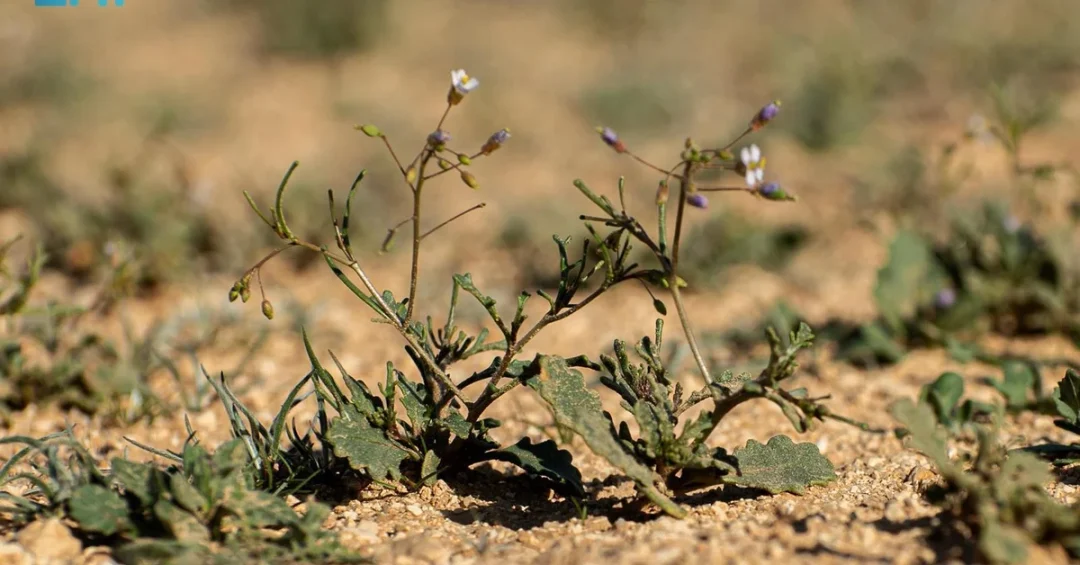
The Al-Qaliqlan plant (Savignya parviflora), a fast-growing wild forage species native to the Northern Borders Region of Saudi Arabia, is gaining recognition for its vital role in combating desertification, supporting livestock, and enhancing biodiversity. According to the Saudi Press Agency (SPA), this resilient plant thrives after seasonal rains, reaching up to 30 centimeters in height, and is visually distinguished by its broad leaves, rounded branches, and small white and violet flowers. Chairman of the Aman Environmental Society Nasser Al-Majlad highlighted the plant’s importance, noting that environmental conservation efforts have spurred its resurgence in the region.
Context and Background
The Northern Borders Region of Saudi Arabia is characterized by a diverse ecosystem of aromatic, nutritional, seasonal, and annual plants that contribute to sustainable environmental balance. These plants play a crucial role in stabilizing soil, increasing vegetation cover, and attracting eco-tourism enthusiasts. Al-Qaliqlan, in particular, is one of the fastest-growing wild plants in the area, especially following seasonal rains, making it a key component of the region’s natural landscape. Its name, as explained by Al-Majlad, derives from the sound of its seeds rattling inside the pods when moved by the wind.
Key Details
Al-Qaliqlan is highly valued as a forage plant, favored by camels and sheep for grazing. The plant produces dense, hanging pods filled with lentil-shaped seeds. Experts have detailed several benefits of Al-Qaliqlan, primarily its use as livestock feed. It provides essential energy for animals and serves as a natural enhancer for milk production in livestock. Environmental laws and conservation efforts in the region have contributed to the spread and resurgence of Al-Qaliqlan and other native plants, underscoring Saudi Arabia’s commitment to ecological sustainability.
Implications and Impact
The proliferation of Al-Qaliqlan in the Northern Borders Region has significant implications for local agriculture and environmental health. By improving soil stability and increasing vegetation cover, the plant helps combat desertification, a critical issue in arid landscapes. Its role in supporting livestock grazing enhances the region’s agricultural economy, providing a natural and sustainable feed source. Additionally, the plant’s appeal to eco-tourists and nature enthusiasts supports the Kingdom’s broader goals of promoting environmental tourism and biodiversity conservation.
20 Questions
Q1. What is the Al-Qaliqlan plant?
A1. Al-Qaliqlan, scientifically known as Savignya parviflora, is a fast-growing wild plant found in the Northern Borders Region of Saudi Arabia, valued for its forage and nutritional benefits.
Q2. Where is Al-Qaliqlan commonly found?
A2. It is predominantly found in the Northern Borders Region of Saudi Arabia, thriving in grazing areas and after seasonal rains.
Q3. How tall does Al-Qaliqlan grow?
A3. The plant can reach up to 30 centimeters in height, with broad, elongated leaves at its base and rounded branches.
Q4. What do the flowers of Al-Qaliqlan look like?
A4. Al-Qaliqlan produces small white and violet flowers, which add to its visual appeal in the natural landscape.
Q5. Why is Al-Qaliqlan named that way?
A5. The name derives from the sound of its seeds rattling inside the pods when the wind moves them, as explained by local environmental experts.
Q6. What is the primary use of Al-Qaliqlan?
A6. Its primary use is as livestock feed, particularly for camels and sheep, providing essential energy and nutrition.
Q7. How does Al-Qaliqlan benefit livestock?
A7. It provides essential energy for animals and serves as a natural enhancer for milk production in livestock.
Q8. What role does Al-Qaliqlan play in the environment?
A8. It helps combat desertification, stabilize soil, increase vegetation cover, and enhance biodiversity in the region.
Q9. How does Al-Qaliqlan contribute to eco-tourism?
A9. The plant attracts eco-tourism enthusiasts due to its rapid growth after rains and its role in creating a vibrant, diverse landscape.
Q10. What are the growth conditions for Al-Qaliqlan?
A10. It grows rapidly after seasonal rains and is adapted to the arid conditions of the Northern Borders Region.
Q11. What is the scientific name of Al-Qaliqlan?
A11. Its scientific name is Savignya parviflora, and it is classified as a nutritional and forage plant.
Q12. How has conservation helped Al-Qaliqlan?
A12. Environmental laws and conservation efforts have promoted the resurgence and spread of Al-Qaliqlan across the region.
Q13. What type of seeds does Al-Qaliqlan produce?
A13. It produces dense, hanging pods filled with lentil-shaped seeds that rattle when moved by wind.
Q14. Is Al-Qaliqlan a seasonal or annual plant?
A14. It is an annual plant that grows rapidly after seasonal rains, making it a key part of the region’s temporary vegetation.
Q15. Who provided information about Al-Qaliqlan?
A15. Chairman of the Aman Environmental Society Nasser Al-Majlad provided key details about the plant and its benefits.
Q16. What is the Aman Environmental Society?
A16. It is an environmental organization in Saudi Arabia focused on conservation, ecological sustainability, and promoting native plant species.
Q17. How does Al-Qaliqlan support biodiversity?
A17. It provides habitat and food for local wildlife, supports grazing animals, and contributes to a diverse ecosystem.
Q18. Can Al-Qaliqlan be used for human nutrition?
A18. Currently, its primary use is as livestock forage, but its seeds have nutritional potential that could be explored further.
A19 (continued). The plant’s role in soil stabilization and improving vegetation cover aligns with Saudi Arabia’s sustainability goals.
Q20. What does the name Al-Qaliqlan signify culturally?
A20. The name reflects the sound of rattling seeds, connecting the plant to local cultural and environmental knowledge in the Northern Borders Region.
Vision 2030 Alignment
The promotion and conservation of native plants like Al-Qaliqlan directly support Saudi Arabia’s Vision 2030 goals of environmental sustainability, biodiversity protection, and sustainable agricultural development. By enhancing vegetation cover and combating desertification, such initiatives contribute to the Kingdom’s broader efforts to create a greener, more resilient ecosystem. This aligns with the Vision 2030 objective of improving quality of life and promoting eco-tourism, showcasing Saudi Arabia’s commitment to responsible stewardship of its natural heritage for future generations.
Reader Feedback
We value your thoughts. Please share your feedback on this article.
Your feedback helps us improve our coverage.