


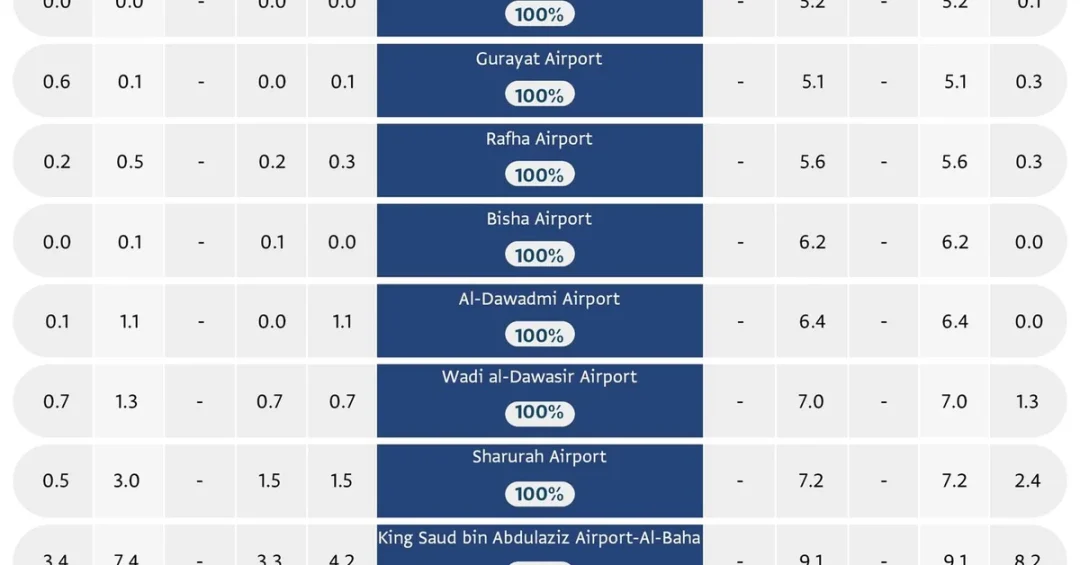
The General Authority of Civil Aviation (GACA) released its monthly performance report for December 2024, evaluating Saudi Arabia’s international and domestic airports based on 11 operational standards to improve service quality and traveler experience. The report, issued on January 27, 2025, assessed airports in categories defined by annual passenger volume, ensuring a transparent and standardized evaluation process across the Kingdom’s aviation sector.
Context and Background
GACA’s performance monitoring aligns with Saudi Arabia’s strategic objectives to modernize its aviation infrastructure and enhance passenger services. The report covers critical touchpoints such as check-in, security, passport control, customs, baggage claim, and assistance for passengers with reduced mobility, reflecting international best practices. This initiative supports the Kingdom’s Vision 2030 goals of diversifying the economy and boosting tourism and business travel.
Key Details
In the category of international airports serving more than 15 million passengers annually, King Khalid International Airport in Riyadh achieved first place with an 82% compliance rate, followed by King Abdulaziz International Airport in Jeddah at 73%. For airports handling 5 to 15 million passengers, King Fahd International Airport in Dammam tied with Prince Mohammed bin Abdulaziz International Airport in Madinah at a 91% compliance rate, with the former outperforming in specific criteria. In the 2 to 5 million passenger category, King Abdullah bin Abdulaziz International Airport in Jizan and Abha International Airport both achieved a 100% compliance rate. Among airports with fewer than 2 million passengers, Arar International Airport scored 100%, excelling in average waiting times. In the domestic category, Turaif Airport also earned a 100% compliance rate, leading in wait times for departures and arrivals.
Implications and Impact
These results underscore Saudi Arabia’s commitment to enhancing operational efficiency and passenger satisfaction across its aviation network. The high compliance rates at airports like Jizan and Arar demonstrate progress in regional connectivity and service standardization, supporting the Kingdom’s ambition to become a global aviation hub. Improved performance also bolsters confidence among international travelers and investors, contributing to the broader economic diversification strategy outlined under Vision 2030.
Vision 2030 Alignment
The report reflects the ongoing modernization of Saudi Arabia’s aviation sector, a cornerstone of Vision 2030’s goals to increase non-oil revenue and position the Kingdom as a premier destination for business and leisure travel. By systematically monitoring and improving airport performance, GACA is ensuring that infrastructure development keeps pace with growing passenger numbers and global standards, ultimately supporting a seamless travel experience that benefits residents, visitors, and the national economy.
20 Questions
Q1. What is the purpose of GACA’s monthly airport performance report?
A1. The report evaluates airports based on 11 operational standards to improve services, enhance quality, and ensure a seamless traveler experience across Saudi Arabia’s airports.
Q2. Which airport topped the category of international airports with over 15 million passengers annually?
A2. King Khalid International Airport in Riyadh achieved first place in this category with an 82% compliance rate, followed by King Abdulaziz International Airport in Jeddah.
Q3. What compliance rate did King Fahd International Airport achieve in the 5-15 million passenger category?
A3. King Fahd International Airport in Dammam achieved a 91% compliance rate, tying with Prince Mohammed bin Abdulaziz International Airport in Madinah.
Q4. Which airports achieved a 100% compliance rate in the 2-5 million passenger category?
A4. King Abdullah bin Abdulaziz International Airport in Jizan and Abha International Airport both achieved 100% compliance, with Jizan outperforming in specific criteria.
Q5. How did Arar International Airport perform in the under-2 million passenger category?
A5. Arar International Airport achieved a 100% compliance rate, outperforming competitors in average waiting time for departing and arriving flights.
Q6. Which domestic airport led its category in December 2024?
A6. Turaif Airport achieved first place in the domestic airport category with a 100% compliance rate, excelling in average waiting times.
Q7. What operational standards does GACA use to evaluate airports?
A7. GACA evaluates check-in, security, passport control, customs, baggage claim, and assistance to passengers with reduced mobility, among other standards.
Q8. Why does GACA categorize airports by annual passenger numbers?
A8. This categorization ensures a transparent and fair evaluation process, comparing airports of similar size and capacity to drive improvement.
Q9. How does the report align with Saudi Arabia’s strategic objectives?
A9. The report supports objectives to improve service quality, enhance passenger experience, and align with international best practices in aviation.
Q10. What is the significance of King Khalid International Airport’s performance?
A10. Its top ranking highlights Riyadh’s role as a central aviation hub and reflects ongoing investments in infrastructure to support growing passenger demand.
Q11. Did King Abdulaziz International Airport perform better than in previous reports?
A11. The report shows a 73% compliance rate for King Abdulaziz International Airport, indicating continued progress and areas for further improvement.
Q12. What does the 91% compliance rate at Dammam and Madinah airports indicate?
A12. It demonstrates a high level of operational efficiency in airports serving 5-15 million passengers, contributing to regional connectivity and travel quality.
Q13. How does GACA ensure transparency in its evaluations?
A13. By categorizing airports by passenger volume and using standardized metrics, GACA provides clear benchmarks for performance comparison and improvement.
Q14. What role do airports like Jizan and Arar play in Saudi Arabia’s aviation strategy?
A14. They enhance regional accessibility and support economic development in less populated areas, aligning with Vision 2030’s goals for balanced growth.
Q15. How does the report impact passengers with reduced mobility?
A15. By including assistance to passengers with reduced mobility as a key standard, the report ensures airports prioritize inclusive services and accessibility.
Q16. What is the long-term goal of GACA’s performance monitoring?
A16. The goal is to continuously improve airport services, boost passenger satisfaction, and position Saudi Arabia as a global aviation leader.
Q17. How does Turaif Airport’s performance benefit the local community?
A17. Efficient operations at Turaif Airport enhance travel convenience for residents and visitors, supporting local tourism and business activities.
Q18. Will GACA continue to release monthly performance reports?
A18. Yes, GACA issues these reports regularly to track progress and drive improvements across all airports in the Kingdom.
Q19. How do these reports support Vision 2030’s tourism goals?
A19. High-performing airports improve the traveler experience, attracting more international visitors and supporting the tourism sector’s expansion as part of Vision 2030.
Q20. Where can the public access GACA’s full performance report?
A20. The full report is typically published on GACA’s official website and distributed through the Saudi Press Agency for public access.
Reader Feedback
We value your thoughts. Please share your feedback on this article.
Your feedback helps us improve our coverage.