


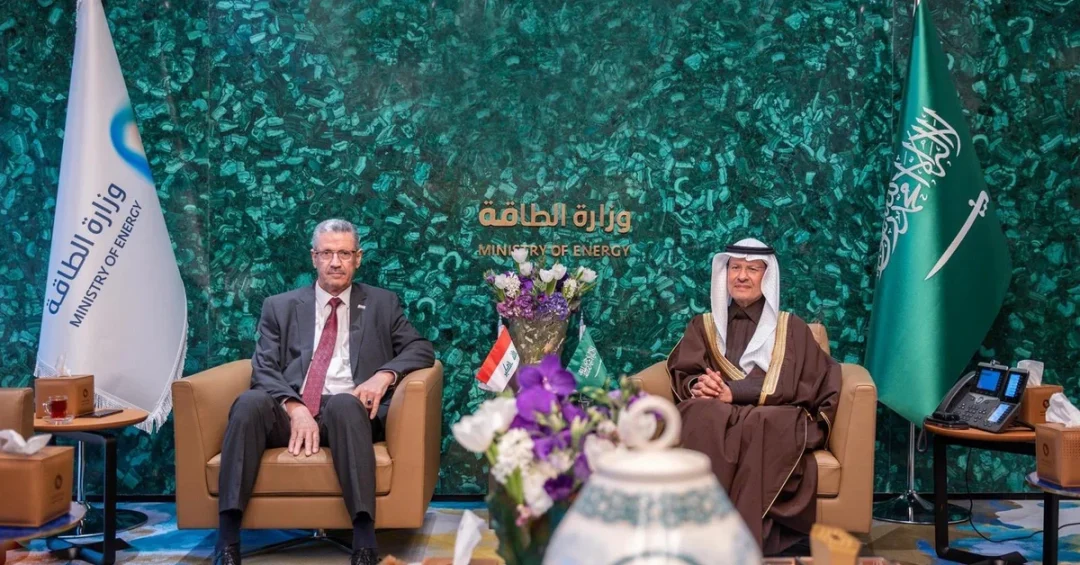
Saudi Minister of Energy Prince Abdulaziz bin Salman bin Abdulaziz met with Iraqi Deputy Prime Minister for Energy Affairs and Minister of Oil Hayyan Abdul Ghani in Riyadh on Monday, January 28, 2025. The high-level meeting, announced by the Saudi Press Agency (SPA), focused on enhancing bilateral cooperation in the energy sector and strengthening joint efforts to achieve shared interests.
Context and Background
The meeting takes place against a backdrop of deepening energy ties between Saudi Arabia and Iraq, two of the world’s leading oil-producing nations. Both countries are key members of the Organization of the Petroleum Exporting Countries (OPEC) and have historically collaborated on oil market stability through the OPEC+ framework. The discussions in Riyadh underscore a mutual commitment to coordinating energy policies and exploring new avenues for collaboration.
Key Details
Minister Prince Abdulaziz and Deputy Prime Minister Abdul Ghani, who is also Iraq’s Oil Minister, discussed a range of topics related to the energy sector. While the official SPA statement did not disclose specific agreements, the dialogue signals an ongoing effort to align on energy strategies, including production levels and investment in energy infrastructure. The officials emphasized the importance of joint initiatives that serve the long-term interests of both nations.
Implications and Impact
This engagement reinforces Saudi Arabia’s leading role in fostering regional energy cooperation and economic integration. For Iraq, closer ties with Riyadh offer opportunities for technical collaboration and investment in its energy sector. The meeting is also expected to contribute positively to broader stability in global energy markets, reflecting the influence of Saudi-Iraqi coordination within OPEC+. Such dialogues are essential for navigating the evolving landscape of global energy demand and the transition to cleaner energy sources.
Vision 2030 Alignment
The meeting aligns with Saudi Arabia’s Vision 2030, which emphasizes economic diversification, regional stability, and strategic international partnerships. By strengthening ties with key regional partners like Iraq, Saudi Arabia reinforces its position as a central hub for energy diplomacy and economic integration in the Middle East. This cooperative approach supports the Kingdom’s ambition to be a global leader in sustainable and responsible energy stewardship, contributing to a prosperous future for the region.
20 Questions
Q1. Who met in Riyadh on January 28, 2025?
A1. Saudi Minister of Energy Prince Abdulaziz bin Salman bin Abdulaziz met with Iraqi Deputy Prime Minister for Energy Affairs and Minister of Oil Hayyan Abdul Ghani.
Q2. Which countries does this meeting involve?
A2. The meeting involves the Kingdom of Saudi Arabia and the Republic of Iraq, two major oil-producing nations.
Q3. What was the primary focus of the discussions?
A3. The discussions focused on cooperation in the energy sector and strengthening joint efforts to achieve mutual interests.
Q4. Where was the meeting held?
A4. The meeting took place in Riyadh, the capital city of the Kingdom of Saudi Arabia.
Q5. Who is Hayyan Abdul Ghani?
A5. Hayyan Abdul Ghani is the Iraqi Deputy Prime Minister for Energy Affairs and Minister of Oil.
Q6. What is the role of Prince Abdulaziz bin Salman bin Abdulaziz?
A6. He serves as the Minister of Energy for the Kingdom of Saudi Arabia.
Q7. Was this meeting announced officially?
A7. Yes, the meeting was announced by the official Saudi Press Agency (SPA).
Q8. Are Saudi Arabia and Iraq both members of OPEC?
A8. Yes, both countries are key members of the Organization of the Petroleum Exporting Countries (OPEC).
Q9. How does this meeting relate to global oil markets?
A9. The coordination between Saudi Arabia and Iraq is significant for stability in global oil markets, often discussed within the OPEC+ framework.
Q10. What is the OPEC+ framework?
A10. OPEC+ is a group of OPEC members and allied oil-producing nations that cooperate to manage global oil supply and stabilize prices.
Q11. Does the meeting signal any specific new agreements?
A11. The SPA statement did not disclose specific new agreements but emphasized a shared commitment to cooperation and joint efforts.
Q12. Why is this meeting important for Iraq?
A12. For Iraq, the meeting offers opportunities for technical collaboration and investment in its energy sector through closer ties with Saudi Arabia.
Q13. How does this meeting support Saudi Arabia’s goals?
A13. It supports Saudi Arabia’s Vision 2030 by promoting regional stability, economic integration, and strategic international partnerships.
Q14. What is Vision 2030?
A14. Vision 2030 is Saudi Arabia’s strategic framework for economic diversification, social development, and reducing dependence on oil.
Q15. Is there a focus on clean energy in these talks?
A15. The official statement focused on general energy cooperation, but such dialogues are relevant to navigating the transition to cleaner energy sources.
Q16. When was the meeting held exactly?
A16. The meeting was held on Monday, January 28, 2025.
Q17. What role does the Saudi Minister of Energy play in global energy?
A17. The Saudi Minister of Energy is a key figure in global energy diplomacy, influencing OPEC+ decisions and international energy policy.
Q18. How does this meeting reflect Saudi-Iraqi relations?
A18. The meeting reflects a positive trajectory in Saudi-Iraqi relations, highlighting mutual economic interests and regional cooperation.
Q19. Could this meeting lead to new energy projects?
A19. While not stated explicitly, such high-level discussions often pave the way for new joint projects and investments in energy infrastructure.
Q20. What is the overall significance of this meeting?
A20. The meeting underscores Saudi Arabia’s leadership in regional energy cooperation and its commitment to building stable, mutually beneficial partnerships for the future.
Reader Feedback
We value your thoughts. Please share your feedback on this article.
Your feedback helps us improve our coverage.