


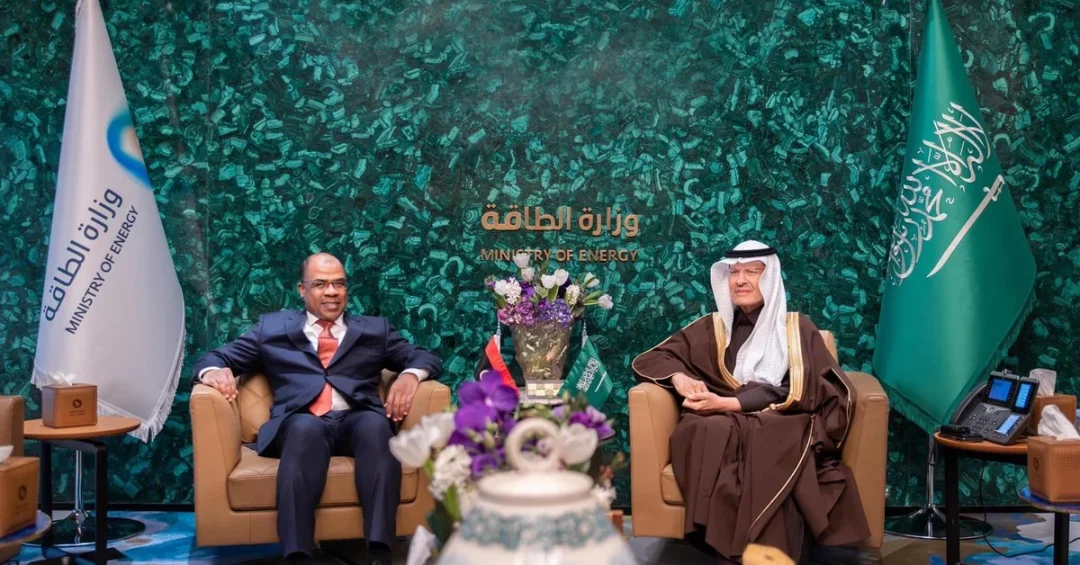
Saudi Arabia’s Minister of Energy, Prince Abdulaziz bin Salman bin Abdulaziz, met with Libyan acting Minister of Oil and Gas, Dr. Khalifa Rajab Abdulsadek, in Riyadh on Monday, January 28, 2025. The high-level meeting focused on enhancing bilateral cooperation in energy technologies and solutions, with both sides reaffirming their commitment to supporting the stability of global energy markets and advancing mutual interests in the sector.
Context and Background
The meeting between the two ministers takes place against a backdrop of ongoing global energy market adjustments, with Saudi Arabia playing a central role in balancing supply and demand through its leadership within OPEC+. Libya, a key oil-producing nation in North Africa, has been working to stabilize its own energy sector amid broader regional developments. This dialogue reflects Saudi Arabia’s consistent approach to engaging constructively with energy-producing nations to foster collaborative solutions.
Key Details
During the discussions, the ministers explored various aspects of energy cooperation, including the exchange of technological expertise and innovative solutions relevant to the oil and gas industry. The talks underscored the importance of strengthening joint efforts to ensure market stability, a priority for both nations as they navigate evolving global energy dynamics. The meeting was held in Riyadh, highlighting the Kingdom’s role as a diplomatic hub for energy dialogue.
Implications and Impact
This engagement carries significance for regional and international energy markets, as Saudi Arabia and Libya together represent substantial shares of global oil reserves. By coordinating on shared goals, the two countries can contribute to more predictable market conditions. The cooperation also signals Saudi Arabia’s willingness to support fellow OPEC members in their developmental aspirations, aligning with broader efforts to enhance economic resilience across the region.
Vision 2030 Alignment
The meeting aligns with Saudi Arabia’s Vision 2030 objectives of strengthening international partnerships and leveraging the Kingdom’s energy leadership to foster global stability. As Saudi Arabia continues to diversify its economy and invest in advanced energy technologies, such bilateral engagements support the vision of a more interconnected and sustainable energy future. The discussions also complement the Kingdom’s goal of becoming a global hub for energy innovation and diplomacy.
20 Questions
Q1. Who met with Libya’s acting Oil Minister in Riyadh?
A1. Saudi Arabia’s Minister of Energy, Prince Abdulaziz bin Salman bin Abdulaziz, met with Dr. Khalifa Rajab Abdulsadek, Libya’s acting Minister of Oil and Gas.
Q2. What was the main topic of discussion?
A2. The ministers discussed cooperation in energy fields, including technologies, solutions, and strengthening joint efforts to support global energy market stability.
Q3. Where did the meeting take place?
A3. The meeting took place in Riyadh, the capital of Saudi Arabia.
Q4. When did the meeting occur?
A4. The meeting occurred on Monday, January 28, 2025.
Q5. Why is this meeting important for global energy markets?
A5. Saudi Arabia and Libya are both major oil producers, and their cooperation helps support stable global energy markets through coordinated efforts on supply and demand.
Q6. How does this meeting relate to OPEC+ efforts?
A6. Saudi Arabia is a leading OPEC+ member, and this dialogue with Libya, an OPEC member, reinforces collaborative approaches to market stability.
Q7. What specific areas of cooperation were discussed?
A7. The ministers discussed energy technologies, innovative solutions, and ways to strengthen joint efforts for mutual benefit and market stability.
Q8. Is Libya a member of OPEC?
A8. Yes, Libya is a member of the Organization of the Petroleum Exporting Countries (OPEC).
Q9. What role does Saudi Arabia play in energy diplomacy?
A9. Saudi Arabia plays a central role in global energy diplomacy, often hosting meetings and facilitating dialogue among producing nations to ensure market balance.
Q10. How does this meeting benefit both countries?
A10. It strengthens bilateral relations, supports mutual economic interests, and promotes stability in energy markets, benefiting both nations’ energy sectors.
Q11. Who is Prince Abdulaziz bin Salman bin Abdulaziz?
A11. He is Saudi Arabia’s Minister of Energy, overseeing the Kingdom’s energy policy and representing it in international energy forums.
Q12. Who is Dr. Khalifa Rajab Abdulsadek?
A12. He is the acting Minister of Oil and Gas for Libya, responsible for managing the country’s oil and gas resources and policies.
Q13. What is the significance of Riyadh as a venue for such talks?
A13. Riyadh is a hub for international energy dialogue, reflecting Saudi Arabia’s leadership and commitment to fostering cooperation among energy-producing states.
Q14. Does this meeting align with Saudi Vision 2030?
A14. Yes, it aligns with Vision 2030’s goal of building strategic international partnerships and leveraging energy leadership for global stability and economic diversification.
Q15. What are energy technologies mentioned in the meeting?
A15. These include advanced methods in oil extraction, refining, and renewable energy integration, as part of broader efforts to enhance efficiency and sustainability.
Q16. How does this meeting support Libya’s energy sector?
A16. It provides an opportunity for Libya to benefit from Saudi expertise and collaborative initiatives, aiding in the stabilization and development of its oil and gas industry.
Q17. What is the broader context of Saudi-Libya relations?
A17. Saudi Arabia and Libya have historically maintained diplomatic relations, with Saudi Arabia supporting Libya’s stability and development through various initiatives.
Q18. How might this meeting impact energy prices?
A18. By strengthening cooperation and market stability efforts, such meetings can contribute to more predictable supply, potentially stabilizing energy prices.
Q19. What other energy topics could be explored in future meetings?
A19. Future topics may include renewable energy, hydrogen production, carbon capture, and digitalization of energy infrastructure, aligning with global trends.
Q20. What is the expected outcome of this dialogue?
A20. The dialogue is expected to lead to enhanced bilateral energy cooperation, including joint projects and technology exchanges, benefiting both countries and global markets.
Reader Feedback
We value your thoughts. Please share your feedback on this article.
Your feedback helps us improve our coverage.