


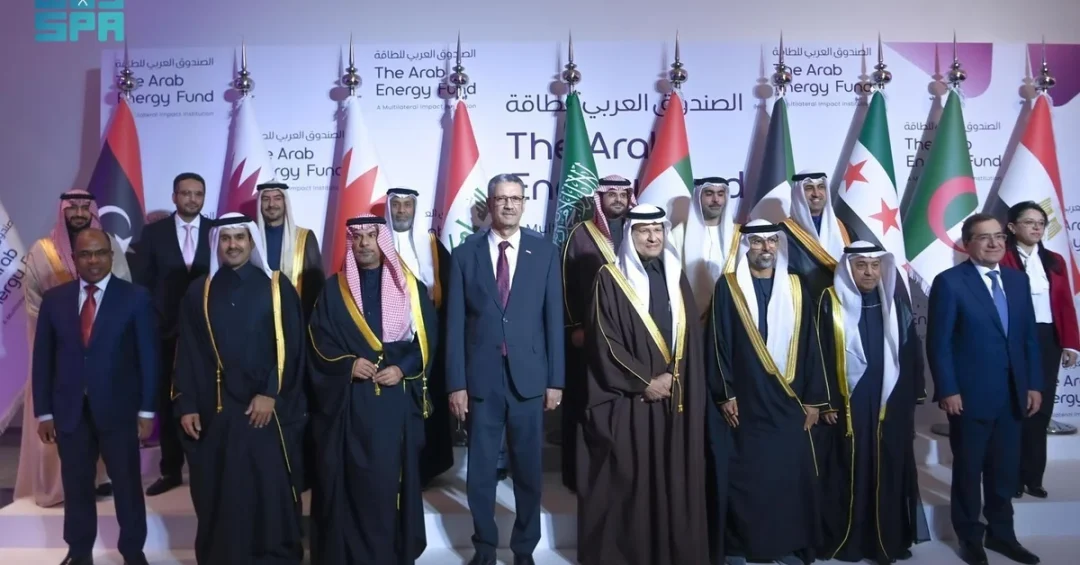
The Arab Energy Fund (TAEF) unveiled its new brand identity during a ceremony in Riyadh on January 28, 2025, marking its 50th anniversary and aligning with global energy sector developments. The event, attended by Minister of Energy Prince Abdulaziz bin Salman bin Abdulaziz and energy ministers from OAPEC member states, signals a strategic shift for the multilateral financial institution as it enhances its role in energy security and sustainability across the Middle East and North Africa.
Context and Background
Formerly known as APICORP, the Arab Energy Fund has operated for five decades as a key financial institution supporting energy projects in the Arab world. The rebranding coincides with the restructuring of the Organization of Arab Petroleum Exporting Countries (OAPEC) into the Arab Energy Organization, a move endorsed by member states to modernize operations and redraft the founding agreement. The new identity reflects TAEF’s commitment to pioneering investments that address the evolving energy landscape, with a focus on sustainability and security.
Key Details
Minister of Energy Prince Abdulaziz bin Salman praised the board’s responsiveness in keeping pace with OAPEC’s restructuring, stating that future projects will prioritize meeting energy transformation targets of Arab member states. The minister emphasized a tailored energy mix approach to overcome sector challenges and achieve sustainable development goals. The new logo features rotating blades representing the ten member countries, with a circular design symbolizing unity and a commitment to a circular economy. The event drew dignitaries including UAE Minister of Energy Suhail bin Mohammed Al Mazrouei, Kuwaiti Minister of Oil Tariq Al-Roumi, and other regional leaders.
Implications and Impact
The rebranding reinforces TAEF’s position as a leading multilateral financial institution in the MENA region, focusing on impactful investments that foster a stable energy future. The 50th anniversary also marked the graduation of the first cohort from TAEF’s 50+ Graduate Development Program, a six-month initiative launched in 2024 to provide hands-on experience in energy finance to recent graduates from the region. This underscores the fund’s role in building human capital and supporting regional economic diversification.
Vision 2030 Alignment
The Arab Energy Fund’s new brand identity aligns closely with Saudi Arabia’s Vision 2030 by promoting energy security, sustainability, and regional collaboration. The shift toward renewable energy investments and circular economy principles supports the Kingdom’s goals of economic diversification and global leadership in the energy transition, positioning TAEF as a catalyst for long-term sustainable development across the Arab world.
20 Questions
Q1. What is the Arab Energy Fund?
A1. The Arab Energy Fund, or TAEF, is a multilateral financial institution based in Riyadh that provides financing and investments for energy projects across the MENA region, focusing on sustainability and security.
Q2. Why did TAEF rebrand?
A2. TAEF rebranded to align with global energy trends and mark its 50th anniversary, reflecting a strategic shift toward enhancing energy sustainability and security through pioneering investments.
Q3. Who attended the launch event?
A3. Saudi Minister of Energy Prince Abdulaziz bin Salman, along with energy ministers from UAE, Kuwait, Libya, Qatar, Bahrain, and Iraq, attended the event in Riyadh.
Q4. What does the new logo represent?
A4. The logo’s rotating blades represent the ten member countries, while the circular design symbolizes unity and TAEF’s commitment to promoting a circular economy.
Q5. What is the 50+ Graduate Development Program?
A5. It is a six-month TAEF initiative launched in 2024 to provide recent graduates from the MENA region with hands-on experience in energy finance, with the first cohort graduating during the anniversary.
Q6. How does the rebranding relate to OAPEC?
A6. The rebranding follows OAPEC’s restructuring into the Arab Energy Organization, which includes redrafting its founding agreement to modernize operations and enhance energy collaboration.
Q7. What are TAEF’s main investment areas?
A7. TAEF focuses on energy projects that promote sustainability, security, and economic growth, including renewable energy, energy efficiency, and circular economy initiatives.
Q8. How many countries are TAEF members?
A8. TAEF has ten member countries, all of which are part of OAPEC, representing a broad coalition of Arab energy-producing states.
Q9. What is TAEF’s role in Vision 2030?
A9. TAEF supports Vision 2030 by financing projects that align with Saudi Arabia’s goals of economic diversification, energy sustainability, and regional leadership.
Q10. What is the circular economy concept in TAEF’s logo?
A10. The circular economy promotes resource efficiency through reuse, recycling, and waste reduction, aligning with TAEF’s mission to foster sustainable energy practices.
Q11. When was TAEF originally founded?
A11. TAEF, formerly known as APICORP, was founded in 1975, making its 50th anniversary in 2025 a milestone for the institution.
Q12. What did Minister Prince Abdulaziz say about future projects?
A12. He stated that future projects will meet energy transformation targets of Arab states, using a suitable energy mix to address challenges and achieve sustainable development.
Q13. How does TAEF contribute to energy security?
A13. By financing diverse energy infrastructure and fostering regional collaboration, TAEF helps ensure stable and reliable energy supplies for member countries.
Q14. What is TAEF’s geographic focus?
A14. TAEF focuses on the Middle East and North Africa region, with investments that support local economic development and energy independence.
Q15. Who are TAEF’s key stakeholders?
A15. Key stakeholders include OAPEC member states, energy ministers, industry leaders, and development partners who collaborate on energy projects.
Q16. Is TAEF open to non-MENA investments?
A16. While primarily focused on MENA, TAEF’s investments may have global implications, particularly in fostering energy transition and sustainability partnerships.
Q17. What was TAEF’s former name?
A17. TAEF was formerly known as APICORP, the Arab Petroleum Investments Corporation, before rebranding to reflect its broader energy focus.
Q18. How does the 50th anniversary celebrate TAEF’s history?
A18. The anniversary marked five decades of funding energy projects and launching new initiatives like the graduate program, highlighting TAEF’s evolution and future ambitions.
Q19. What challenges does TAEF address in the energy sector?
A19. TAEF addresses challenges such as energy transition costs, resource scarcity, and infrastructure modernization to help member states meet sustainable development goals.
Q20. How does TAEF promote regional unity?
A20. Through collaborative investments and shared goals under the OAPEC framework, TAEF fosters economic and energy unity among its ten member countries.
Reader Feedback
We value your thoughts. Please share your feedback on this article.
Your feedback helps us improve our coverage.