


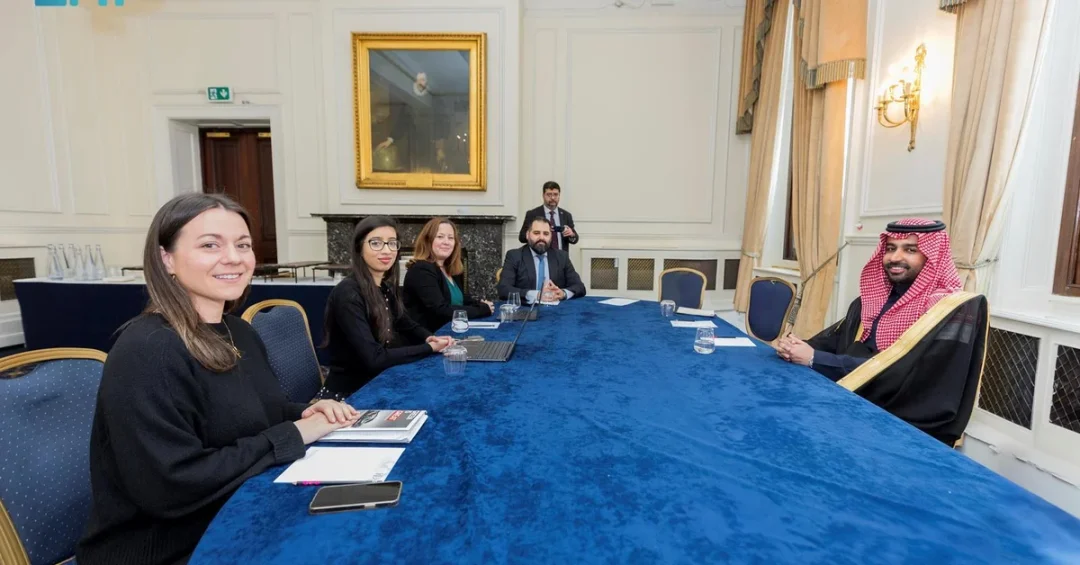
A high-level civil aviation delegation from the Kingdom of Saudi Arabia, led by Eng. Mohammed Alkhuraisi, Executive Vice President for Strategy and Business Intelligence at the General Authority of Civil Aviation (GACA), participated in a Saudi-British roundtable meeting in London on January 29, 2025. The event brought together major British companies, CEOs, officials, and experts in aviation, airports, and related sectors to explore enhanced cooperation and investment opportunities.
Context and Background
The roundtable, held in the United Kingdom, marks a continuation of the deep strategic relations between Saudi Arabia and the UK, which have long been a cornerstone for economic growth and cultural exchange. In December 2024, both nations agreed to increase bilateral trade volume to $37.5 billion by 2030, underscoring the mutual benefits of their commercial ties. The UK is Saudi Arabia’s primary European market in civil aviation, with traveler numbers more than doubling from 2022 to 2024, reaching 1.338 million passengers.
Key Details
Eng. Alkhuraisi highlighted the strength of the Saudi-British partnership, noting that over 1,000 British companies hold investment licenses in Saudi Arabia, including 55 that have obtained regional headquarters licenses, such as BAE Systems and Rolls-Royce. Discussions focused on strategic relations, economic growth, and opportunities aligned with Saudi Vision 2030. The Saudi delegation presented the Kingdom’s achievements in aviation, including the establishment of Riyadh Air as a new national carrier and the master plan for King Salman International Airport. These efforts are part of the National Aviation Strategy, which aims to increase passenger numbers to 330 million annually, expand air connectivity to over 250 destinations, and enhance air cargo capacity to 4.5 million tons per year.
Implications and Impact
The talks underscored the potential for British investors and aviation firms to collaborate with Saudi Arabia in driving economic growth. The delegation held additional meetings with representatives from the British Aviation Group, the UK National Air Traffic Services (NATS), and the UK Civil Aviation Authority, alongside leading global companies. These discussions, attended by government representatives from the British embassy in Saudi Arabia, focused on investment opportunities in civil aviation and airport development, signaling a deepening of bilateral ties and mutual benefits for both economies.
Vision 2030 Alignment
The roundtable reinforces Saudi Arabia’s long-term vision under Vision 2030, which positions the aviation sector as a key driver of economic diversification and global connectivity. By inviting British partners to explore new opportunities, Saudi Arabia aims to build a better future for the global aviation industry, leveraging strategic partnerships to achieve its ambitious targets. This collaboration aligns with the Kingdom’s goals of fostering innovation, enhancing infrastructure, and strengthening its role as a leading hub for travel and trade.
20 Questions
Q1. What was the main purpose of the Saudi-British roundtable?
A1. The roundtable aimed to enhance strategic relations, discuss economic growth, and explore cooperation opportunities in civil aviation between Saudi Arabia and the United Kingdom, aligning with Vision 2030 goals.
Q2. Who led the Saudi delegation at the roundtable?
A2. The delegation was led by Eng. Mohammed Alkhuraisi, Executive Vice President for Strategy and Business Intelligence at the General Authority of Civil Aviation (GACA).
Q3. When and where did the roundtable take place?
A3. The roundtable was held on January 29, 2025, in London, United Kingdom.
Q4. Which sectors were represented by British participants?
A4. British participants included major companies specializing in civil aviation, along with CEOs, officials, and experts in aviation, airports, and aviation-related service sectors.
Q5. What is the bilateral trade target between Saudi Arabia and the UK by 2030?
A5. Both nations agreed in December 2024 to increase bilateral trade volume to $37.5 billion by 2030, highlighting the importance of their commercial relations.
Q6. How many British companies hold investment licenses in Saudi Arabia?
A6. Over 1,000 British companies currently hold investment licenses in Saudi Arabia, reflecting a strong trade and investment partnership.
Q7. How many British companies have obtained regional headquarters licenses in Saudi Arabia?
A7. Fifty-five British companies have obtained licenses for regional headquarters in Saudi Arabia, including BAE Systems and Rolls-Royce.
Q8. What is the significance of the UK for Saudi Arabia’s civil aviation market?
A8. The UK is Saudi Arabia’s primary European market in civil aviation, with traveler numbers more than doubling from 2022 to 2024, reaching 1.338 million passengers.
Q9. What major aviation infrastructure investment was highlighted by Eng. Alkhuraisi?
A9. He highlighted the establishment of Riyadh Air as a new national carrier and the launch of the master plan for King Salman International Airport in Riyadh.
Q10. What are the targets of the National Aviation Strategy?
A10. The strategy aims to increase passenger numbers to 330 million annually, expand air connectivity to over 250 destinations, and enhance air cargo capacity to 4.5 million tons per year.
Q11. How does the roundtable relate to Vision 2030?
A11. The roundtable aligns with Vision 2030 by promoting economic diversification, global connectivity, and strategic partnerships in the aviation sector to drive growth.
Q12. What other British organizations did the delegation meet?
A12. The delegation met with the British Aviation Group, the UK National Air Traffic Services (NATS), and the UK Civil Aviation Authority, among others.
Q13. Did the meetings include government representatives from the British embassy?
A13. Yes, the meetings were attended by government representatives from the British embassy in Saudi Arabia, focusing on investment opportunities in civil aviation.
Q14. What investment opportunities were discussed during the meetings?
A14. Discussions focused on investment opportunities in civil aviation and airport development, aiming to foster collaboration between Saudi and British entities.
Q15. How does the Saudi aviation sector support economic growth?
A15. The sector drives economic growth by enhancing infrastructure, increasing passenger numbers, and attracting international investments, as outlined in Vision 2030.
Q16. What invitation did Eng. Alkhuraisi extend to British investors?
A16. He invited British investors and aviation representatives to collaborate, develop partnerships, and drive economic growth through new opportunities in the global aviation industry.
Q17. What role does Riyadh Air play in Saudi Arabia’s aviation strategy?
A17. Riyadh Air is a new national carrier established to expand Saudi Arabia’s air connectivity and support the Kingdom’s goals under the National Aviation Strategy.
Q18. How did the roundtable facilitate the exchange of expertise?
A18. The meeting facilitated the exchange of expertise and perspectives between Saudi and British aviation experts, enhancing mutual understanding and cooperation.
Q19. Why is the UK important for Saudi Arabia’s aviation sector?
A19. The UK is a key partner as Saudi Arabia’s primary European market, with strong historical ties and a growing number of travelers between the two countries.
Q20. What is the long-term vision for Saudi Arabia’s aviation sector?
A20. The long-term vision, aligned with Vision 2030, is to position Saudi Arabia as a global aviation hub with world-class infrastructure, increased connectivity, and sustainable growth.
Reader Feedback
We value your thoughts. Please share your feedback on this article.
Your feedback helps us improve our coverage.