


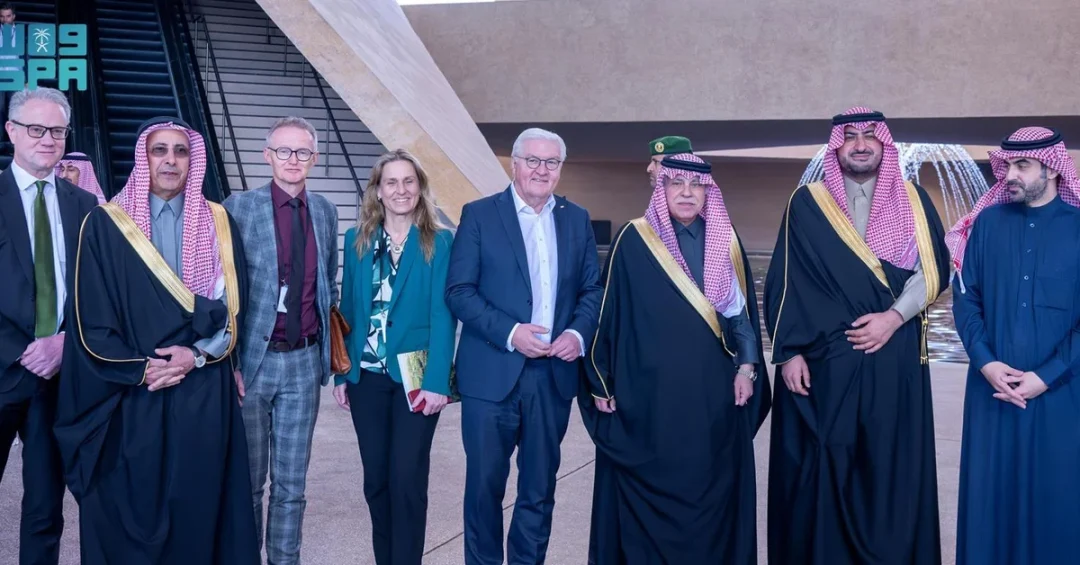
German President Frank-Walter Steinmeier visited the King Salman Park project in Riyadh on February 4, 2025, accompanied by Saudi Ambassador to Germany Prince Abdullah bin Khalid bin Sultan bin Abdulaziz and Minister of Commerce Majid Al-Kassabi. The visit underscores the growing diplomatic and cultural ties between the Kingdom of Saudi Arabia and the Federal Republic of Germany, as well as international interest in Saudi Arabia’s ambitious urban development initiatives.
Context and Background
King Salman Park is a flagship project under Saudi Arabia’s Vision 2030, designed to transform Riyadh into a greener, more livable city. Spanning over 16 square kilometers, it will be one of the largest urban parks in the world. The project reflects the Kingdom’s commitment to enhancing quality of life, promoting environmental sustainability, and diversifying the economy away from oil dependence. President Steinmeier’s visit highlights growing European engagement with Saudi megaprojects and bilateral cooperation in urban development and sustainability.
Key Details
During the visit, President Steinmeier attended a visual presentation detailing the project’s current stages of implementation and its comprehensive vision. The delegation observed ongoing construction and received an in-depth briefing on how the park aims to introduce new concepts for future cities centered around green spaces. The German President’s presence signals international recognition of Saudi Arabia’s progress in creating sustainable urban environments. The visit also included discussions on potential Germany-Saudi partnerships in green technology and smart city solutions.
International Implications
The visit strengthens Saudi-German relations, which have been deepening across trade, investment, and cultural exchange. Germany, as a leader in environmental technology and urban planning, stands to collaborate with Saudi Arabia on achieving Vision 2030’s environmental goals. This engagement also positions Saudi Arabia as a global hub for innovation and a key partner for European nations in the Middle East. The King Salman Park project serves as a model for future cooperation, aligning with both countries’ priorities on climate action and sustainable development.
Vision 2030 Alignment
The King Salman Park project directly supports Vision 2030’s goal of improving urban livability and environmental sustainability. By hosting foreign leaders like President Steinmeier, Saudi Arabia demonstrates its commitment to transparency and international partnership. The park, once completed, will contribute to Riyadh’s ranking among the world’s most livable cities, attract tourism, and create green jobs—all central to the Kingdom’s long-term vision for a prosperous and diversified future.
20 Questions
Q1. Who visited the King Salman Park project in Riyadh?
A1. German President Frank-Walter Steinmeier visited the King Salman Park project on February 4, 2025, accompanied by Saudi officials including Ambassador Prince Abdullah bin Khalid and Minister Majid Al-Kassabi.
Q2. Why did President Steinmeier visit the park?
A2. The visit aimed to observe the park’s progress and learn about its vision as a large-scale urban green space, reflecting interest in Saudi development projects and bilateral cooperation.
Q3. What is King Salman Park?
A3. King Salman Park is a major project under Vision 2030, set to become one of the world’s largest urban parks, covering over 16 square kilometers in Riyadh.
Q4. How does the park support Vision 2030?
A4. It enhances quality of life, promotes environmental sustainability, and helps diversify the economy by creating green spaces and attracting tourism and investment.
Q5. Who accompanied President Steinmeier during the visit?
A5. Saudi Ambassador to Germany Prince Abdullah bin Khalid bin Sultan bin Abdulaziz and Minister of Commerce Majid Al-Kassabi accompanied the German President.
Q6. What did the delegation see at the park?
A6. They attended a visual presentation, observed ongoing construction, and received a briefing on the project’s comprehensive vision for future cities centered on green spaces.
Q7. What is the significance of the visit for Saudi-German relations?
A7. It underscores deepening diplomatic and economic ties and opens opportunities for collaboration in sustainable urban development and green technology.
Q8. What new concepts does the park aim to introduce?
A8. It introduces concepts for future cities that prioritize green spaces, sustainable design, and improved livability for residents.
Q9. How large is King Salman Park?
A9. The park spans over 16 square kilometers, making it one of the largest urban parks globally.
Q10. When did the visit take place?
A10. The visit occurred on February 4, 2025.
Q11. What is the role of the Saudi Ministry of Commerce in the visit?
A11. Minister Majid Al-Kassabi, who accompanied the President, represents Saudi commerce interests, highlighting economic dimensions of the bilateral engagement.
Q12. How does this visit reflect Saudi Arabia’s global engagement?
A12. Hosting foreign leaders at its megaprojects demonstrates transparency and openness, inviting international partnership and investment aligned with Vision 2030.
Q13. What potential collaborations exist between Germany and Saudi Arabia?
A13. Germany’s expertise in green technology and urban planning offers avenues for partnership in developing smart, sustainable cities.
Q14. What is the timeline for King Salman Park’s completion?
A14. The article does not specify a completion date, but the project is under construction as of February 2025.
Q15. How does the park benefit Riyadh’s residents?
A15. It provides extensive green spaces, recreational areas, and improved air quality, directly enhancing urban livability and well-being.
Q16. What type of presentation did the delegation attend?
A16. They attended a visual presentation detailing the project’s implementation stages and its future vision for green-centered urban living.
Q17. Why is the park named King Salman Park?
A17. It is named after King Salman bin Abdulaziz Al Saud, reflecting royal patronage and the Kingdom’s leadership in urban development.
Q18. How does the park contribute to Saudi economic diversification?
A18. The park attracts tourism, creates jobs in construction and maintenance, and stimulates related businesses, reducing reliance on oil revenues.
Q19. What other countries have shown interest in this project?
A19. While the article focuses on Germany, many nations have expressed interest in Saudi megaprojects, viewing them as opportunities for investment and collaboration.
Q20. What is the broader impact of such visits on Saudi Arabia’s image?
A20. They enhance Saudi Arabia’s reputation as a dynamic, forward-looking nation actively transforming its economy and society through visionary projects.
Reader Feedback
We value your thoughts. Please share your feedback on this article.
Your feedback helps us improve our coverage.