


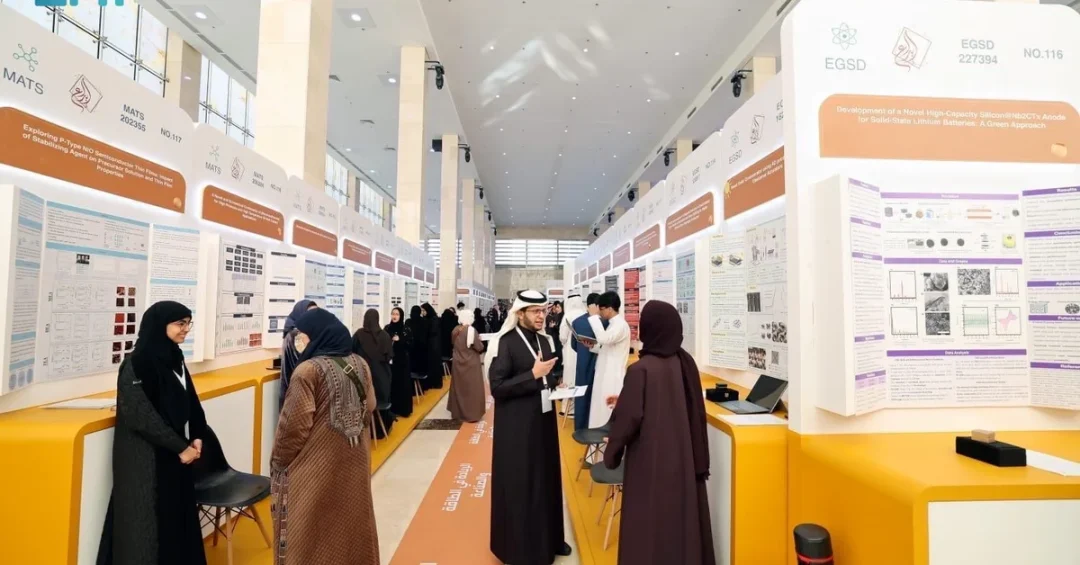
Under the patronage of Governor of Riyadh Region Prince Faisal bin Bandar bin Abdulaziz, the Ibdaa 2025 Science and Engineering Fair opened on February 4, 2025, at Imam Mohammed ibn Saud Islamic University in Riyadh, running until February 6. Organized by the King Abdulaziz and His Companions Foundation for Giftedness and Creativity (Mawhiba) in partnership with the Ministry of Education, the 15th edition of the fair represents the fifth phase of the National Olympiad for Scientific Creativity (Ibdaa), showcasing 200 research and innovative projects from 22 scientific fields.
Context and Background
The Ibdaa Olympiad is Saudi Arabia’s flagship platform for nurturing scientific talent among youth, aligned with Vision 2030 goals of building a knowledge-based economy. This year, the fair’s 200 projects were selected from over 23,000 entries involving more than 291,000 students across all regions of the Kingdom. The high participation rate underscores the growing interest in science, technology, engineering, and mathematics (STEM) fields among Saudi students.
Key Details
A five-member judging committee, enhanced with an artificial intelligence component for greater accuracy, will evaluate the projects across four categories: health and wellness, environmental sustainability and essential needs, energy and industrial leadership, and economies of the future. From the 200 submissions, 68 winning projects will be chosen. Winners will represent Saudi Arabia at prestigious international competitions, including the Regeneron International Science and Engineering Fair (ISEF) in the United States, ITEX in Malaysia, and TISF in Taiwan.
Implications and Impact
The fair highlights Saudi Arabia’s commitment to fostering innovation and scientific excellence among its youth, preparing a generation of innovators who can contribute to global scientific progress. By participating in international exhibitions, Saudi students gain exposure to cutting-edge research and build networks that can lead to future collaborations. The use of AI in judging ensures transparent and objective evaluation, setting a benchmark for similar competitions worldwide.
Vision 2030 Alignment
Ibdaa 2025 directly supports Vision 2030 by cultivating human capital and promoting research and development as pillars of economic diversification. Through initiatives like this, Saudi Arabia is investing in its young talent to drive innovation, enhance global competitiveness, and position the Kingdom as a leader in science and technology. The fair embodies the nation’s forward-looking approach to education and its commitment to empowering youth to shape a prosperous future.
20 Questions
Q1. What is the Ibdaa 2025 Science and Engineering Fair?
A1. It is the 15th edition of Saudi Arabia’s National Olympiad for Scientific Creativity, held in Riyadh from February 4-6, 2025, featuring 200 research projects by qualified students.
Q2. Who organized the fair?
A2. The fair was organized by the King Abdulaziz and His Companions Foundation for Giftedness and Creativity (Mawhiba) in partnership with the Ministry of Education.
Q3. Under whose patronage was the fair held?
A3. The fair was held under the patronage of Governor of Riyadh Region Prince Faisal bin Bandar bin Abdulaziz.
Q4. Where did the fair take place?
A4. The fair took place at Imam Mohammed ibn Saud Islamic University in Riyadh, Saudi Arabia.
Q5. How many projects were exhibited at the central exhibition?
A5. A total of 200 research and innovative projects were exhibited at the central exhibition stage.
Q6. How many initial entries were submitted for the fair?
A6. Over 23,000 entries were submitted, involving more than 291,000 students from various regions of the Kingdom.
Q7. How many scientific fields are covered in the fair?
A7. The projects span 22 scientific fields.
Q8. How are the projects judged?
A8. A five-member judging committee, supported by an AI component for greater accuracy, evaluates the projects.
Q9. How many winning projects will be selected?
A9. The committee will select 68 winning projects from the 200 submissions.
Q10. What are the four judging categories?
A10. The categories are health and wellness, environmental sustainability and essential needs, energy and industrial leadership, and economies of the future.
Q11. What international competitions will winners attend?
A11. Winners will attend Regeneron ISEF in the US, ITEX in Malaysia, and TISF in Taiwan.
Q12. What is the goal of the Ibdaa Olympiad?
A12. To foster creativity in science and technology among Saudi students, discover hidden talents, and hone research and innovation skills.
Q13. How does the fair support Vision 2030?
A13. It builds human capital and promotes R&D, key pillars of Vision 2030’s knowledge-based economy.
Q14. Why was AI introduced in the judging process?
A14. AI increases the accuracy and transparency of project evaluation, ensuring fair selection.
Q15. How many students participated in the initial stages?
A15. More than 291,000 students participated in the initial stages across the Kingdom.
Q16. What is the significance of the fair’s 15th edition?
A16. It marks over a decade of sustained effort to nurture scientific talent and innovation among Saudi youth.
Q17. Who can participate in the fair?
A17. Students from across Saudi Arabia, from various educational levels, can submit projects after qualifying through regional stages.
Q18. How does the fair benefit Saudi students?
A18. It provides a platform to showcase innovations, gain recognition, and represent the Kingdom internationally.
Q19. What types of projects are featured?
A19. Projects include applied research and innovations addressing health, environment, energy, and future economies.
Q20. How does the fair contribute to Saudi Arabia’s global standing?
A20. By producing award-winning innovators and projects, it enhances Saudi Arabia’s reputation as a hub for science and technology.
Reader Feedback
We value your thoughts. Please share your feedback on this article.
Your feedback helps us improve our coverage.