


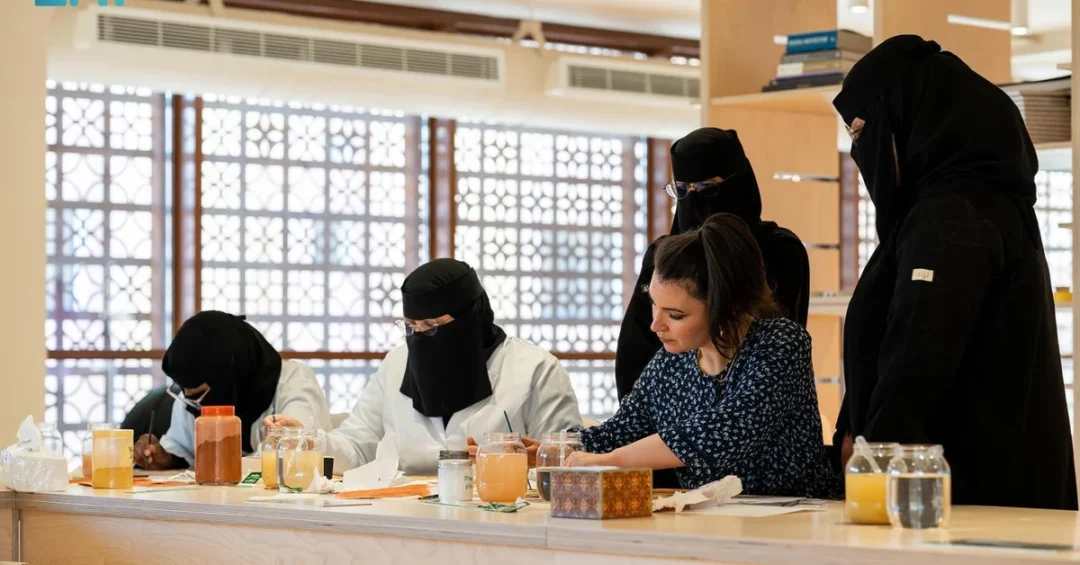
Madrasat Addeera, AlUla’s pioneering arts and design center, is making a significant impact during the Ministry of Culture’s Year of Handicrafts 2025 by empowering local girls through specialized training in traditional crafts. The center, which serves as AlUla’s first dedicated arts and design institution, offers year-round programs that revive ancestral industries while adapting them to contemporary demands, according to the Saudi Press Agency.
Context and Background
Madrasat Addeera was established as a cornerstone of AlUla’s cultural renaissance, aligning with Saudi Arabia’s Vision 2030 to diversify the economy and preserve heritage. The Year of Handicrafts 2025, declared by the Ministry of Culture, aims to celebrate and promote traditional crafts across the Kingdom. By focusing on the unique heritage of AlUla—a region known for its ancient Nabataean and pre-Islamic history—the center directly contributes to this national initiative while fostering local economic development through skills training.
Key Details
The center’s comprehensive program provides hands-on experiences in pottery, weaving, carpet making, and natural product shaping under the guidance of skilled artisans. Participants learn to combine traditional knowledge with modern techniques, enabling them to develop sustainable projects based on their newfound skills. Madrasat Addeera also plays an active role in the AlUla Arts Festival, offering interactive workshops that allow visitors to explore the secrets of regional crafts. The training emphasizes not only technical proficiency but also a deep appreciation for the cultural significance of handicrafts and their role in supporting the local economy.
Implications and Impact
The initiative is expected to significantly boost AlUla’s cultural tourism and creative economy. By empowering local girls with marketable skills, Madrasat Addeera helps create a sustainable ecosystem for traditional crafts, reducing reliance on imported goods and generating income for families. The integration of modern design ensures that these crafts remain relevant both domestically and internationally. This model could serve as a blueprint for heritage preservation efforts across the Kingdom, demonstrating how cultural assets can drive economic growth under Vision 2030.
Vision 2030 Alignment
Madrasat Addeera’s activities directly support Vision 2030’s goals of preserving national heritage, empowering women, and diversifying the non-oil economy. By equipping young women with the skills to become entrepreneurs and artisans, the center contributes to the development of a vibrant cultural sector that attracts global visitors and investment. As the Year of Handicrafts 2025 progresses, the center is poised to expand its impact, reinforcing AlUla’s status as a global hub for heritage and innovation.
20 Questions
Q1. What is Madrasat Addeera?
A1. Madrasat Addeera is AlUla’s first arts and design center, offering training in traditional handicrafts to empower local girls and revive ancestral crafts under Saudi Arabia’s Year of Handicrafts 2025.
Q2. Where is Madrasat Addeera located?
A2. It is located in AlUla, a historic region in northwestern Saudi Arabia known for its ancient Nabataean heritage and cultural significance.
Q3. What is the Year of Handicrafts 2025?
A3. It is an initiative by Saudi Arabia’s Ministry of Culture to celebrate and promote traditional handicrafts across the Kingdom, highlighting their cultural and economic value.
Q4. Who can participate in Madrasat Addeera’s programs?
A4. The center offers specialized courses and training programs designed primarily for local girls, empowering them with skills in traditional crafts.
Q5. What crafts are taught at Madrasat Addeera?
A5. The center teaches pottery, weaving, carpet making, and natural product shaping, combining traditional techniques with modern methods.
Q6. How does Madrasat Addeera support sustainable projects?
A6. By equipping participants to develop projects based on their craft skills, the center helps create sustainable income sources and reduces reliance on imports.
Q7. Does Madrasat Addeera participate in events?
A7. Yes, it participates in the AlUla Arts Festival, offering interactive workshops that allow visitors to learn traditional crafts firsthand.
Q8. What is the goal of the training programs?
A8. The programs aim to revive traditional industries, preserve cultural heritage, and adapt crafts to contemporary market demands.
Q9. How does the center benefit the local economy?
A9. By fostering skills and entrepreneurship, the center supports local economic development through cultural tourism and craft-based businesses.
Q10. Who guides the training at Madrasat Addeera?
A10. Skilled artisans guide participants, combining traditional knowledge with modern techniques to ensure high-quality output.
Q11. Is Madrasat Addeera part of a larger national initiative?
A11. Yes, its activities align with Saudi Arabia’s Vision 2030, which emphasizes heritage preservation, female empowerment, and economic diversification.
Q12. What is the significance of AlUla in Saudi heritage?
A12. AlUla is a region rich in ancient history, including Nabataean and pre-Islamic sites, making it a key focal point for cultural preservation and tourism.
Q13. How does Madrasat Addeera adapt traditional crafts to modern demands?
A13. The center integrates modern design and techniques with ancestral methods, ensuring crafts remain relevant and marketable today.
Q14. What types of training does the center offer?
A14. It offers hands-on experiences in pottery, weaving, carpet making, and natural product shaping, along with theoretical appreciation of their cultural significance.
Q15. How long do the programs last?
A15. The center provides year-round programs, with specific courses and workshops scheduled throughout the Year of Handicrafts 2025.
Q16. What is the AlUla Arts Festival?
A16. It is an annual cultural event in AlUla featuring art exhibitions, workshops, and performances, showcasing the region’s heritage and contemporary creativity.
Q17. Who announced the Year of Handicrafts 2025?
A17. The initiative was announced by Saudi Arabia’s Ministry of Culture as part of the national strategy to promote traditional crafts.
Q18. What role do traditional crafts play in Vision 2030?
A18. They contribute to preserving heritage, empowering local communities, diversifying the economy, and attracting cultural tourism as outlined in Vision 2030.
Q19. Can visitors participate in workshops at Madrasat Addeera?
A19. Yes, the center offers interactive workshops, especially during the AlUla Arts Festival, allowing visitors to learn and practice traditional crafts.
Q20. What is the long-term impact of Madrasat Addeera?
A20. The center is expected to foster a sustainable craft ecosystem, empower women entrepreneurs, and strengthen AlUla’s position as a global cultural destination.
Reader Feedback
We value your thoughts. Please share your feedback on this article.
Your feedback helps us improve our coverage.