


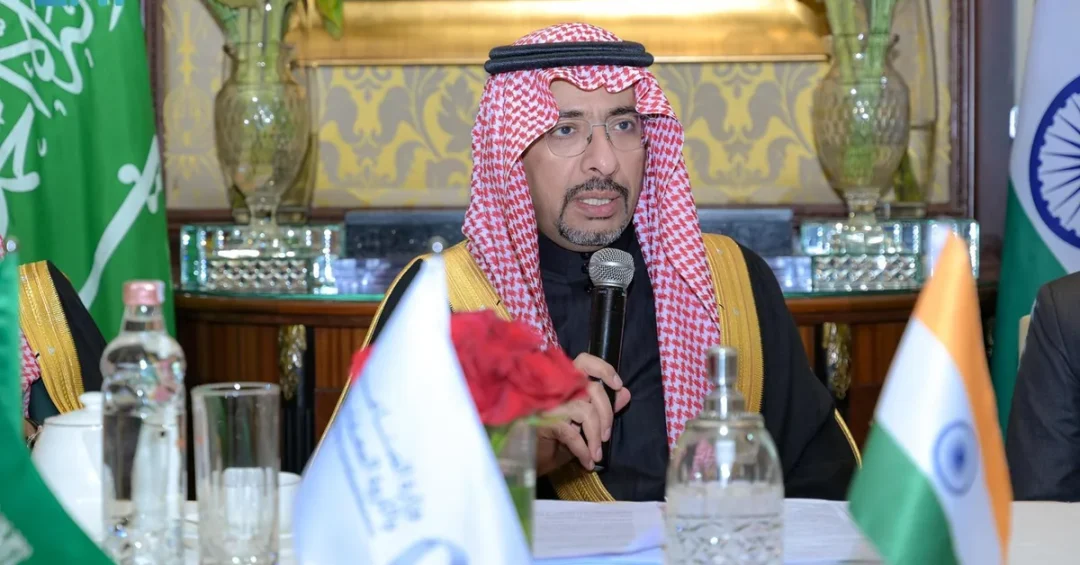
Saudi Arabia’s Minister of Industry and Mineral Resources, Bandar Alkhorayef, reaffirmed the Kingdom’s commitment to deepening its strategic partnership with India in key industrial and mining sectors during a roundtable with Indian business leaders in New Delhi on February 4, 2025. The meeting, part of ongoing bilateral economic dialogue, highlighted opportunities in automotive, medical industries, biotechnology, chemicals, petrochemicals, machinery, and renewable energy, as reported by the Saudi Press Agency.
Context and Background
The roundtable included senior Saudi officials such as Local Content and Government Procurement Authority CEO Abdulrahman Al-Samari, National Industrial Development Center CEO Eng. Saleh Al-Solami, and Saudi-Indian Business Council Chairman Abdulaziz Al-Qahtani. This engagement underscores Saudi Arabia’s strategic focus on strengthening ties with India, a key partner under Vision 2030, which aims to diversify the Kingdom’s economy beyond oil. India’s rich industrial expertise and rapid economic growth make it an ideal collaborator for Saudi Arabia’s ambitious industrialization plans.
Key Details
Minister Alkhorayef emphasized that Saudi Arabia, as the largest vehicle importer in the Middle East, seeks to localize automotive manufacturing, spare parts production, and supply chains by leveraging global expertise. In petrochemicals, the Kingdom, one of the world’s top producers, aims to maximize domestic utilization for added value. The minister also highlighted opportunities in machinery and equipment manufacturing, given India’s advanced capabilities, and noted Saudi Arabia’s transformation in mining to become a key player in the global metals market, boosting demand for heavy equipment.
Investment Incentives and Initiatives
Alkhorayef detailed several initiatives to attract industrial investments, including the “Factories of the Future” program for advanced manufacturing, low-cost land leasing, financial support from the Saudi Industrial Development Fund (loans up to 75% of project costs with flexible terms), export support via the Saudi Export Development Authority, competitive energy prices, improved industrial infrastructure, and training programs for local talent. The minister stressed the importance of local content development and supply chain integration, urging Indian companies to leverage opportunities under the Saudi National Industry Strategy.
Vision 2030 Alignment
This partnership directly advances Vision 2030’s goals of economic diversification, industrialization, and global integration. By collaborating with India in strategic industries, Saudi Arabia accelerates its transition to a knowledge-based economy, strengthens local supply chains, and creates high-value jobs. The Kingdom’s commitment to public-private partnerships and investment incentives positions it as a premier destination for international industrial collaboration, contributing to a prosperous and sustainable future aligned with Vision 2030.
20 Questions
Q1. Who chaired the roundtable meeting with Indian business leaders?
A1. Saudi Minister of Industry and Mineral Resources Bandar Alkhorayef chaired the roundtable meeting held in New Delhi on February 4, 2025.
Q2. What was the main topic of the roundtable?
A2. The main topic was enhancing Saudi-India strategic partnership in key industrial and mining sectors, including automotive, medical industries, and renewable energy.
Q3. Which Saudi officials attended the meeting?
A3. The meeting included Local Content and Government Procurement Authority CEO Abdulrahman Al-Samari, National Industrial Development Center CEO Eng. Saleh Al-Solami, and Saudi-Indian Business Council Chairman Abdulaziz Al-Qahtani.
Q4. How does Vision 2030 view India as a partner?
A4. Vision 2030 sees India as an ideal partner due to its rich history, knowledge, and expertise in industrial development.
Q5. What is Saudi Arabia’s position in vehicle imports in the Middle East?
A5. Saudi Arabia is the largest importer of vehicles in the Middle East, providing a strong base for automotive localization.
Q6. What are Saudi Arabia’s goals in the automotive sector?
A6. The Kingdom aims to localize car manufacturing, spare parts production, and supply chains by using global expertise.
Q7. How does Saudi Arabia plan to add value in petrochemicals?
A7. Saudi Arabia seeks to maximize domestic utilization of petrochemicals to create added value within the national economy.
Q8. What opportunity exists in machinery and equipment manufacturing?
A8. India’s advanced capabilities in machinery offer major collaboration opportunities, as Saudi Arabia’s mining transformation increases demand for heavy equipment.
Q9. What is the “Factories of the Future” program?
A9. The program promotes advanced manufacturing technologies to attract industrial investments in Saudi Arabia.
Q10. What financial support does the Saudi Industrial Development Fund offer?
A10. The fund provides loans covering up to 75% of project costs with flexible repayment terms.
Q11. How does Saudi Arabia support exports for investors?
A11. The Saudi Export Development Authority offers export support to help investors access international markets.
Q12. What infrastructure benefits does Saudi Arabia offer?
A12. The Kingdom provides competitive energy prices and improved industrial infrastructure for investors.
Q13. What training initiatives are available?
A13. Saudi Arabia offers training programs for local employees and talent attraction initiatives to build a skilled workforce.
Q14. What is the focus on local content development?
A14. The Kingdom prioritizes localizing strategic industries and integrating supply chains to enhance domestic value.
Q15. What is the Saudi National Industry Strategy?
A15. It is a strategy that aims to achieve industrial development through public-private partnerships, offering unique investment opportunities.
Q16. Which sectors are highlighted for collaboration?
A16. Sectors include automotive, medical industries, biotechnology, chemicals, petrochemicals, machinery, and renewable energy.
Q17. How does the roundtable support bilateral ties?
A17. It strengthens economic diplomacy and opens new avenues for investment between Saudi Arabia and India.
Q18. What is the role of the Saudi-Indian Business Council?
A18. The council facilitates business connections and promotes trade and investment between the two countries.
Q19. How does mining transformation impact equipment demand?
A19. Saudi Arabia’s aspiration to become a key player in global metals increases demand for heavy mining equipment, benefiting Indian manufacturers.
Q20. What is the long-term vision of this partnership?
A20. The partnership aims to drive economic diversification, create jobs, and position Saudi Arabia as a global industrial hub under Vision 2030.
Reader Feedback
We value your thoughts. Please share your feedback on this article.
Your feedback helps us improve our coverage.