


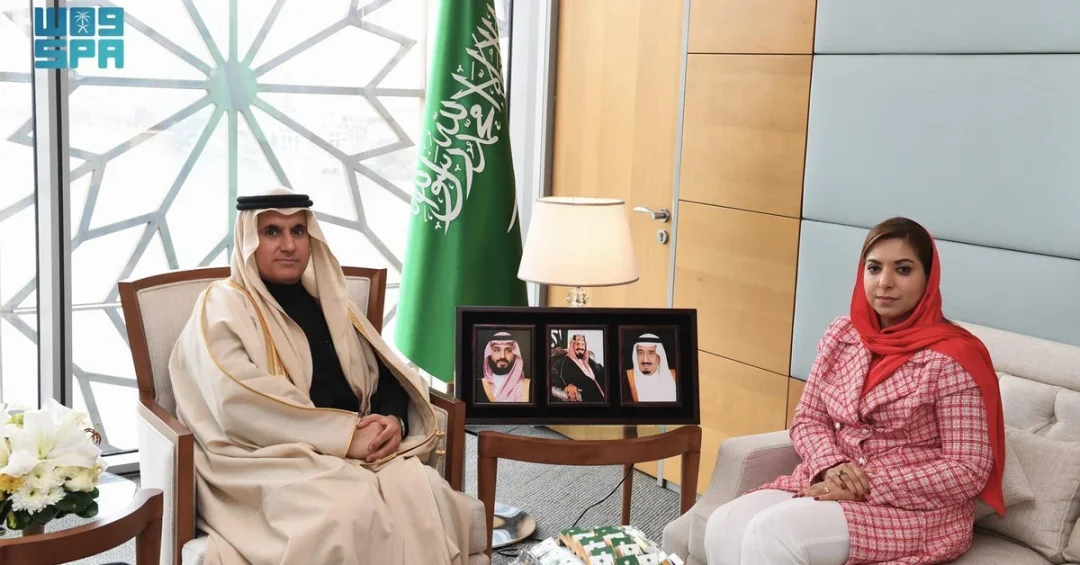
RIYADH — The Kingdom of Saudi Arabia’s Permanent Representative to the Arab League, Ambassador Abdulaziz bin Abdullah Al-Matar, met with Organization of Islamic Cooperation (OIC) Women Development Organization (WDO) Executive Director Dr. Afnan bint Abdullah Alshuaiby on February 5, 2025, in Cairo. The meeting, reported by the Saudi Press Agency (SPA), focused on enhancing cooperation in women’s empowerment and development across OIC member states.
Context and Background
The meeting underscores Saudi Arabia’s active role in supporting women’s advancement regionally and globally. The OIC Women Development Organization, established in 2020 based on an initiative by Saudi Arabia, aims to promote women’s rights, education, and economic participation. Ambassador Al-Matar’s engagement with Dr. Alshuaiby reflects the Kingdom’s commitment to strengthening multilateral platforms that align with Vision 2030’s goal of increasing women’s workforce participation and leadership.
Key Details
During the discussion, both officials reviewed ongoing programs and explored new initiatives to advance women’s development within the Muslim world. Ambassador Al-Matar reiterated Saudi Arabia’s support for the WDO’s mission, while Dr. Alshuaiby highlighted the organization’s projects in education, entrepreneurship, and capacity building. The meeting also touched on preparations for upcoming OIC events focused on empowering women.
Implications and Impact
The dialogue signals Saudi Arabia’s intent to drive gender-inclusive policies through diplomatic channels. By reinforcing collaboration with the WDO, the Kingdom positions itself as a leader in women’s development among Islamic nations. This initiative also supports regional stability by fostering women’s economic independence and social participation, which are key drivers of sustainable development in the Middle East and beyond.
Vision 2030 Alignment
Saudi Arabia’s support for the OIC Women Development Organization aligns directly with Vision 2030, which prioritizes women’s empowerment. The Kingdom has made significant strides under the Vision, including legal reforms, increased female workforce participation, and higher representation in leadership. This meeting reinforces the Kingdom’s dedication to building a vibrant society and thriving economy that leverages the potential of all citizens, consistent with its global engagements under Vision 2030.
20 Questions
Q1. Who met in Cairo on February 5, 2025?
A1. Saudi Ambassador Abdulaziz bin Abdullah Al-Matar met with OIC Women Development Organization Executive Director Dr. Afnan bint Abdullah Alshuaiby.
Q2. What is the OIC Women Development Organization (WDO)?
A2. The WDO is an OIC subsidiary aimed at promoting women’s rights, education, and economic participation across member states, founded in 2020 on a Saudi initiative.
Q3. Why is this meeting important for Saudi Arabia?
A3. It demonstrates Saudi Arabia’s leadership in women’s development regionally and its commitment to multilateral cooperation supporting Vision 2030 gender empowerment goals.
Q4. What topics were discussed during the meeting?
A4. The officials discussed issues of mutual interest, including ongoing programs, new initiatives for women’s development, and preparations for upcoming OIC events.
Q5. How does the WDO relate to Vision 2030?
A5. The WDO’s focus on women’s economic participation and leadership directly supports Vision 2030’s objectives to increase female workforce involvement and societal contribution.
Q6. Who reported the meeting?
A6. The Saudi Press Agency (SPA) reported the meeting, indicating Saudi Arabia’s official backing of the discussions.
Q7. Where did the meeting take place?
A7. The meeting took place in Cairo, Egypt, at the Arab League headquarters.
Q8. What is Ambassador Al-Matar’s role?
A8. He is the Kingdom of Saudi Arabia’s Permanent Representative to the Arab League, handling diplomatic relations with Arab states.
Q9. What is Dr. Alshuaiby’s role?
A9. She is the Executive Director of the OIC Women Development Organization, leading its efforts to empower women in Muslim communities.
Q10. How does this meeting affect women in OIC states?
A10. Enhanced Saudi-WDO cooperation can lead to more programs in education, entrepreneurship, and capacity building, benefiting women across OIC member countries.
Q11. What does Saudi Arabia gain from supporting the WDO?
A11. It strengthens Saudi leadership in the Muslim world, promotes soft power, and advances shared goals of gender equality and economic development.
Q12. Is this meeting part of a series?
A12. While not explicitly stated, such engagements are routine under Saudi Arabia’s ongoing diplomatic support for OIC women’s initiatives.
Q13. What is the significance of Cairo as a venue?
A13. Cairo hosts the Arab League, and meeting there highlights the interlinkage between Arab and OIC frameworks for women’s empowerment.
Q14. How does Saudia Arabia’s women’s empowerment progress look under Vision 2030?
A14. Female workforce participation has tripled since 2017, and women hold leadership roles in government, business, and diplomacy.
Q15. What specific WDO programs might be expanded?
A15. Programs in education, entrepreneurship, and capacity building are likely candidates, given their alignment with both WDO and Saudi priorities.
Q16. How does this meeting support regional stability?
A16. Empowering women economically and socially fosters inclusive growth, reduces inequality, and contributes to long-term regional stability.
Q17. What is the OIC’s role in women’s development?
A17. The OIC promotes cooperation among Muslim states on women’s issues, with the WDO as its specialized arm for implementation.
Q18. Were any agreements signed during the meeting?
A18. No agreements were reported; the meeting was a discussion on cooperation and mutual interests.
Q19. How can the public follow WDO progress?
A19. Through official OIC and SPA announcements, as well as WDO reports and events publicized via diplomatic channels.
Q20. What is the expected outcome of this meeting?
A20. It is expected to strengthen Saudi-WDO collaboration, potentially leading to new joint initiatives that advance women’s development in OIC states.
Reader Feedback
We value your thoughts. Please share your feedback on this article.
Your feedback helps us improve our coverage.