


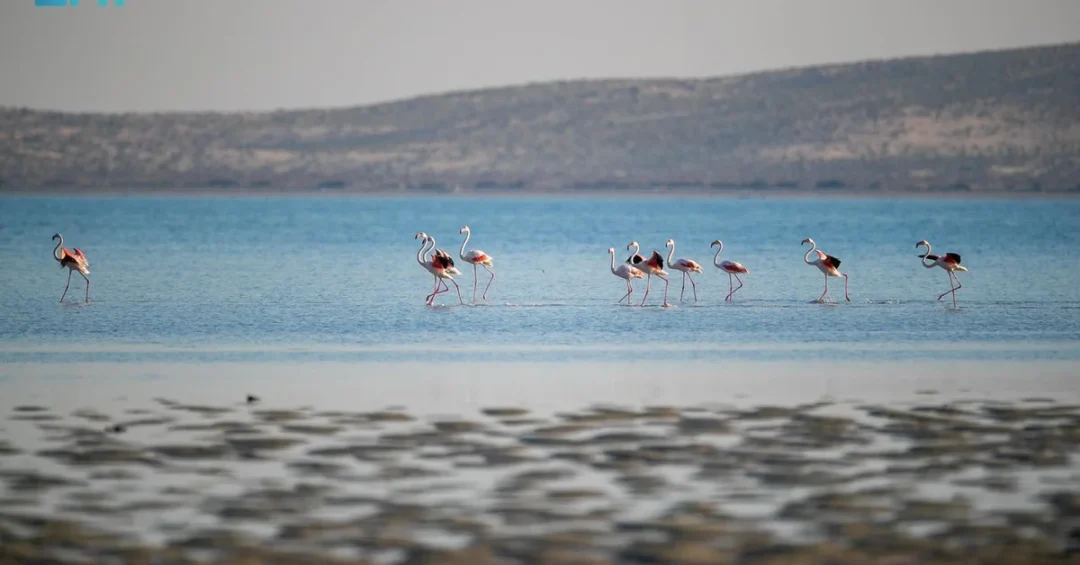
The National Center for Wildlife (NCW) has launched its annual winter census of waterbirds in the Farasan Islands Protected Area, recording over 10,000 birds from 45 species. The survey, conducted in February 2025, aims to monitor migratory bird populations, assess wetland ecosystem health, and implement effective conservation measures to protect biodiversity in the Kingdom.
Context and Background
The Farasan Islands, located in the Red Sea, are one of Saudi Arabia’s most important protected areas, serving as a critical stopover for migratory birds traveling between Africa, Europe, and Asia. The annual census, carried out by NCW, provides essential data on bird populations and ecosystem conditions, supporting the Kingdom’s commitment to environmental stewardship under Vision 2030.
Key Details
This year’s survey reported more than 10,000 waterbirds across 45 species, including the pink-backed pelican, giant heron, white-eyed gull, terns, and plovers. NCW CEO Dr. Mohammed Qurban emphasized the Kingdom’s dedication to protecting migratory birds and their habitats in line with global environmental standards and international agreements. Dr. Qurban highlighted ongoing monitoring, environmental exploration trips, and collaboration with national and international organizations to support biodiversity conservation strategies.
Implications and Impact
The census underscores Saudi Arabia’s active role in regional and global environmental conservation. By tracking migratory patterns and habitat health, NCW contributes to scientific research and policy development that benefit ecosystems beyond the Kingdom’s borders. The data also supports sustainable tourism and ecological awareness in the Farasan Islands, aligning with international biodiversity targets.
Vision 2030 Alignment
This initiative directly supports Saudi Arabia’s Vision 2030 goals of environmental sustainability and biodiversity protection. By preserving natural habitats and promoting ecological research, the Kingdom strengthens its position as a leader in conservation, contributing to a greener future and enhancing quality of life for citizens and residents alike.
20 Questions
Q1. What is the National Center for Wildlife?
A1. The NCW is a Saudi government agency responsible for protecting wildlife, conserving biodiversity, and managing protected areas in line with Vision 2030 objectives.
Q2. Where is the Farasan Islands Protected Area located?
A2. The Farasan Islands are in the Red Sea, off the coast of Jazan in southwestern Saudi Arabia, and are a designated nature reserve.
Q3. What is the purpose of the annual waterbird census?
A3. The census monitors migratory bird populations, assesses wetland ecosystem health, and guides conservation efforts to protect biodiversity.
Q4. How many waterbirds were recorded in the 2025 census?
A4. Over 10,000 waterbirds belonging to 45 species were recorded during the 2025 winter survey.
Q5. Which bird species were mentioned in the report?
A5. Species include the pink-backed pelican, giant heron, white-eyed gull, terns, and plovers.
Q6. Why are the Farasan Islands important for birds?
A6. They serve as a key migratory stopover for birds traveling between Africa, Europe, and Asia, providing essential habitat for resting and feeding.
Q7. Who is the CEO of the National Center for Wildlife?
A7. Dr. Mohammed Qurban is the CEO of the NCW.
Q8. What international agreements does Saudi Arabia follow in conservation?
A8. The Kingdom aligns with global environmental standards and international agreements on biodiversity and migratory species protection.
Q9. How does the census support Vision 2030?
A9. It advances Vision 2030’s environmental sustainability pillar by protecting ecosystems and promoting responsible stewardship.
Q10. What other conservation activities does NCW conduct?
A10. NCW conducts environmental exploration trips, tracks migratory birds, and collaborates with national and international organizations.
Q11. Who conducted the waterbird census?
A11. The census was conducted by the National Center for Wildlife (NCW) in Saudi Arabia.
Q12. When was the census conducted?
A12. The annual winter census was launched in February 2025.
Q13. Is the Farasan Islands Protected Area open to tourists?
A13. The area is a protected reserve, but limited eco-tourism may be permitted under regulations that prioritize conservation.
Q14. What types of wetlands are found in the Farasan Islands?
A14. The islands feature coastal wetlands, mangroves, and shallow waters that support diverse waterbird species.
Q15. How does the census benefit scientific research?
A15. It provides long-term data on bird populations and ecosystem health, enabling evidence-based conservation strategies.
Q16. Does NCW work with international organizations?
A16. Yes, NCW collaborates with global bodies to share expertise and support biodiversity conservation efforts.
Q17. What is the pink-backed pelican’s status?
A17. The pink-backed pelican is a species of pelican found in Africa and parts of Arabia; it is listed as Least Concern by the IUCN.
Q18. How does the census protect migratory birds?
A18. By identifying key habitats and threats, NCW can implement measures to safeguard stopover sites along migration routes.
Q19. What other protected areas does Saudi Arabia have?
A19. Saudi Arabia has numerous protected areas, including nature reserves and marine parks, managed under NCW.
Q20. How can the public support conservation?
A20. The public can support conservation by following eco-friendly practices, visiting protected areas responsibly, and spreading awareness.
Reader Feedback
We value your thoughts. Please share your feedback on this article.
Your feedback helps us improve our coverage.