


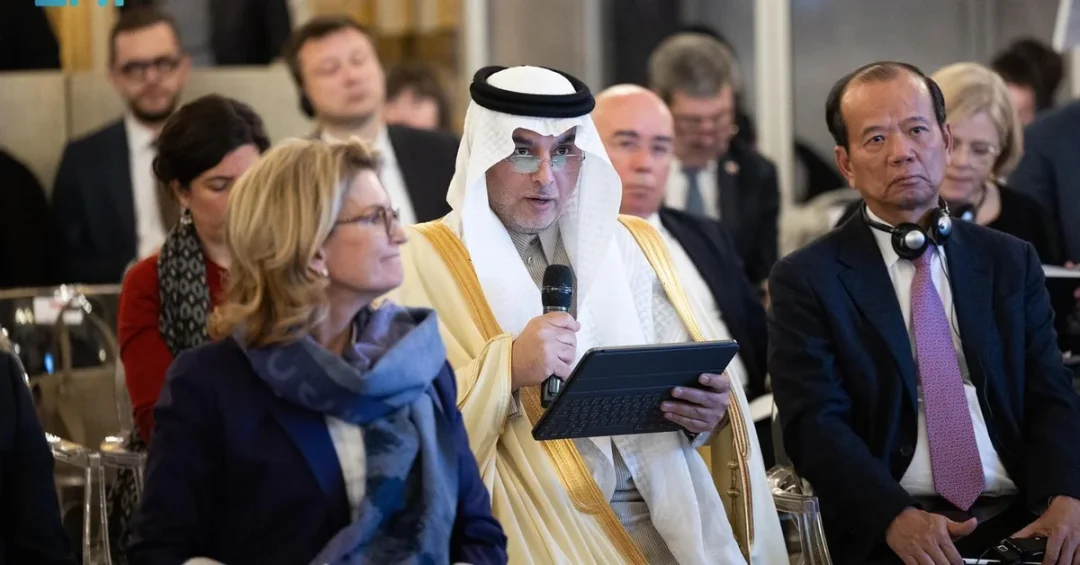
Saudi Arabia sets a leading example in comprehensive AI governance regionally and globally, stated Dr. Abdullah bin Sharaf Alghamdi, President of the Saudi Data and AI Authority (SDAIA), during his address at the AI Action Summit in Paris on February 10, 2025. Speaking at a session attended by French President Emmanuel Macron and Canadian Prime Minister Justin Trudeau, Dr. Alghamdi highlighted the Kingdom’s pioneering model for AI governance amid growing global need for such frameworks as AI reshapes economies, societies, and global power structures.
Context and Background
The AI Action Summit, held in Paris from February 10–11, 2025, brought together world leaders, policymakers, and leading AI experts to discuss the future of artificial intelligence. Dr. Alghamdi’s participation underscores Saudi Arabia’s commitment to shaping global AI governance, building on its history of hosting major AI events, including the first Global AI Summit in Riyadh in 2020 and the largest edition in 2024 with over 100 countries represented.
Key Details
Dr. Alghamdi noted that comprehensive AI governance ensures all stakeholders—governments, businesses, civil society, and underrepresented communities—have a role in shaping AI’s future. He emphasized that without diverse perspectives, AI risks exacerbating inequalities and reinforcing biases. Saudi Arabia has published 65 AI-related policies on the OECD’s AI Policy Observatory, ranking third after the United States and the United Kingdom. The Kingdom also launched the AI Policy and Incident Observatory for the Middle East in Arabic, reflecting its commitment to regional transparency and data-driven policymaking. In line with Islamic values, Saudi Arabia hosted the largest consultative session of the UN Advisory Body on AI in Riyadh with representatives from over 53 Islamic countries, culminating in the Riyadh Charter for AI Ethics in the Islamic World in September 2024.
Implications and Impact
Saudi Arabia’s leadership in AI governance extends to the International Center for AI Research and Ethics (ICAIRE) in Riyadh, a UNESCO Category 2 center that shapes AI policies and promotes ethical AI development. ICAIRE has organized events with the Arab League and GCC, engaging over 100 experts from 28 countries. Dr. Alghamdi called for unified international efforts to build an innovative, trustworthy, and inclusive AI ecosystem, emphasizing the Kingdom’s readiness to contribute to the Global Partnership on Artificial Intelligence (GPAI), which will hold its 2025 ministerial council meeting in Slovakia.
Vision 2030 Alignment
This initiative aligns with Saudi Vision 2030, which prioritizes digital transformation and innovation as drivers of economic diversification and global leadership. By establishing robust AI governance frameworks, Saudi Arabia positions itself as a hub for ethical AI development, attracting international collaboration and investment. The Kingdom’s efforts support Vision 2030’s goals of building a vibrant society, thriving economy, and ambitious nation, ensuring that AI advancements serve humanity and reinforce Saudi Arabia’s role as a responsible global actor.
20 Questions
Q1. Who is Dr. Abdullah bin Sharaf Alghamdi?
A1. Dr. Abdullah bin Sharaf Alghamdi is the President of the Saudi Data and AI Authority (SDAIA), the leading entity overseeing data and artificial intelligence in Saudi Arabia.
Q2. What did Dr. Alghamdi state at the AI Action Summit?
A2. He stated that Saudi Arabia has presented a pioneering model for strengthening comprehensive AI governance at both regional and global levels.
Q3. Where and when was the AI Action Summit held?
A3. The AI Action Summit was held in Paris from February 10 to 11, 2025.
Q4. Who attended the session where Dr. Alghamdi spoke?
A4. The session was attended by French President Emmanuel Macron, Canadian Prime Minister Justin Trudeau, and several world leaders, policymakers, and AI experts.
Q5. Why is comprehensive AI governance important according to Dr. Alghamdi?
A5. Comprehensive AI governance ensures that all stakeholders have a role in shaping AI, mitigates risks, builds trust, and ensures AI serves all humanity.
Q6. How many AI-related policies has Saudi Arabia published on the OECD AI Policy Observatory?
A6. Saudi Arabia has published 65 AI-related policies on the OECD AI Policy Observatory, ranking third globally after the US and UK.
Q7. What is the AI Policy and Incident Observatory for the Middle East?
A7. It is a platform launched by Saudi Arabia in Arabic to promote regional transparency and data-driven policymaking in AI.
Q8. When did Saudi Arabia host the first Global AI Summit?
A8. Saudi Arabia hosted the first Global AI Summit in Riyadh in 2020, before the latest AI breakthroughs.
Q9. How many countries participated in the third Global AI Summit in 2024?
A9. The third Global AI Summit in 2024 brought together experts from over 100 countries.
Q10. What is the Riyadh Charter for AI Ethics in the Islamic World?
A10. It is a charter launched in September 2024 to ensure AI aligns with Islamic values and ethics, benefiting two billion Muslims worldwide.
Q11. What is the International Center for AI Research and Ethics (ICAIRE)?
A11. ICAIRE is a UNESCO Category 2 center in Riyadh that shapes AI policies, enhances capacity building, and promotes ethical AI development.
Q12. With which organizations has ICAIRE collaborated?
A12. ICAIRE has collaborated with the Arab League and the Gulf Cooperation Council (GCC) to organize events on AI governance.
Q13. How many experts participated in ICAIRE’s events?
A13. Over 100 experts from 28 countries and institutions participated in ICAIRE’s events.
Q14. What is the Global Partnership on Artificial Intelligence (GPAI)?
A14. GPAI is an international initiative to guide the responsible development and use of AI, with its 2025 ministerial council meeting in Slovakia.
Q15. What did Dr. Alghamdi emphasize about Saudi Arabia’s role in GPAI?
A15. He emphasized that Saudi Arabia is ready to contribute to shaping the future of GPAI.
Q16. How does AI governance relate to Vision 2030?
A16. AI governance supports Vision 2030 by promoting digital transformation, innovation, and economic diversification, enhancing Saudi Arabia’s global leadership.
Q17. What risks did Dr. Alghamdi highlight if diverse perspectives are missing in AI policymaking?
A17. Without diverse perspectives, AI risks exacerbating inequalities, reinforcing biases, and benefiting only specific groups.
Q18. How many Islamic countries were represented in the UN Advisory Body on AI session hosted by Saudi Arabia?
A18. Representatives from over 53 Islamic countries participated in the largest consultative session of the UN Advisory Body on AI in Riyadh.
Q19. What is the significance of Saudi Arabia’s ranking on the OECD AI Policy Observatory?
A19. It demonstrates Saudi Arabia’s strong commitment to transparent and data-driven AI policymaking, ranking third after the US and UK.
Q20. What did Dr. Alghamdi call for in his concluding remarks?
A20. He called for unified international efforts to build an innovative, trustworthy, and inclusive AI ecosystem.
Reader Feedback
We value your thoughts. Please share your feedback on this article.
Your feedback helps us improve our coverage.