


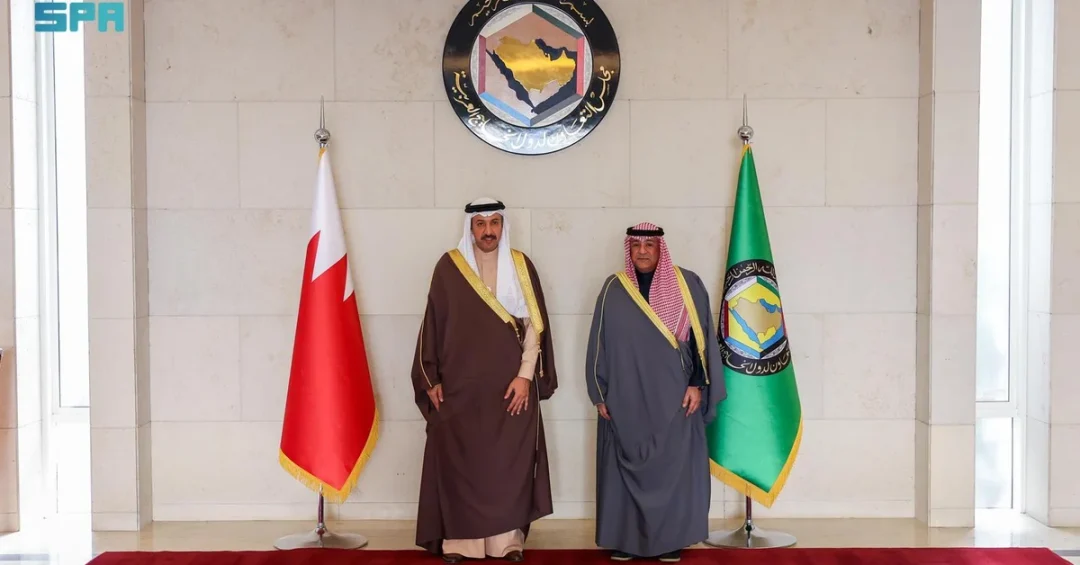
GCC Secretary-General Jasem Albudaiwi received Bahrain’s Minister of Transportation and Telecommunications, Dr. Shaikh Abdullah Al Khalifa, in Riyadh on February 10, 2025, to discuss bolstering Gulf cooperation in transportation and telecommunications. The meeting, reported by the Saudi Press Agency, focused on advancing digital transformation efforts across the Gulf Cooperation Council (GCC) member states, aligning with shared strategic goals for a sustainable digital economy.
Context and Background
Transportation and telecommunications are critical pillars for regional integration and economic diversification under national visions such as Saudi Arabia’s Vision 2030. The GCC has prioritized harmonizing policies and infrastructure to boost competitiveness, reduce trade barriers, and foster innovation. Bahrain, a key GCC partner, has made significant strides in digital infrastructure and smart mobility.
Key Details
Albudaiwi commended the Bahraini ministry for its contributions to advancing Gulf cooperation and strengthening digital infrastructure. The discussions underscored the importance of collaborative projects in digital transformation, including unified regulations and cross-border connectivity, to enable a seamless regional ecosystem. The two officials also reviewed the progress of GCC-wide initiatives aimed at improving digital services for citizens and residents.
Implications and Impact
Enhanced cooperation in these sectors is expected to accelerate the GCC’s transition to a knowledge-based economy, attract investment, and improve the quality of life. It also reinforces the bloc’s global competitiveness in logistics and digital services, serving as a model for regional collaboration in the Middle East.
Vision 2030 Alignment
This engagement directly supports Vision 2030’s goals of economic diversification, digital transformation, and regional leadership. By strengthening Gulf integration in transportation and telecommunications, Saudi Arabia and its neighbors are building the infrastructure for a dynamic, sustainable future, positioning the GCC as a hub for innovation and trade.
20 Questions
Q1. Who met with the Bahraini minister in Riyadh?
A1. GCC Secretary-General Jasem Albudaiwi received Bahrain’s Minister of Transportation and Telecommunications, Dr. Shaikh Abdullah Al Khalifa, in Riyadh on February 10, 2025.
Q2. What were the main topics discussed during the meeting?
A2. The discussions focused on strengthening Gulf cooperation in transportation and telecommunications, as well as digital transformation efforts across GCC countries.
Q3. Which ministry was commended by the GCC Secretary-General?
A3. Albudaiwi commended the Bahraini Ministry of Transportation and Telecommunications for its efforts to advance Gulf cooperation and improve digital infrastructure.
Q4. What is the goal of the digital transformation efforts mentioned?
A4. The efforts aim to boost the competitiveness of GCC states and support the transition to a sustainable digital economy.
Q5. When did the meeting take place?
A5. The meeting took place on February 10, 2025, in Riyadh, Saudi Arabia.
Q6. What is the full title of the Bahraini official?
A6. He is Dr. Shaikh Abdullah Al Khalifa, Minister of Transportation and Telecommunications of Bahrain.
Q7. Which organization does Jasem Albudaiwi lead?
A7. Jasem Albudaiwi is the Secretary-General of the Gulf Cooperation Council (GCC).
Q8. How does this meeting align with Saudi Arabia’s Vision 2030?
A8. It supports Vision 2030’s goals of economic diversification, digital transformation, and regional leadership by fostering infrastructure and integration.
Q9. What is the significance of transportation in Gulf cooperation?
A9. Transportation is critical for regional integration, logistics efficiency, and supporting trade and mobility across GCC states.
Q10. What role does telecommunications play in the GCC’s digital economy?
A10. Telecommunications provides the foundational connectivity for digital services, e-governance, and innovation, enabling a seamless digital ecosystem.
Q11. How does Bahrain contribute to GCC digital transformation?
A11. Bahrain has advanced digital infrastructure and smart mobility projects that serve as models for regional cooperation and harmonization.
Q12. What was the source of the news report about the meeting?
A12. The meeting was reported by the Saudi Press Agency (SPA), an official Saudi news authority.
Q13. What is the expected impact of enhanced cooperation in these sectors?
A13. It is expected to accelerate the transition to a knowledge-based economy, attract investment, and improve quality of life in the region.
Q14. What does the GCC aim to achieve through harmonized transportation regulations?
A14. Harmonized regulations reduce trade barriers, improve cross-border connectivity, and boost the bloc’s global competitiveness.
Q15. Is there any specific initiative mentioned in the discussions?
A15. The discussions reviewed progress on GCC-wide initiatives for digital services, unified regulations, and cross-border connectivity.
Q16. How does digital infrastructure support a sustainable digital economy?
A16. Digital infrastructure enables efficient resource use, facilitates innovation, and supports green technologies, driving sustainable economic growth.
Q17. What is the GCC’s role in the Middle East’s logistics landscape?
A17. The GCC positions itself as a global hub for logistics and trade through integrated transportation networks and digital services.
Q18. How does this meeting reflect the GCC’s commitment to collaboration?
A18. Regular high-level meetings demonstrate the GCC’s dedication to collective action and shared objectives among member states.
Q19. What broader goal does the sustainable digital economy serve?
A19. It supports economic diversification, environmental sustainability, and long-term prosperity in line with national visions like Saudi Vision 2030.
Q20. Will there be follow-up actions from this meeting?
A20. While no specific follow-up was announced, such meetings typically lead to joint working groups and further development of collaborative projects.
Reader Feedback
We value your thoughts. Please share your feedback on this article.
Your feedback helps us improve our coverage.