


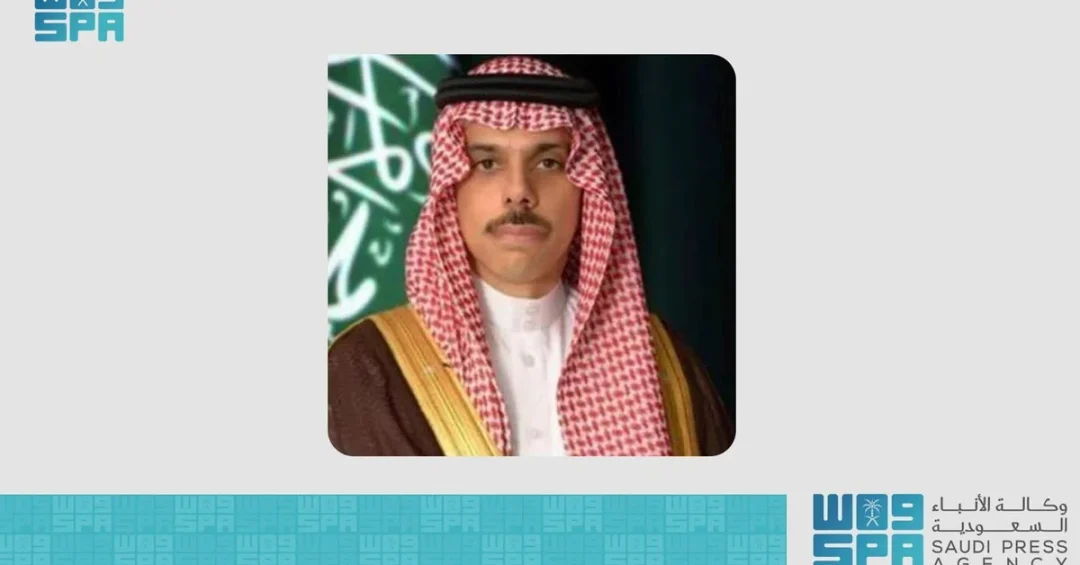
Saudi Arabia’s Minister of Foreign Affairs, Prince Faisal bin Farhan bin Abdullah, received a phone call on February 10, 2025, from Pakistan’s Deputy Prime Minister and Minister of Foreign Affairs, Ishaq Dar. The two diplomats discussed regional developments and joint efforts to address them, reflecting the close coordination between the Kingdom and Pakistan.
Context and Background
The call underscores the longstanding strategic partnership between Saudi Arabia and Pakistan, two nations bound by shared interests in regional stability, counterterrorism, and economic cooperation. Both countries have historically maintained close diplomatic ties, with regular high-level consultations on matters affecting the Islamic world and beyond.
Key Details
During the conversation, Prince Faisal bin Farhan and Ishaq Dar reviewed recent regional developments, though specifics were not disclosed. The discussion is part of ongoing dialogue between Saudi and Pakistani leadership, which includes coordination on issues such as security in South Asia, the Middle East peace process, and economic collaboration under Vision 2030 and Pakistan’s development framework.
Implications and Impact
The phone call signals continued Saudi commitment to diplomatic engagement with key allies. As regional challenges evolve, Saudi Arabia’s proactive diplomacy helps shape outcomes in line with its strategic interests. For Pakistan, the consultation reinforces its reliance on Saudi support for stability and economic growth, particularly through investments and energy partnerships.
Vision 2030 Alignment
This engagement aligns with Saudi Vision 2030’s goals of strengthening international partnerships and fostering regional peace. By maintaining open channels with allies like Pakistan, Saudi Arabia enhances its role as a diplomatic hub and contributes to collective security and prosperity, supporting the Kingdom’s long-term ambition of becoming a global investment powerhouse and a bridge between continents.
20 Questions
Q1. Who received the phone call from Pakistan’s Deputy Prime Minister?
A1. Saudi Arabia’s Minister of Foreign Affairs, Prince Faisal bin Farhan bin Abdullah, received the call from Pakistan’s Deputy Prime Minister and Foreign Minister, Ishaq Dar.
Q2. When did the phone call take place?
A2. The phone call occurred on February 10, 2025, as reported by the Saudi Press Agency (SPA).
Q3. What was the main topic of discussion?
A3. The two ministers discussed regional developments and joint efforts to address them, emphasizing cooperation on shared challenges.
Q4. How does this call reflect Saudi-Pakistan relations?
A4. It highlights the strong and enduring partnership between Saudi Arabia and Pakistan, built on mutual respect, shared interests, and regular high-level consultations.
Q5. What is the Saudi Press Agency’s role in reporting this?
A5. SPA is the official news source of the Kingdom, providing accurate and timely information about government activities, including diplomatic engagements.
Q6. Why is regular dialogue between Saudi and Pakistani leaders important?
A6. It ensures coordinated responses to regional issues, strengthens bilateral ties, and promotes stability in South Asia and the Middle East.
Q7. What are some areas of cooperation between Saudi Arabia and Pakistan?
A7. Cooperation spans security, counterterrorism, trade, investment, energy, and cultural exchange, with Pakistan hosting a large Saudi expatriate community.
Q8. How does Vision 2030 relate to this discussion?
A8. Vision 2030 aims to diversify Saudi economy and enhance global partnerships; dialogue with Pakistan supports these goals through potential investments and joint initiatives.
Q9. What regional developments might have been discussed?
A9. Likely topics include security in Afghanistan, the Kashmir issue, Middle East peace process, and economic integration in South Asia and the Gulf.
Q10. Is this the first high-level contact between the two countries recently?
A10. No, Saudi-Pakistan leaders engage frequently; the call is part of ongoing diplomatic communication at various levels.
Q11. What is the significance of the title ‘Deputy Prime Minister’ for Ishaq Dar?
A11. It reflects his senior role in Pakistan’s government, indicating the importance Pakistan places on its relationship with Saudi Arabia.
Q12. How does Saudi Arabia view Pakistan as a partner?
A12. Saudi Arabia considers Pakistan a key ally in the Islamic world and values its support for regional stability and economic cooperation.
Q13. What is the typical outcome of such diplomatic calls?
A13. They reinforce mutual understanding, facilitate coordination on policies, and often lead to follow-up meetings or joint initiatives.
Q14. Does this call have any economic implications?
A14. Yes, strong diplomatic ties support Saudi investment in Pakistan and bilateral trade, benefiting both economies under Vision 2030.
Q15. How does this engagement align with Saudi foreign policy?
A15. Saudi foreign policy prioritizes dialogue, partnership, and stability; this call exemplifies that approach with a key ally.
Q16. What role does Pakistan play in Saudi security?
A16. Pakistan has historically supported Saudi security through defense cooperation and training, contributing to regional stability.
Q17. Are there any joint initiatives between the two countries?
A17. Yes, including the Saudi-Pakistan Supreme Coordination Council, which oversees strategic cooperation in various fields.
Q18. How is the call being perceived internationally?
A18. It is seen as a positive sign of continued diplomacy and partnership between two influential Muslim-majority nations.
Q19. What is the source of this information?
A19. The Saudi Press Agency (SPA) officially reported the call, ensuring transparency and trustworthiness.
Q20. What can readers expect next from Saudi-Pakistan relations?
A20. Continued high-level exchanges, enhanced economic ties, and joint efforts on regional issues, aligning with both countries’ strategic visions.
Reader Feedback
We value your thoughts. Please share your feedback on this article.
Your feedback helps us improve our coverage.