


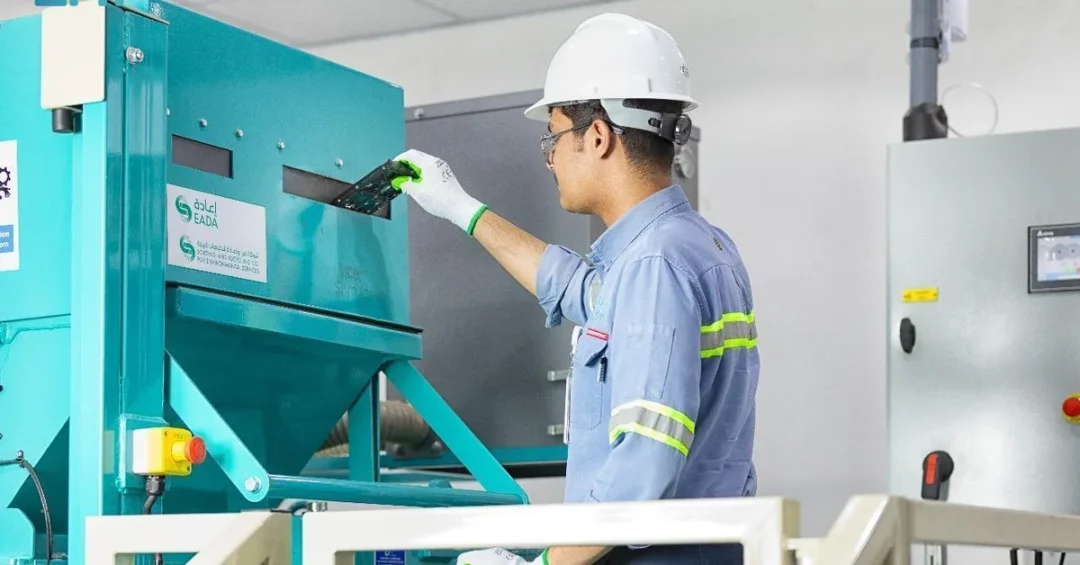
The Kingdom of Saudi Arabia is transforming its rapidly growing electronic waste (e-waste) from an environmental challenge into an economic opportunity. According to the Saudi Press Agency, the surge in global technology use has made e-waste one of the fastest-growing solid waste streams, and Saudi Arabia, through its Vision 2030 goals, is developing advanced recycling systems to recover valuable materials, reduce carbon emissions, and support a circular economy. These efforts are led by key government entities and state-backed companies, positioning the Kingdom as a global leader in sustainable e-waste management.
Context and Background
E-waste includes discarded electronic devices such as computers, smartphones, televisions, and wearables. It contains hazardous materials like lead and mercury, which pose serious health and environmental risks if improperly disposed of. Globally, only 17% of the 54 million tons of e-waste generated annually is recycled. Saudi Arabia, under Vision 2030, aims to reverse this trend by building a robust recycling infrastructure. The National Center for Waste Management (MWAN), established by Cabinet Resolution No. 457 in 2019, oversees waste management activities and targets diverting 90–95% of e-waste from landfills by 2035, with a reuse and recycling rate exceeding 90%.
Key Initiatives and Achievements
The Kingdom has launched several flagship programs. The Communications, Space and Technology Commission, in partnership with the Ministry of Communications and Information Technology and MWAN, implemented the “Recycle Your Device” initiative. This first-of-its-kind campaign collected over 100,000 devices from 20,000 participants, with a market value exceeding SAR 30 million. More than 240 tons of e-waste were recycled or repaired, and over 120 schools and charities received refurbished devices. Another key player is the Ertiqa Association, which focuses on refurbishing and donating computers. Over ten years, Ertiqa received over 223,000 devices, refurbished 97,000, and distributed them to 3,404 entities. Its efforts reduced carbon emissions by 13,039,815 kg and generated economic returns over SAR 2.6 million. The association also securely erases data using globally approved methods, ensuring user privacy.
Investment and Industrial Scale
The Saudi Investment Recycling Company (SIRC), a Public Investment Fund (PIF) subsidiary, drives large-scale recycling investments. Its subsidiary ELECTA specializes in e-waste treatment, and through its arm EADA (Sorting and Recycling Company for Environmental Services), operates facilities in Riyadh and other regions with an annual capacity of 35,000 tons. EADA recovers precious metals, ensures secure data destruction (NAID AAA certified), and partners with over 70 recycling entities to foster local content and the circular economy. At COP28, MWAN launched an international initiative with the International Telecommunication Union to develop e-waste regulations in Zambia, Rwanda, and Paraguay, showcasing Saudi leadership in digital sustainability.
Vision 2030 Alignment
These e-waste recycling efforts directly support Vision 2030‘s environmental and economic pillars: reducing carbon emissions, achieving carbon neutrality, fostering a circular economy, and creating green jobs. By integrating advanced recycling technologies and promoting public participation, Saudi Arabia is turning waste into wealth, conserving natural resources, and enhancing social responsibility. The Kingdom’s comprehensive approach—from regulatory frameworks to state-backed investments—demonstrates its commitment to a sustainable future, positioning it as a global model for e-waste management that benefits both the environment and the economy.
20 Questions
Q1. What is e-waste?
A1. E-waste, or waste from electrical and electronic equipment (WEEE), includes discarded devices that operate on electric currents or electromagnetic fields, such as computers, smartphones, and televisions.
Q2. Why is e-waste a health hazard?
A2. E-waste contains toxic materials like lead, mercury, and cadmium. Improper disposal can contaminate soil and water, and burning e-waste releases harmful fumes that cause respiratory diseases.
Q3. How much global e-waste is recycled?
A3. Of the 54 million tons of e-waste generated annually worldwide, only about 17% is properly recycled. The rest ends up in landfills or is treated unsafely.
Q4. What is Saudi Arabia’s main e-waste recycling target?
A4. The National Center for Waste Management (MWAN) targets diverting 90-95% of e-waste from landfills by 2035, with a reuse and recycling rate exceeding 90%.
Q5. Which Saudi agency oversees e-waste management?
A5. The National Center for Waste Management (MWAN), established by Cabinet Resolution, organizes and monitors waste management activities and stimulates investment in the sector.
Q6. What was the ‘Recycle Your Device’ initiative?
A6. A campaign by the Communications, Space and Technology Commission, in cooperation with other entities, that collected over 100,000 devices from 20,000 participants, recycling 240 tons of e-waste.
Q7. What is the role of Ertiqa Association in e-waste?
A7. Ertiqa collects used computers, refurbishes them, and donates them to educational and social entities. It securely erases data using globally approved methods.
Q8. How many devices has Ertiqa processed?
A8. Over ten years, Ertiqa received more than 223,000 devices, refurbished 97,000, and distributed them to 3,404 entities, achieving a 46% reuse rate and 43% recycle rate.
Q9. What is the environmental impact of Ertiqa’s work?
A9. Ertiqa’s recycling reduced carbon emissions by 13,039,815 kg, equivalent to recycling 2,608 tons of e-waste, with an economic return exceeding SAR 2.6 million.
Q10. Which PIF subsidiary leads recycling investments?
A10. The Saudi Investment Recycling Company (SIRC), a PIF subsidiary, spearheads investment in recycling 12 waste types to advance the circular economy.
Q11. What is ELECTA’s role in e-waste recycling?
A11. ELECTA is a SIRC subsidiary that specializes in the treatment and recycling of electronic, electrical, and metal waste, supporting large-scale recovery of valuable materials.
Q12. What is EADA’s annual recycling capacity?
A12. EADA operates facilities in Riyadh and other regions with a combined annual recycling capacity of 35,000 tons of e-waste.
Q13. How does EADA ensure data security?
A13. EADA uses industrial shredders for secure data destruction, adhering to the NAID AAA standard, and provides a certificate of destruction to each customer.
Q14. How many recycling partners does EADA have?
A14. EADA collaborates with over 70 recycling partners to foster local content and support the circular economy in Saudi Arabia.
Q15. What valuable materials are recovered from e-waste?
A15. E-waste contains precious metals like gold, silver, copper, and rare earth elements, which can be extracted and reused, reducing the need for virgin mining.
Q16. How does e-waste recycling support Vision 2030?
A16. It reduces carbon emissions, conserves resources, creates jobs, and promotes a circular economy, directly aligning with Vision 2030’s environmental and economic goals.
Q17. Has Saudi Arabia launched international e-waste initiatives?
A17. Yes, at COP28, MWAN launched an initiative with the International Telecommunication Union to develop e-waste regulations in Zambia, Rwanda, and Paraguay.
Q18. Can citizens donate old devices?
A18. Yes, citizens and residents can submit a donation request through the Ertiqa website or app, and free pickup is scheduled for the donor’s convenience.
Q19. How did Ertiqa help during COVID-19?
A19. Ertiqa launched an initiative to provide computers to needy students for remote learning, resulting in over 40 million educational hours and 30,000 devices distributed.
Q20. What is the economic benefit of e-waste recycling?
A20. Proper recycling creates jobs, generates revenue from recovered materials, and reduces costs associated with waste disposal and environmental remediation.
Reader Feedback
We value your thoughts. Please share your feedback on this article.
Your feedback helps us improve our coverage.