


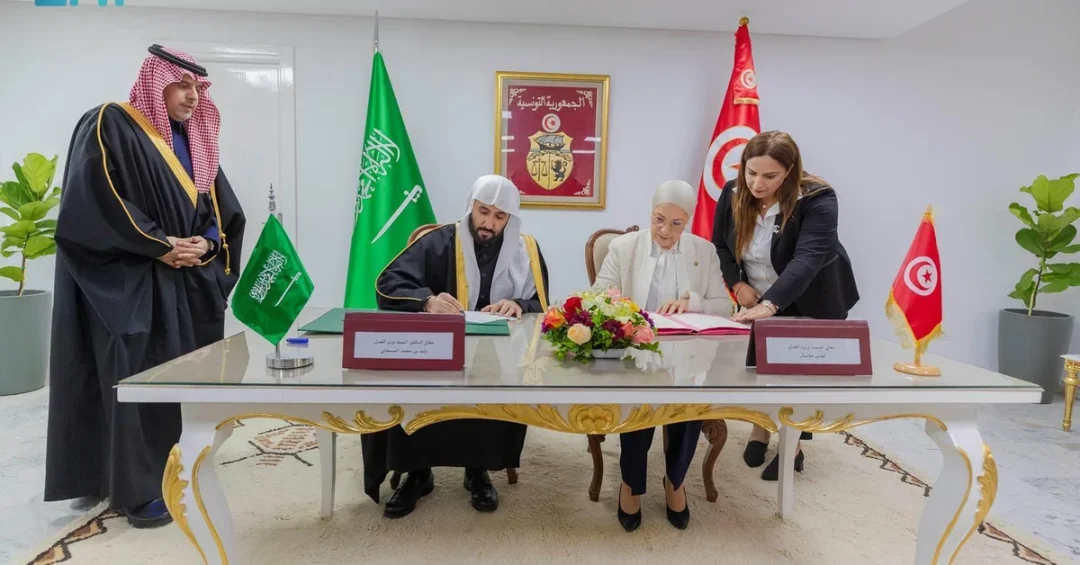
Saudi Minister of Justice Dr. Walid Al-Samaani signed an executive cooperation program with Tunisian Minister of Justice Leïla Jaffel on February 11, 2025, in Tunis, marking a significant step in judicial collaboration between the two nations. The program, established under the Riyadh Arab Agreement for Judicial Cooperation, aims to enhance coordination in judicial affairs and facilitate the exchange of expertise in court administration and training.
Context and Background
The signing took place during an official visit by Dr. Al-Samaani to the Republic of Tunisia, underscoring the strong bilateral ties between Saudi Arabia and Tunisia. The Riyadh Arab Agreement for Judicial Cooperation serves as a foundational framework for Arab states to collaborate on legal and judicial matters, promoting harmony and shared standards across the region.
Key Details
Both ministers discussed ways to strengthen judicial cooperation, focusing on legislative, technical, and training developments. Saudi Arabia’s judicial sector has seen significant advancements supported by the country’s wise leadership, including modernization initiatives aligned with Vision 2030. The program specifically aims to improve the training of judges and judicial personnel, ensuring high standards of justice delivery.
Implications and Impact
This agreement reinforces Saudi Arabia’s role as a leader in judicial reform within the Arab world. By sharing best practices and fostering joint training programs, the partnership is expected to enhance the efficiency and transparency of judicial systems in both countries. It also signals Saudi Arabia’s commitment to regional cooperation and legal harmonization.
Vision 2030 Alignment
The executive program directly supports Saudi Vision 2030’s goal of building a transparent and efficient judicial system. By engaging with international partners like Tunisia, the Kingdom continues to modernize its legal framework, promote the rule of law, and strengthen its position as a global hub for justice and investment.
20 Questions
Q1. Who signed the executive cooperation program?
A1. Saudi Minister of Justice Dr. Walid Al-Samaani and Tunisian Minister of Justice Leïla Jaffel signed the program in Tunis on February 11, 2025.
Q2. Under which agreement was the program established?
A2. The program was established under the Riyadh Arab Agreement for Judicial Cooperation, a framework for judicial collaboration among Arab states.
Q3. What are the main objectives of the program?
A3. The program aims to strengthen coordination in judicial affairs, facilitate exchange of expertise in court administration, and enhance training for judges and judicial personnel.
Q4. What topics did the ministers discuss during the meeting?
A4. They discussed ways to enhance judicial cooperation, including legislative, technical, and training developments in Saudi Arabia’s judicial sector.
Q5. How does this program support Saudi Vision 2030?
A5. It aligns with Vision 2030’s goal of building a transparent and efficient judicial system by promoting modernization and international cooperation.
Q6. What is the Riyadh Arab Agreement for Judicial Cooperation?
A6. It is a regional agreement among Arab countries to collaborate on legal and judicial matters, promote shared standards, and facilitate mutual legal assistance.
Q7. How will this program benefit judges and judicial personnel?
A7. It will provide enhanced training opportunities and enable the exchange of best practices, improving their skills and the overall quality of justice delivery.
Q8. Why is judicial reform important for Saudi Arabia?
A8. Judicial reform is key to achieving Vision 2030, as it enhances transparency, attracts investment, and ensures fair and efficient legal processes.
Q9. What role does Saudi Arabia play in regional judicial cooperation?
A9. Saudi Arabia is a leader in judicial reform and actively promotes collaboration through agreements like the Riyadh Arab Agreement, fostering legal harmonization.
Q10. How does the program facilitate exchange of expertise?
A10. It creates mechanisms for sharing best practices in court administration and judicial training, allowing both countries to learn from each other’s experiences.
Q11. What is the significance of signing in Tunis?
A11. Tunis, as the capital of Tunisia, symbolizes the strong bilateral ties and commitment to deepening cooperation between the two nations.
Q12. How does the program impact court administration?
A12. It aims to improve court administration by introducing efficient practices and technologies, making judicial processes more streamlined and accessible.
Q13. What legislative developments were discussed?
A13. The ministers discussed updates to laws that support modernization and alignment with international standards, enhancing the legal environment.
Q14. How does Saudi Arabia’s leadership support judicial sector development?
A14. The wise leadership of Saudi Arabia has provided continuous support for judicial reforms, including investments in technology and training.
Q15. What technical training is included in the program?
A15. The program includes training on digital tools for case management, legal research, and other technologies that improve efficiency and transparency.
Q16. How does this agreement strengthen bilateral relations?
A16. It deepens the partnership between Saudi Arabia and Tunisia by fostering cooperation in a critical sector, building trust and mutual understanding.
Q17. Will the program include exchange visits?
A17. Yes, the program likely includes exchange visits for judges and legal experts to share knowledge and observe practices firsthand.
Q18. How does judicial cooperation benefit regional stability?
A18. Harmonized legal systems and improved justice delivery contribute to regional stability by ensuring fairness and upholding the rule of law.
Q19. What is the expected long-term impact of the program?
A19. Over time, the program is expected to modernize judicial systems in both countries, increase public trust, and attract international investment.
Q20. How can other Arab countries benefit from this model?
A20. Other Arab countries can adopt similar bilateral programs under the Riyadh Arab Agreement, promoting regional judicial harmonization and shared progress.
Reader Feedback
We value your thoughts. Please share your feedback on this article.
Your feedback helps us improve our coverage.