


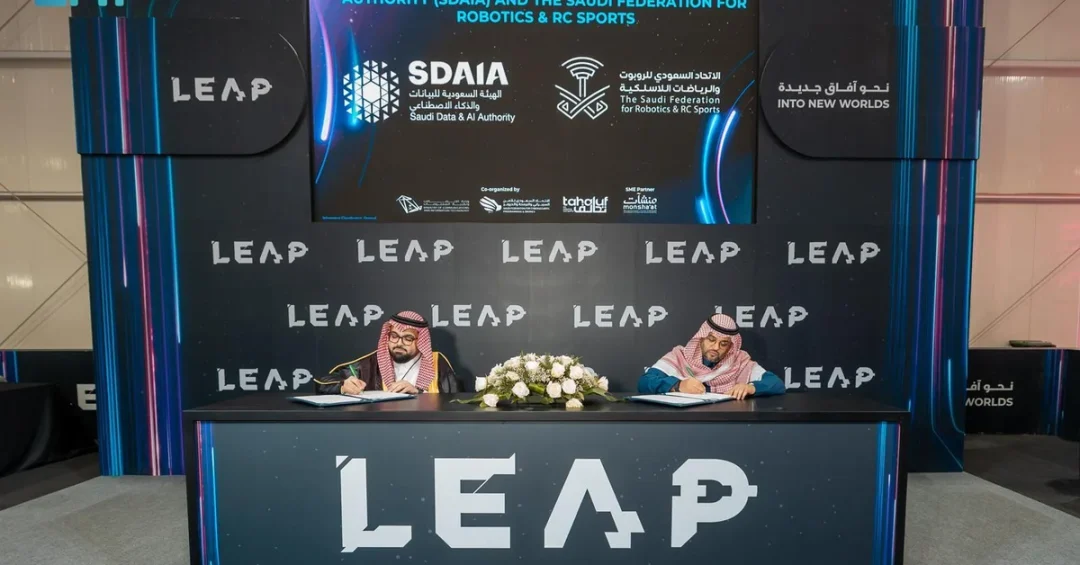
The Saudi Data and Artificial Intelligence Authority (SDAIA) signed a memorandum of understanding (MoU) with the Saudi Federation for Robotics and RC Sports on February 11, 2025, in Riyadh. The agreement aims to enhance integration, coordination, and capacity building in artificial intelligence (AI) and robotics, further cementing the Kingdom’s leadership in these transformative technologies.
Context and Background
This MoU is part of Saudi Arabia’s broader strategy under Vision 2030 to diversify the economy and position the Kingdom as a global hub for innovation. SDAIA, established in 2019, is the national authority overseeing data and AI initiatives, while the Saudi Federation for Robotics and RC Sports promotes robotics and remote-controlled sports across the Kingdom. The partnership underscores a concerted push to leverage AI and robotics for industrial, educational, and recreational advancements.
Key Details of the Agreement
Under the MoU, both parties will collaborate on data exchange and technical expertise sharing. They will develop joint training programs, including educational and professional initiatives to strengthen national capabilities in advanced technologies. The agreement also fosters academic partnerships and supports future cooperation in emerging industries through AI- and robotics-driven industrial applications. This structured collaboration aims to maximize the use of AI and data technologies, reinforce Saudi Arabia’s leadership in the field, and empower the robotics and RC sports ecosystem.
Implications and Impact
The MoU is expected to accelerate the integration of AI into robotics, benefiting sectors such as manufacturing, healthcare, and entertainment. By enhancing national expertise, Saudi Arabia aims to reduce reliance on foreign technology and create a skilled workforce for the future economy. International observers view this as a strategic move to align with global trends in automation and smart technologies, potentially attracting foreign investment and partnerships. The agreement also signals Saudi Arabia’s commitment to responsible AI development, as outlined in its national AI strategy.
Vision 2030 Alignment
This initiative directly supports Vision 2030 goals of economic diversification and building a knowledge-based society. By strengthening AI and robotics capabilities, Saudi Arabia is laying the groundwork for sustainable growth and global competitiveness. The partnership exemplifies the Kingdom’s proactive approach to embracing cutting-edge technologies while fostering collaboration between government entities and specialized federations.
20 Questions
Q1. What is SDAIA?
A1. SDAIA is the Saudi Data and Artificial Intelligence Authority, the national body responsible for governing data and AI initiatives in Saudi Arabia, established to drive the Kingdom’s digital transformation.
Q2. What is the Saudi Federation for Robotics and RC Sports?
A2. It is the official federation overseeing robotics and remote-controlled sports in Saudi Arabia, promoting innovation and competition in these fields.
Q3. When was the MoU signed?
A3. The MoU was signed on February 11, 2025, in Riyadh, Saudi Arabia.
Q4. What is the main purpose of the MoU?
A4. The MoU aims to enhance integration, coordination, and capacity building in AI and robotics between SDAIA and the Federation.
Q5. How will the MoU support AI and robotics?
A5. Through data exchange, technical expertise sharing, joint training programs, and developing AI-driven industrial applications.
Q6. What sectors could benefit from this agreement?
A6. Sectors such as manufacturing, healthcare, education, and entertainment could benefit from advances in AI and robotics.
Q7. How does this align with Vision 2030?
A7. It supports economic diversification and building a knowledge-based economy, key pillars of Vision 2030.
Q8. What is the role of SDAIA in Saudi Arabia?
A8. SDAIA leads data and AI governance, develops national strategies, and fosters innovation in these fields.
Q9. What is the Federation’s focus beyond sports?
A9. It promotes robotics education, competitions, and industrial applications, contributing to technical skills development.
Q10. What are joint training programs?
A10. They are educational and professional initiatives aimed at strengthening national capabilities in AI and robotics.
Q11. How will this MoU improve national expertise?
A11. By offering training and academic partnerships, it builds a skilled workforce for emerging technologies.
Q12. Why is data exchange important?
A12. Data exchange enables better AI model training and enhances decision-making for robotics applications.
Q13. How does this agreement support emerging industries?
A13. It fosters cooperation in AI- and robotics-driven applications, spurring innovation in new sectors.
Q14. Who benefits from the MoU?
A14. Saudi citizens, businesses, and the global tech community benefit from enhanced AI capabilities and partnerships.
Q15. Is this part of a larger strategy?
A15. Yes, it aligns with Saudi Arabia’s national AI strategy and Vision 2030’s technology goals.
Q16. What does the MoU mean for international partners?
A16. It signals Saudi Arabia’s commitment to AI and robotics, attracting foreign investment and collaboration.
Q17. How will the MoU be implemented?
A17. Through coordinated projects, training sessions, and joint initiatives over an agreed timeline.
Q18. What is the expected impact on RC sports?
A18. Integration of AI could enhance robotics competitions and develop new sport technologies.
Q19. How does this foster academic partnerships?
A19. Universities will collaborate on research and curricula to prepare students for AI and robotics careers.
Q20. What is the long-term vision for this partnership?
A20. To position Saudi Arabia as a global leader in AI and robotics, driving sustainable innovation and economic growth.
Reader Feedback
We value your thoughts. Please share your feedback on this article.
Your feedback helps us improve our coverage.