


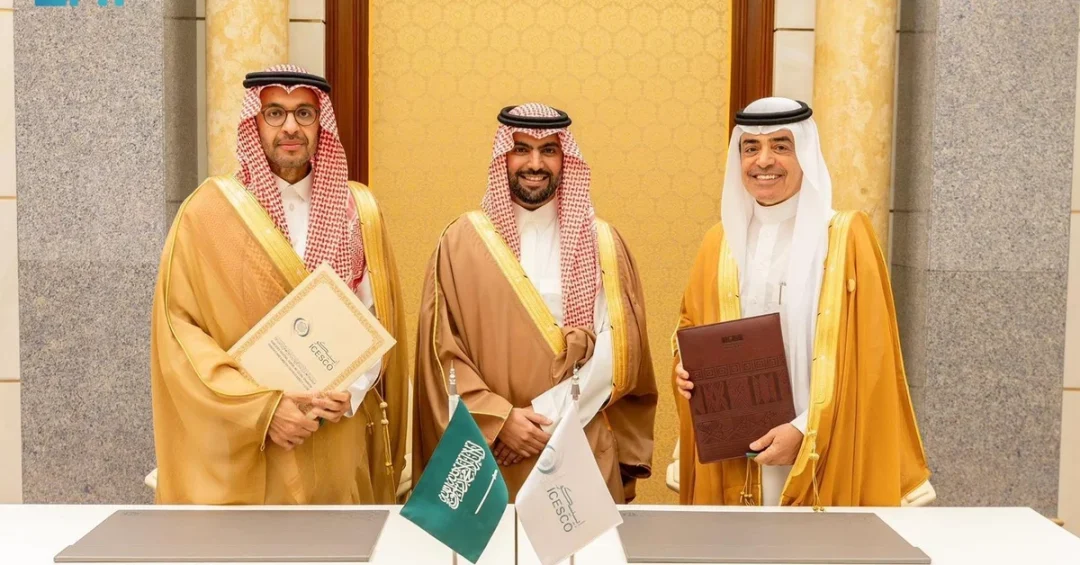
The Ministry of Culture, represented by Minister Prince Badr bin Abdullah bin Farhan, signed an implementation program with the Islamic World Educational, Scientific, and Cultural Organization (ICESCO) in Jeddah on February 12, 2025, to collaborate on the Illustrated Historical Dictionary of Arabic Calligraphy. The agreement, announced by the Saudi Press Agency, formalizes cooperation between the ministry and ICESCO to produce a comprehensive reference documenting the evolution and heritage of Arabic calligraphy across the Islamic world.
Context and Background
The Illustrated Historical Dictionary of Arabic Calligraphy project aligns with Saudi Arabia’s broader commitment to preserving and promoting Islamic cultural heritage as part of Vision 2030. Arabic calligraphy, recognized by UNESCO as an Intangible Cultural Heritage of Humanity, holds profound artistic and spiritual significance. This dictionary aims to compile historical scripts, manuscripts, and inscriptions from diverse regions, creating an authoritative scholarly resource for researchers, artists, and educators.
Key Details
The implementation program builds on a memorandum of understanding (MoU) signed in Riyadh in 2022 between the Ministry of Culture and ICESCO. Under the program, both parties will nominate Arabic calligraphy experts from institutions and institutes across the Islamic world to contribute to writing, editing, and reviewing the dictionary. Additionally, the collaboration involves developing a framework to identify the most renowned sources of Arabic calligraphy, including manuscripts, inscriptions, and artistic panels, ensuring global coverage of calligraphic traditions.
Implications and Impact
This project represents a milestone in cultural diplomacy, strengthening ties between Saudi Arabia and ICESCO member states. By documenting calligraphy in a standardized, illustrated format, the dictionary will facilitate academic exchange and enhance appreciation of Islamic art worldwide. It also underscores Saudi Arabia’s leadership in preserving the region’s cultural heritage, setting a precedent for future collaborative endeavors in the arts and humanities.
Vision 2030 Alignment
The initiative directly supports Vision 2030’s goal of enriching the Kingdom’s cultural identity and positioning Saudi Arabia as a global hub for heritage and creativity. Through partnerships like this, the Ministry of Culture continues to drive sustainable cultural development, fostering a deeper understanding of Islamic civilization while contributing to economic diversification through cultural tourism and education.
20 Questions
Q1. What is the Illustrated Historical Dictionary of Arabic Calligraphy?
A1. It is a collaborative project between the Saudi Ministry of Culture and ICESCO to produce a comprehensive reference documenting the history and styles of Arabic calligraphy across the Islamic world.
Q2. Who signed the implementation program on behalf of Saudi Arabia?
A2. The program was signed by Minister of Culture Prince Badr bin Abdullah bin Farhan during a ceremony in Jeddah on February 12, 2025.
Q3. What is ICESCO?
A3. ICESCO stands for the Islamic World Educational, Scientific, and Cultural Organization, a specialized agency focusing on education, science, and culture in Islamic countries.
Q4. When was the initial MoU between the Ministry and ICESCO signed?
A4. The memorandum of understanding for cultural cooperation was signed in Riyadh in 2022.
Q5. How will experts be selected for the dictionary?
A5. Both the Ministry and ICESCO will nominate Arabic calligraphy experts from various institutions and institutes across the Islamic world to contribute through writing, editing, and review.
Q6. What types of sources will the dictionary include?
A6. The dictionary will include manuscripts, inscriptions, and artistic panels to represent the diversity of Arabic calligraphy heritage.
Q7. Why is Arabic calligraphy significant?
A7. Arabic calligraphy is an ancient art form recognized by UNESCO as Intangible Cultural Heritage, with deep artistic, religious, and historical importance.
Q8. How does this project support Vision 2030?
A8. It aligns with Vision 2030’s goal of preserving Saudi cultural identity and promoting the Kingdom as a global center for heritage and creativity.
Q9. What is the role of the Saudi Ministry of Culture in this project?
A9. The Ministry leads the initiative, coordinates with ICESCO, and ensures the dictionary reflects scholarly standards and cultural values.
Q10. How will the dictionary be used by researchers?
A10. It will serve as an authoritative reference for studying calligraphy styles, historical scripts, and cultural exchanges across the Islamic world.
Q11. What is the expected timeline for completion?
A11. The program implementation has just begun, and a timeline will be determined by the scope of work and expert contributions.
Q12. Will the dictionary be available online?
A12. While not specified, digital publication is likely to ensure wide accessibility for global audiences.
Q13. Which countries are involved in the project?
A13. The project involves experts and institutions from across the Islamic world, with ICESCO facilitating participation by its 54 member states.
Q14. Does this project relate to other Saudi heritage initiatives?
A14. Yes, it complements Saudi efforts like the Year of Arabic Calligraphy and the King Salman Global Academy for Arabic Language.
Q15. How will the dictionary be illustrated?
A15. It will include visual examples of calligraphic works, such as photographs of manuscripts and inscriptions, to aid understanding.
Q16. What languages will the dictionary be published in?
A16. The primary language is Arabic, but translations into other languages may be considered for international reach.
Q17. How does this initiative promote cultural tourism?
A17. By highlighting the richness of Arabic calligraphy, the dictionary can attract tourists interested in Islamic art and heritage sites.
Q18. What is the budget for the dictionary project?
A18. The financial details have not been disclosed but are covered under the existing MoU and program agreements.
Q19. How can institutions contribute to the dictionary?
A19. Institutions can nominate experts or provide access to calligraphy collections through ICESCO or the Ministry of Culture.
Q20. What is the unique value of this dictionary?
A20. It will be the first comprehensive illustrated dictionary covering Arabic calligraphy across the entire Islamic world, filling a significant gap in scholarship.
Reader Feedback
We value your thoughts. Please share your feedback on this article.
Your feedback helps us improve our coverage.