


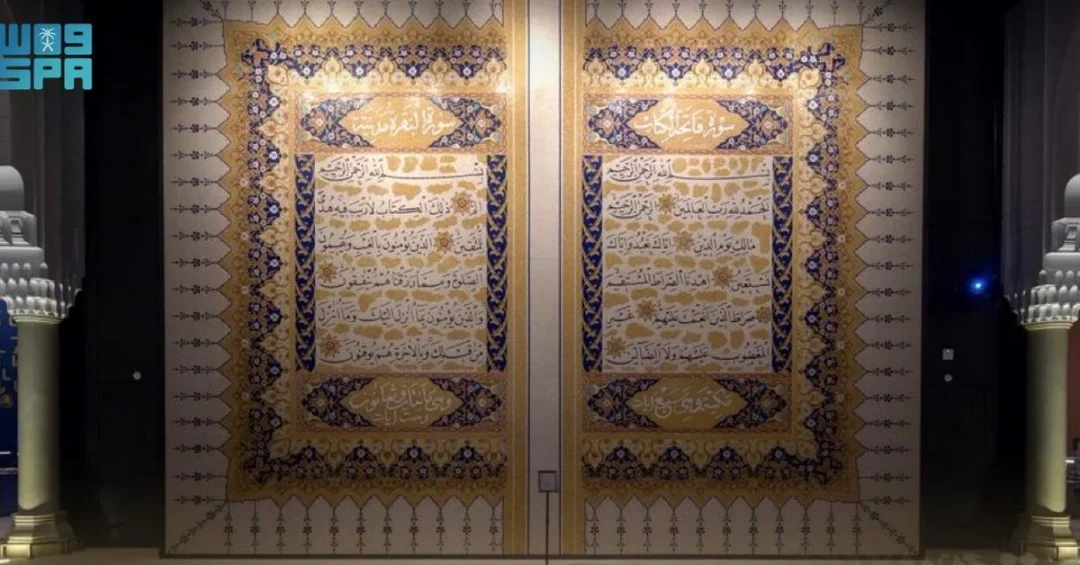
The Museum of the Holy Quran at the Hira Cultural District in Makkah has unveiled a stunning artistic panoramic experience and world map exhibit, showcasing the Holy Quran’s global reach and profound influence. Officially opened by the Royal Commission for Makkah City and Holy Sites, the museum offers visitors a journey through the Quran’s history and artistry, with a captivating mosaic of Surah Al-Fatiha and the opening verses of Surah Al-Baqarah enhancing the display.
Context and Background
Located at the foot of Hira Mountain, where the first revelation of the Quran was received by Prophet Muhammad (peace be upon him), the Hira Cultural District serves as a significant cultural and historical landmark. It attracts visitors year-round as a vital gateway for those traveling to and from Makkah. Development of the district is overseen by the Royal Commission for Makkah City and Holy Sites, in collaboration with the Makkah Municipality, aligning with Saudi Arabia’s Vision 2030 to enhance religious tourism and cultural heritage.
Key Details
The Museum of the Holy Quran features a collection of rare Quranic manuscripts spanning centuries, along with a dedicated visual display room that traces the Quran’s spread across continents. The panoramic experience includes a world map illustrating the Quran’s impact on hearts and minds worldwide, while the intricate mosaic of Surah Al-Fatiha and Surah Al-Baqarah highlights the beauty and artistry of Islamic calligraphy. According to the Saudi Press Agency, the museum aims to provide an immersive educational experience for both pilgrims and tourists.
Implications and Impact
The museum’s opening reinforces Saudi Arabia’s role as a global hub for Islamic culture and learning. By showcasing the Quran’s historical journey and artistic heritage, the initiative fosters interfaith dialogue and cultural appreciation among international visitors. It also supports the Kingdom’s efforts to diversify its tourism offerings beyond religious pilgrimages, attracting a broader audience to the Hira Cultural District. This development is expected to boost local tourism and economic growth in the Makkah region.
Vision 2030 Alignment
The Museum of the Holy Quran at Hira Cultural District is a testament to Saudi Arabia’s commitment to preserving and promoting Islamic heritage as part of Vision 2030. By integrating cultural experiences with modern tourism infrastructure, the project enhances the Kingdom’s global standing and enriches the pilgrimage experience. The museum stands as a forward-looking symbol of Saudi Arabia’s dedication to sharing the Quran’s message of peace and beauty with the world.
20 Questions
Q1. Where is the Museum of the Holy Quran located?
A1. The museum is located at the Hira Cultural District in Makkah, at the foot of Hira Mountain, the site of the first Quranic revelation.
Q2. What is the main feature of the museum’s new exhibit?
A2. The exhibit features a stunning world map and panoramic experience demonstrating the Holy Quran’s global impact and influence on hearts and minds.
Q3. Which suras are highlighted in a mosaic at the museum?
A3. A mosaic of Surah Al-Fatiha (the opening chapter) and the opening verses of Surah Al-Baqarah is displayed.
Q4. What types of manuscripts does the museum collect?
A4. The museum houses a collection of rare Quranic manuscripts from various centuries and regions.
Q5. What is the purpose of the visual display room?
A5. The visual display room traces the Quran’s spread across continents over the centuries.
Q6. Who oversees the development of Hira Cultural District?
A6. The Royal Commission for Makkah City and Holy Sites, in collaboration with the Makkah Municipality, oversees the district’s development.
Q7. Why is Hira Mountain significant in Islam?
A7. Hira Mountain is where Prophet Muhammad received the first revelation of the Quran from Angel Gabriel.
Q8. How does the museum contribute to Vision 2030?
A8. It supports Vision 2030 by enhancing religious tourism and preserving Islamic heritage.
Q9. Who announced the museum’s exhibit details?
A9. The Saudi Press Agency (SPA) reported the opening and details of the exhibit.
Q10. What is the target audience of the museum?
A10. The museum targets pilgrims, tourists, and scholars interested in Islamic culture and history.
Q11. Does the museum showcase any artistic elements?
A11. Yes, it includes intricate mosaics and calligraphic art highlighting the Quran’s beauty.
Q12. How does the museum demonstrate the Quran’s global impact?
A12. Through a world map exhibit that illustrates the Quran’s reach across different continents and cultures.
Q13. What is the Hira Cultural District known for?
A13. It is a cultural and historical landmark serving as a gateway for travelers to and from Makkah.
Q14. Is the museum open year-round?
A14. Yes, the Hira Cultural District attracts visitors throughout the year.
Q15. What other features does the district offer?
A15. The district includes attractions that combine cultural heritage with modern tourism facilities.
Q16. How does the museum advance interfaith dialogue?
A16. By showcasing the Quran’s artistic and historical significance, it fosters appreciation among non-Muslim visitors.
Q17. What role does the Makkah Municipality play in the district?
A17. The municipality collaborates with the Royal Commission to develop and maintain the district.
Q18. Are there any educational programs at the museum?
A18. The museum offers immersive educational experiences about the Quran’s history and impact.
Q19. How does the museum benefit local tourism?
A19. It attracts a broader audience to Makkah, boosting local tourism and economic growth.
Q20. What is the overall mission of the museum?
A20. To preserve and share the Quran’s message of peace and beauty, aligning with Saudi Arabia’s cultural vision.
Reader Feedback
We value your thoughts. Please share your feedback on this article.
Your feedback helps us improve our coverage.