


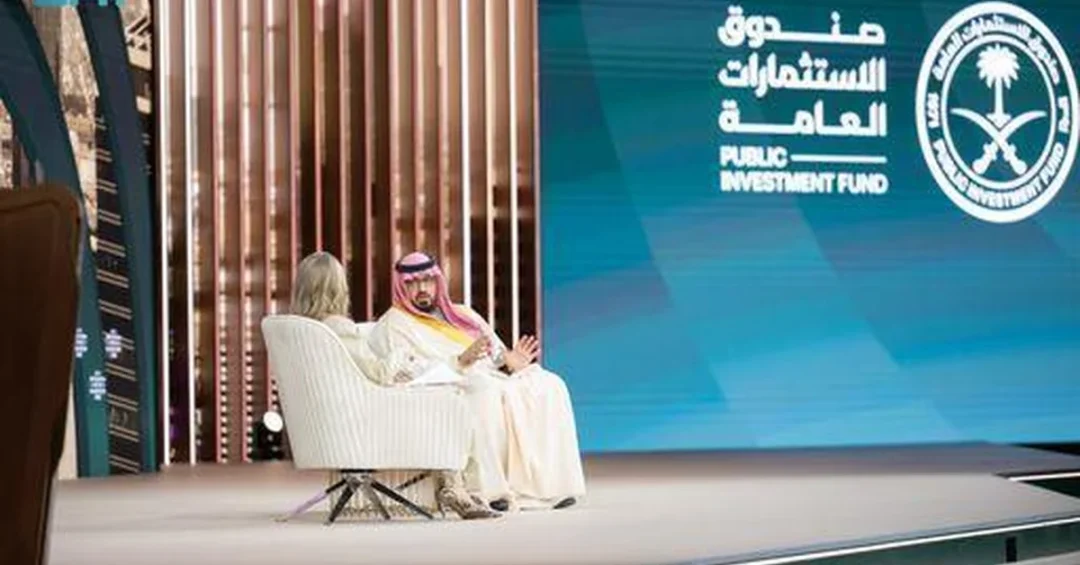
Saudi Arabia plans to invest approximately $1 trillion in infrastructure by 2030, Minister of Economy and Planning Faisal Alibrahim announced at the Public Investment Fund (PIF) Private Sector Forum in Riyadh. The minister stated that the Kingdom’s non-oil sector is set for substantial growth by 2026, driven by the expansion of key industries and clear long-term economic objectives. This investment underscores Saudi Arabia’s commitment to transforming its economy under Vision 2030.
Context and Background
The announcement comes as Saudi Arabia accelerates its economic diversification efforts, reducing reliance on oil revenues. Minister Alibrahim emphasized that PIF plays a central role in establishing and funding strategic companies that foster new industries and strengthen government integration. The infrastructure spending targets sectors such as transport, energy, urban development, and digital infrastructure, aligning with national priorities.
Key Details
Speaking at the PIF Private Sector Forum, Minister Alibrahim highlighted that PIF’s mission extends beyond financial returns, focusing on advancing the knowledge economy and introducing innovative business models. He also underscored PIF’s commitment to developing national talent and human capital. The minister described the Kingdom’s economic transformation as a fundamental shift that redefines the national economy, not merely a transitional phase. The $1 trillion figure includes both public and private sector contributions, with private sector partnerships being a key driver.
Implications and Impact
This massive infrastructure investment is expected to create numerous jobs, stimulate non-oil industries, and enhance Saudi Arabia’s global competitiveness. It will support the growth of sectors like logistics, manufacturing, and tourism, positioning the Kingdom as a leading investment destination. Regionally, the investment reinforces Saudi Arabia’s role as a stable economic power in the Middle East, attracting international partners and fostering economic integration with neighboring countries. Globally, it signals confidence in Saudi Arabia’s long-term economic vision and its ability to execute large-scale projects.
Vision 2030 Alignment
The infrastructure investment directly supports Vision 2030’s goals of economic diversification, increased non-oil GDP contribution, and enhanced quality of life. By developing world-class infrastructure, Saudi Arabia aims to become a hub for business, tourism, and innovation. Minister Alibrahim reaffirmed that PIF will continue to foster public-private partnerships to ensure sustainable growth and the successful realization of Vision 2030. This forward-looking approach cements Saudi Arabia’s position as a dynamic and modern economy on the global stage.
20 Questions
Q1. What is the total infrastructure investment Saudi Arabia plans by 2030?
A1. Saudi Arabia plans to invest approximately $1 trillion in infrastructure by 2030, as announced by Minister of Economy and Planning Faisal Alibrahim at the PIF Private Sector Forum.
Q2. Who made the announcement about the $1 trillion infrastructure investment?
A2. The announcement was made by Saudi Arabia’s Minister of Economy and Planning, Faisal Alibrahim, during his speech at the Public Investment Fund (PIF) Private Sector Forum.
Q3. What event was the $1 trillion infrastructure investment announced at?
A3. The investment was announced at the Public Investment Fund (PIF) Private Sector Forum, held in Riyadh, Saudi Arabia.
Q4. What is the role of the Public Investment Fund (PIF) in the infrastructure investment?
A4. PIF plays a central role by establishing and funding strategic companies that drive economic growth and private-sector partnerships, contributing to the $1 trillion investment.
Q5. How does the infrastructure investment relate to Vision 2030?
A5. The investment directly supports Vision 2030’s goals of diversifying the economy, reducing reliance on oil, and boosting non-oil sectors through strategic infrastructure development.
Q6. What sectors will the infrastructure investment target?
A6. The investment targets sectors including transportation, energy, urban development, digital infrastructure, and logistics, among others aligned with national priorities.
Q7. When is the non-oil sector expected to see substantial growth?
A7. Minister Alibrahim stated that Saudi Arabia’s non-oil sector is poised for substantial growth by 2026, driven by key industry expansions.
Q8. How will private sector companies participate in the infrastructure investment?
A8. Private sector companies are expected to partner through public-private partnerships (PPPs) and contribute to the $1 trillion investment, as emphasized by the minister.
Q9. What is the significance of the non-oil sector growth for Saudi Arabia?
A9. Non-oil sector growth is crucial for economic diversification, reducing oil dependency, and increasing high-value exports, as outlined in Vision 2030.
Q10. How does PIF contribute to the knowledge economy?
A10. PIF advances the knowledge economy by introducing innovative business models, funding strategic sectors, and supporting human capital development.
Q11. What did Minister Alibrahim say about the nature of Saudi Arabia’s economic transformation?
A11. He described it as a fundamental shift that redefines the national economy, not just a transitional phase, emphasizing long-term change.
Q12. How does the infrastructure investment create jobs?
A12. The investment stimulates new industries and large-scale projects, generating employment opportunities across construction, engineering, technology, and services sectors.
Q13. What is the expected impact on Saudi Arabia’s global competitiveness?
A13. World-class infrastructure will enhance Saudi Arabia’s attractiveness for foreign investment, tourism, and business, boosting its global economic standing.
Q14. How does the investment support regional economic integration?
A14. By developing logistics and transport networks, the investment strengthens Saudi Arabia’s role as a regional economic hub, facilitating trade and connectivity.
Q15. What role does human capital play in the infrastructure plan?
A15. PIF is committed to developing national talent and human capital, ensuring a skilled workforce to execute and manage infrastructure projects.
Q16. How will the investment affect oil revenue dependency?
A16. The investment is part of Vision 2030’s diversification strategy, reducing reliance on oil by expanding non-oil industries and exports.
Q17. What is the timeframe for the $1 trillion investment?
A17. The investment is planned to be executed by 2030, aligning with the timeline of Saudi Vision 2030.
Q18. Are there any previous announcements similar to this investment?
A18. The $1 trillion figure was first highlighted by Minister Alibrahim at the forum, though Saudi Arabia has previously announced large-scale projects under Vision 2030.
Q19. How does the investment align with international economic trends?
A19. The investment aligns with global shifts toward sustainable infrastructure, digitalization, and public-private partnerships, positioning Saudi Arabia at the forefront.
Q20. What is the long-term vision for the Saudi economy after 2030?
A20. The investment lays the foundation for a diversified, knowledge-based economy beyond 2030, with sustained growth driven by private sector innovation and global integration.
Reader Feedback
We value your thoughts. Please share your feedback on this article.
Your feedback helps us improve our coverage.