


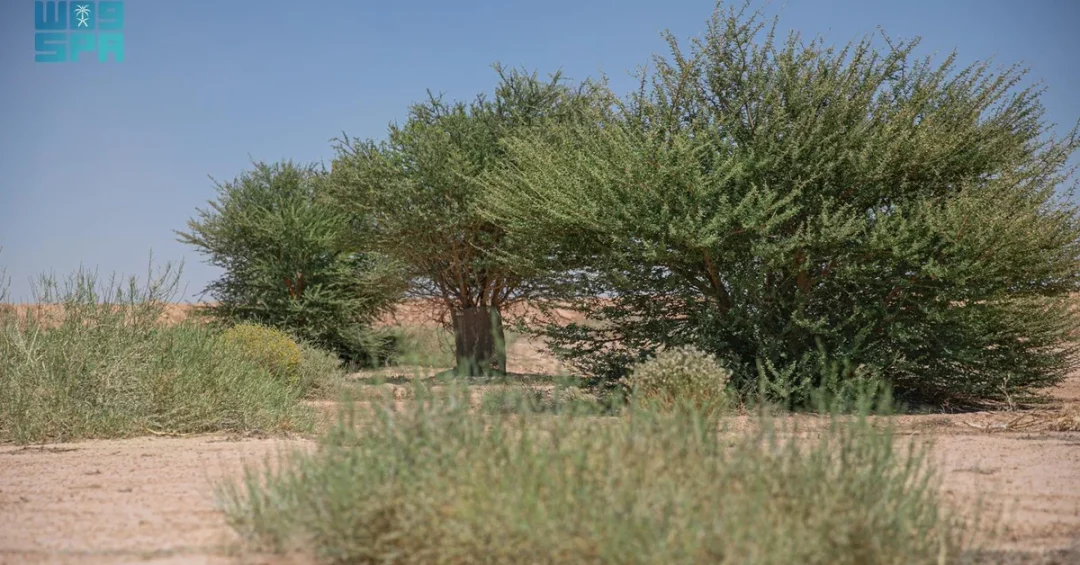
The Wadi Mira Restoration Project, led by Saudi Arabian Mining Company (Ma’aden) in collaboration with the Ministry of Environment, Water and Agriculture, has revitalized a 140-kilometer valley in the Northern Borders Region using advanced native plant cultivation techniques. Announced by the Saudi Press Agency on February 17, 2025, the initiative aims to balance industrial growth with environmental sustainability, turning Wadi Mira into a thriving ecological sanctuary.
Context and Background
Wadi Mira, stretching from southwest of Hazm Al-Jalamid to the Iraqi border, has long been a vital natural watercourse and a popular destination for locals and nature enthusiasts during rainy seasons. The valley’s significance extends beyond recreation; it supports biodiversity and plays a key role in the region’s ecological health. The restoration project is part of broader efforts under Saudi Vision 2030 and the Saudi Green Initiative to combat desertification, enhance wildlife habitats, and promote sustainable development.
Key Details
Ma’aden has planted 2,450 native trees—including species such as Sidr, Acacia, Prosopis cineraria, and Tamarix aphylla—along a 1,000-meter stretch on the western side of Wadi Mira. Additionally, 3.6 million seedlings were scattered over an area of 9 million cubic meters as part of the Wadi Mira Green Initiative. The project aims to plant 20 million trees by 2040 using renewable water sources, aligning with the national target to increase vegetation cover and reduce carbon emissions. The valley now hosts a diverse array of birds and wildlife, demonstrating the success of rehabilitation efforts in restoring ecological balance.
Implications and Impact
The restoration complements industrial activities at Hazm Al-Jalamid, the Kingdom’s phosphate capital located north of Arar and Turaif. This phosphate mine significantly contributes to the national economy by supplying minerals for fertilizer production, supporting global agriculture. By rehabilitating Wadi Mira, Ma’aden aims to transform the valley into a sustainable natural sanctuary that serves both residents and tourists while preserving the environment and local communities. The project sets a precedent for integrating industrial operations with environmental stewardship in arid regions.
Vision 2030 Alignment
The Wadi Mira Restoration Project directly supports Saudi Vision 2030 objectives of environmental sustainability, natural resource conservation, and economic diversification. By enhancing biodiversity, promoting eco-tourism, and mitigating climate change impacts, the initiative contributes to the Kingdom’s commitment to a greener future. This project exemplifies how public-private partnerships can advance national goals while fostering local ecosystem health.
20 Questions
Q1. What is the Wadi Mira Restoration Project?
A1. It is a Saudi initiative led by Ma’aden to rehabilitate Wadi Mira in the Northern Borders Region using native plant cultivation to restore ecological balance and support Vision 2030 environmental goals.
Q2. Where is Wadi Mira located?
A2. Wadi Mira is located in the Northern Borders Region of Saudi Arabia, stretching over 140 kilometers from southwest of Hazm Al-Jalamid to the Iraqi border.
Q3. What techniques were used for restoration?
A3. Advanced techniques for cultivating native plants, including direct planting and seed scattering, were used to restore the valley’s vegetation and ecological health.
Q4. How many trees were planted?
A4. Ma’aden planted 2,450 trees of native species along a 1,000-meter stretch on the western side of Wadi Mira.
Q5. Which tree species were planted?
A5. Native species include Sidr, Acacia, Prosopis cineraria, and Tamarix aphylla, which are well-adapted to the local climate.
Q6. How many seedlings were scattered?
A6. Over 3.6 million seedlings were scattered across 9 million cubic meters as part of the Wadi Mira Green Initiative.
Q7. What is the long-term tree planting target?
A7. The project aims to plant 20 million trees by 2040 using renewable water sources.
Q8. How does the project relate to the Saudi Green Initiative?
A8. It aligns with the Saudi Green Initiative’s goal to increase vegetation cover, combat desertification, and reduce carbon emissions.
Q9. What wildlife has returned to Wadi Mira?
A9. The valley now hosts a diverse array of birds and wildlife, indicating successful ecosystem rejuvenation.
Q10. What is Hazm Al-Jalamid?
A10. Hazm Al-Jalamid is a town in northern Saudi Arabia that has developed into the Kingdom’s phosphate capital, supporting fertilizer production for global agriculture.
Q11. How does the restoration balance industrial growth?
A11. It mitigates environmental impacts of nearby phosphate mining while promoting sustainable development and eco-tourism.
Q12. What is the economic significance of the phosphate mine?
A12. The mine yields phosphate minerals crucial for fertilizer production, supporting global agriculture and grain production.
Q13. Who led the restoration project?
A13. The project was led by Saudi Arabian Mining Company (Ma’aden) in collaboration with relevant authorities.
Q14. What is the purpose of the Wadi Mira Green Initiative?
A14. It aims to restore ecological balance, create wildlife habitats, combat desertification, and mitigate climate change.
Q15. How does the project support tourism?
A15. It transforms the valley into a sustainable natural sanctuary for residents and tourists, enhancing eco-tourism opportunities.
Q16. What is the role of renewable water sources?
A16. Renewable water sources are used for tree planting, ensuring sustainability and reducing strain on non-renewable groundwater.
Q17. How does this project align with Vision 2030?
A17. It supports environmental sustainability, natural resource conservation, and economic diversification goals of Vision 2030.
Q18. What is the total length of Wadi Mira?
A18. Wadi Mira stretches over 140 kilometers from southwest of Hazm Al-Jalamid to the Iraqi border.
Q19. How does the project benefit local communities?
A19. It preserves the environment, provides recreational spaces, and promotes sustainable practices that support local livelihoods.
Q20. Who announced the project updates?
A20. The Saudi Press Agency announced the rehabilitation progress on February 17, 2025.
Reader Feedback
We value your thoughts. Please share your feedback on this article.
Your feedback helps us improve our coverage.