


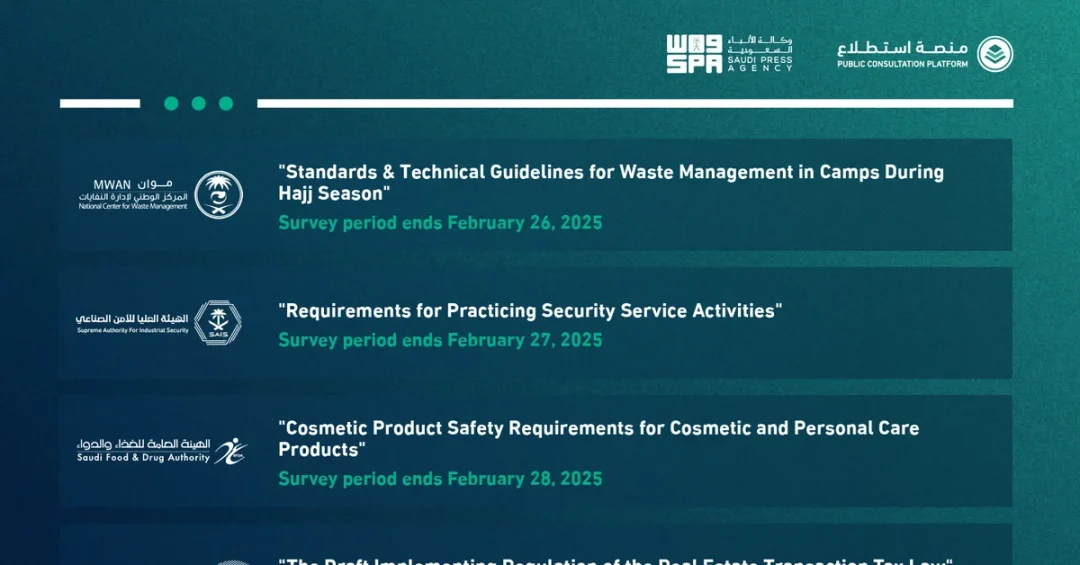
RIYADH — The National Competitiveness Center (NCC) has opened 20 projects for public consultation through its Istitlaa platform, inviting feedback from citizens, government entities, and the private sector before final approval. The initiative, announced on February 17, 2025, via the Saudi Press Agency, underscores Saudi Arabia’s commitment to transparent and participatory policymaking aligned with Vision 2030 reforms.
Context and Background
The Istitlaa platform, operated by the NCC, serves as a digital channel for stakeholders to review and comment on draft regulations and projects affecting the business environment and economic development. By seeking input prior to enactment, the platform reinforces the Kingdom’s legislative transparency and encourages civic engagement. The 20 projects span multiple sectors and were developed in cooperation with eight government agencies.
Key Details
Among the projects is a set of “Standards & Technical Guidelines for Waste Management in Camps during Hajj Season”, proposed by the National Center for Waste Management. This initiative defines requirements and controls for waste handling in holy sites during Hajj, with public feedback accepted until February 26, 2025. The Supreme Authority for Industrial Security has put forward “Requirements for Practicing Security Service Activities” to regulate licensed security services, open for comment until February 27, 2025. The Saudi Food and Drug Authority (SFDA) seeks input on “Cosmetic Product Safety Requirements for Cosmetic and Personal Care Products”, establishing safety, labeling, and packaging guidelines, with a deadline of February 28, 2025. Additionally, the Zakat, Tax and Customs Authority (ZATCA) invites views on the Draft Implementing Regulation of the Real Estate Transaction Tax Law (RETT), covering definitions, tax scope, due dates, exemptions, and refund provisions, open until March 15, 2025.
Implications and Impact
Public consultation on these projects allows for diverse input, helping to refine regulations that directly affect businesses and residents. The waste management guidelines aim to improve sustainability during Hajj, a key religious event. Security service regulations enhance safety standards. Cosmetics rules align with global safety norms. The RETT regulation clarifies property tax obligations, fostering a more predictable real estate market. Such transparent processes boost investor confidence and support economic diversification under Vision 2030.
Vision 2030 Alignment
The NCC’s Istitlaa platform exemplifies Saudi Arabia’s drive toward efficient, inclusive governance—a core pillar of Vision 2030. By integrating stakeholder feedback, the Kingdom ensures its regulatory environment remains competitive, business-friendly, and aligned with international best practices. These 20 projects, spanning waste management, security, cosmetics, and taxation, reflect ongoing efforts to modernize legislation and enhance quality of life, positioning Saudi Arabia as a leading global investment destination.
20 Questions
Q1. What is the National Competitiveness Center?
A1. The NCC is a Saudi government entity tasked with improving the Kingdom’s business environment and competitiveness, in line with Vision 2030 goals.
Q2. What is the Istitlaa platform?
A2. Istitlaa is the NCC’s public consultation platform that allows citizens, businesses, and agencies to review and comment on draft regulations before they are finalized.
Q3. How many projects are open for feedback?
A3. A total of 20 projects related to economic and development affairs are available for public input through Istitlaa.
Q4. Which agency developed the waste management project?
A4. The waste management project was developed by the National Center for Waste Management, focusing on camps during Hajj season.
Q5. What does the waste management project cover?
A5. It defines requirements, controls, and technical guidelines for managing waste in camps at holy sites during Hajj.
Q6. When does public feedback close for the waste management project?
A6. The feedback period ends on February 26, 2025.
Q7. What is the Supreme Authority for Industrial Security’s project?
A7. It proposed “Requirements for Practicing Security Service Activities” to regulate licensed security services in the Kingdom.
Q8. Until when can the public comment on the security services project?
A8. Comments are accepted until February 27, 2025.
Q9. What is the SFDA’s cosmetic product project?
A9. It establishes safety requirements for cosmetic and personal care products, including labeling and packaging standards.
Q10. When does the SFDA consultation close?
A10. Public consultation on the cosmetic safety project ends February 28, 2025.
Q11. What is ZATCA’s proposed regulation?
A11. ZATCA seeks input on the Draft Implementing Regulation of the Real Estate Transaction Tax Law (RETT).
Q12. What does the RETT draft regulation clarify?
A12. It clarifies definitions, tax scope, due dates, exemptions, and refund procedures related to real estate transactions.
Q13. When is the deadline for RETT feedback?
A13. The public consultation period ends on March 15, 2025.
Q14. How does Istitlaa promote transparency?
A14. By allowing stakeholders to review and contribute to draft regulations before they become law, ensuring openness in legislative processes.
Q15. Who can participate in the consultations?
A15. The general public, government agencies, and the private sector are all invited to submit their views.
Q16. Why is public participation important?
A16. It fosters a culture of engagement and helps create regulations that better serve the community and business environment.
Q17. How do these projects align with Vision 2030?
A17. They support economic diversification, regulatory efficiency, and improved quality of life, key pillars of Vision 2030.
Q18. What is the benefit of the waste management guidelines for Hajj?
A18. They ensure cleaner, more sustainable practices during the annual pilgrimage, enhancing the experience for millions of pilgrims.
Q19. How does the RETT regulation impact the real estate market?
A19. It provides clearer rules, which can increase investor confidence and stimulate the property sector.
Q20. Where can more information be found about these projects?
A20. Details and submission links are available on the Istitlaa platform, run by the National Competitiveness Center.
Reader Feedback
We value your thoughts. Please share your feedback on this article.
Your feedback helps us improve our coverage.