


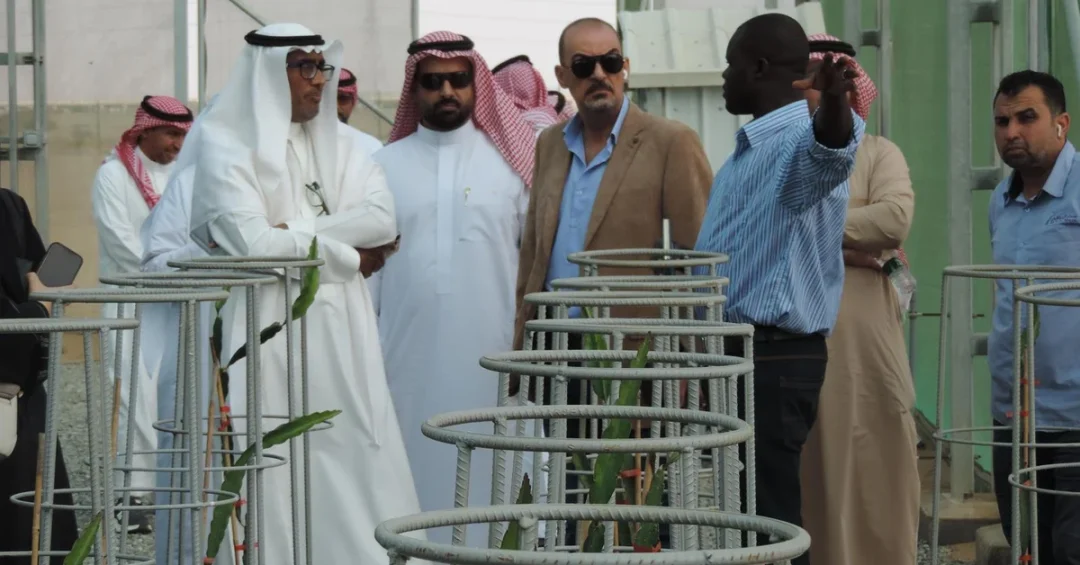
Teams from the National Center for Vegetation Cover Development and Combating Desertification (NCVC), King Abdullah University of Science and Technology (KAUST), and the University of Jeddah convened at the Experiment Station and Ecological Observatory at Wadi Qudaid National Park on February 17, 2025. The meeting aimed to enhance research collaboration with academic institutions to drive sustainable environmental solutions in the Kingdom of Saudi Arabia.
Context and Background
The Experiment Station and Ecological Observatory at Wadi Qudaid National Park, located in Khulais governorate, is a product of NCVC’s strategic partnership with KAUST. It serves as a hub for cutting-edge research in vegetation restoration and ecosystem conservation. The collaboration with the University of Jeddah further strengthens efforts in desertification combating, greening, and biodiversity conservation, leveraging the university’s extensive expertise in environmental studies.
Key Details
Designed as a fully integrated research facility, the station features greenhouses, experimental fields, and specialized research areas for testing greening techniques and environmental restoration strategies. It supports key research initiatives, including the KSA Native Genome Project, which seeks to enhance understanding of native plant ecosystems. Additionally, the facility plays a crucial role in translating research into innovative, sustainable greening solutions, in line with the Saudi Green Initiative’s goals.
Implications and Impact
The strengthened collaboration among NCVC, KAUST, and the University of Jeddah is expected to accelerate the development of sustainable environmental practices in the region. By combining expertise in vegetation cover development, advanced technology, and academic research, the partnership aims to combat desertification effectively and promote biodiversity. This initiative also supports global efforts to address climate change and land degradation, positioning Saudi Arabia as a leader in environmental innovation.
Vision 2030 Alignment
NCVC remains committed to preserving and restoring vegetation cover across the Kingdom, monitoring ecosystems, rehabilitating degraded lands, preventing illegal logging, and managing rangelands, forests, and national parks. These efforts align directly with Saudi Arabia’s broader sustainability vision under Vision 2030, ensuring the protection and expansion of green spaces for future generations. The Wadi Qudaid National Park project exemplifies how strategic academic and institutional partnerships are driving the Kingdom’s green transformation.
20 Questions
Q1. What is Wadi Qudaid National Park?
A1. Wadi Qudaid National Park is a protected area in Khulais governorate, Saudi Arabia, serving as a hub for environmental research and conservation efforts focused on vegetation restoration and ecosystem preservation.
Q2. Who met at the Experiment Station at Wadi Qudaid?
A2. Teams from NCVC, KAUST, and the University of Jeddah met at the station to discuss enhancing research collaboration for sustainable environmental solutions.
Q3. What is the role of NCVC?
A3. NCVC focuses on developing vegetation cover, combating desertification, rehabilitating degraded lands, and managing rangelands, forests, and national parks in Saudi Arabia.
Q4. Why is KAUST involved in this initiative?
A4. KAUST brings advanced research capabilities in science and technology to support vegetation restoration, ecosystem conservation, and sustainable greening solutions.
Q5. How does the University of Jeddah contribute?
A5. The University of Jeddah contributes expertise in environmental studies, helping to combat desertification and promote biodiversity conservation through academic research.
Q6. What is the Saudi Green Initiative?
A6. The Saudi Green Initiative is a national effort to plant billions of trees, reduce carbon emissions, and protect the environment, aligned with Vision 2030 sustainability goals.
Q7. What is the KSA Native Genome Project?
A7. It is a research initiative to understand native plant ecosystems in Saudi Arabia, supporting the development of effective greening and restoration strategies.
Q8. What facilities does the Experiment Station have?
A8. The station includes greenhouses, experimental fields, and specialized research areas for testing greening techniques and environmental restoration.
Q9. Why is desertification a key concern in Saudi Arabia?
A9. Desertification threatens vegetation cover and biodiversity, making it a critical focus for NCVC and partners under the Kingdom’s sustainability vision.
Q10. How does this collaboration align with Vision 2030?
A10. It supports Vision 2030 by promoting environmental sustainability, enhancing green spaces, and leveraging research to achieve long-term ecological goals.
Q11. What is the main goal of the Experiment Station?
A11. To serve as a hub for cutting-edge research in vegetation restoration, ecosystem conservation, and translating research into practical greening solutions.
Q12. How does the partnership benefit local ecosystems?
A12. It develops innovative techniques to restore degraded lands, conserve biodiversity, and prevent illegal logging, protecting natural habitats.
Q13. Who announced the meeting?
A13. The meeting was announced by the Saudi Press Agency (SPA) on February 17, 2025.
Q14. What is NCVC’s overall mission?
A14. NCVC’s mission is to preserve and restore vegetation cover, combat desertification, and manage natural resources sustainably across the Kingdom.
Q15. How does KAUST support environmental research?
A15. KAUST provides advanced facilities, expertise in science and engineering, and strategic partnerships to address environmental challenges.
Q16. What is the significance of Wadi Qudaid National Park?
A16. It acts as a living laboratory for environmental studies, enabling hands-on research to combat desertification and promote green growth.
Q17. Are there other similar stations in Saudi Arabia?
A17. While Wadi Qudaid is a key station, NCVC and partners operate multiple research centers across the Kingdom to support environmental restoration.
Q18. How does this initiative combat climate change?
A18. By restoring vegetation and reducing desertification, the initiative helps sequester carbon and mitigate the effects of climate change.
Q19. What role do national parks play in Vision 2030?
A19. National parks are central to Vision 2030’s environmental goals, promoting conservation, tourism, and sustainable development.
Q20. What is the expected outcome of the collaboration?
A20. The collaboration aims to accelerate sustainable environmental solutions, enhance biodiversity, and strengthen Saudi Arabia’s global leadership in green initiatives.
Reader Feedback
We value your thoughts. Please share your feedback on this article.
Your feedback helps us improve our coverage.