


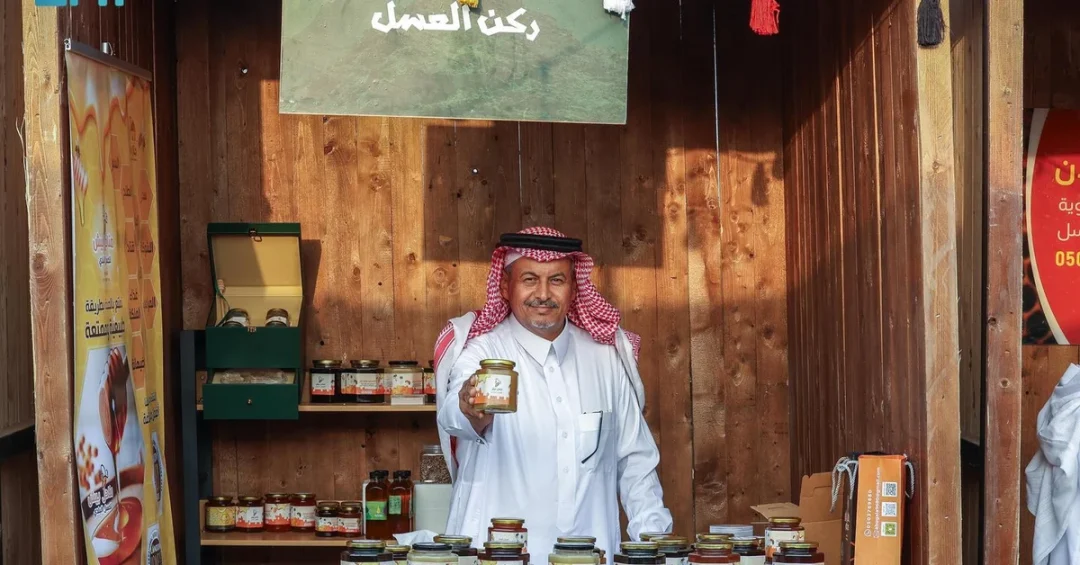
The Tenth Jazan Honey Festival, organized by the Ministry of Environment, Water, and Agriculture, has concluded at the Cultural Center Square in Al-Edabi Governorate, achieving over SAR2.5 million in sales and attracting more than 50,000 visitors. Held over 15 days as part of the Jazan Winter 2025 festivities, the event showcased premium honey varieties from 60 beekeepers and highlighted the region’s thriving apiculture sector.
Context and Background
The Jazan Honey Festival, now in its tenth edition, is a key initiative under Saudi Arabia’s Vision 2030 to diversify the economy and promote sustainable agricultural practices. The festival serves as a platform for local beekeepers to market their products directly to consumers, boosting the honey industry in the Jazan region. The sale of 10 tons of honey, including the prized Sidr variety, underscores the high quality and demand for Saudi honey both domestically and internationally.
Key Details
The festival featured a range of programs, including children’s entertainment, theatrical performances, and exhibitions by government departments. A dedicated section for families involved in cottage industries showcased products from 50 families supported by the Social Development Bank. The event not only promoted honey but also contributed to job creation and economic growth in the region. Visitors from within and outside the Kingdom experienced the rich cultural heritage of Jazan while enjoying honey tasting sessions.
Implications and Impact
The success of the Jazan Honey Festival reinforces Saudi Arabia’s position as a producer of high-quality honey and honey products. The event supports local beekeepers, enhances the value chain, and promotes rural development. By attracting tourists and buyers, it also boosts the regional economy and aligns with Vision 2030’s goals of increasing non-oil exports and supporting small and medium enterprises. The festival’s focus on cottage industries provides income opportunities for families and contributes to social development.
Vision 2030 Alignment
The Jazan Honey Festival exemplifies Saudi Arabia’s commitment to economic diversification and sustainable development under Vision 2030. By supporting local producers and promoting agricultural heritage, the initiative helps create a vibrant rural economy and strengthens the Kingdom’s food security. The festival’s success paves the way for future editions, further integrating traditional industries into the national economic framework and enhancing Saudi Arabia’s global reputation as a hub for premium agricultural products.
20 Questions
Q1. What was the Tenth Jazan Honey Festival?
A1. It was a 15-day event organized by the Ministry of Environment, Water, and Agriculture, held in Al-Edabi Governorate, Jazan, as part of the Jazan Winter 2025 festivities, focusing on honey sales and local culture.
Q2. How many visitors attended the festival?
A2. The festival attracted over 50,000 visitors from within and outside Saudi Arabia, who came to shop and participate in various activities.
Q3. How much honey was sold?
A3. A total of 10 tons of premium honey were sold during the festival.
Q4. What was the total revenue from honey sales?
A4. The honey sales generated revenue exceeding SAR2.5 million.
Q5. Which honey variety was most sought after?
A5. Sidr honey emerged as the most sought-after variety.
Q6. How many beekeepers participated?
A6. A total of 60 beekeepers showcased their honey products at the festival.
Q7. What other activities were featured?
A7. The festival included children’s entertainment, theatrical performances, government exhibitions, and a section for cottage industries.
Q8. How many families participated in the cottage industry section?
A8. Fifty families exhibited their products with support from the Social Development Bank.
Q9. What is the significance of the Jazan Honey Festival?
A9. The festival plays a vital role in generating job opportunities, enhancing economic growth, and improving the quality of local products.
Q10. How does the festival support Vision 2030?
A10. It promotes economic diversification, sustainable agriculture, and non-oil exports, aligning with Vision 2030 goals.
Q11. Who organized the festival?
A11. The Ministry of Environment, Water, and Agriculture organized the festival.
Q12. Where was the festival held?
A12. It was held at the Cultural Center Square in Al-Edabi Governorate, Jazan region.
Q13. When did the festival take place?
A13. The festival concluded on February 17, 2025, and ran for 15 days.
Q14. What honey varieties were showcased?
A14. Varieties included Sidr, Qatad, Salam, Samra, Dom, Dahyan, Al-Talh, Al-Mrar, Al-Majar, and Al-Sahah honey.
Q15. How does the festival benefit local beekeepers?
A15. It provides a direct market for their products, increases brand visibility, and helps them achieve better prices.
Q16. What role does the Social Development Bank play?
A16. The bank supported 50 families in the cottage industry section, helping them showcase and sell their products.
Q17. Is the festival an annual event?
A17. Yes, this was the tenth edition of the Jazan Honey Festival, indicating it is a recurring event.
Q18. What is the economic impact of the festival?
A18. The festival generated over SAR2.5 million in sales, boosted tourism, and created income opportunities for beekeepers and families.
Q19. Why is Sidr honey special?
A19. Sidr honey is highly prized for its rich flavor and medicinal properties, and it is a premium product from the Jazan region.
Q20. How does the festival promote Saudi culture?
A20. The festival includes theatrical performances, exhibitions, and local products that showcase the cultural heritage of Jazan and Saudi Arabia.
Reader Feedback
We value your thoughts. Please share your feedback on this article.
Your feedback helps us improve our coverage.