


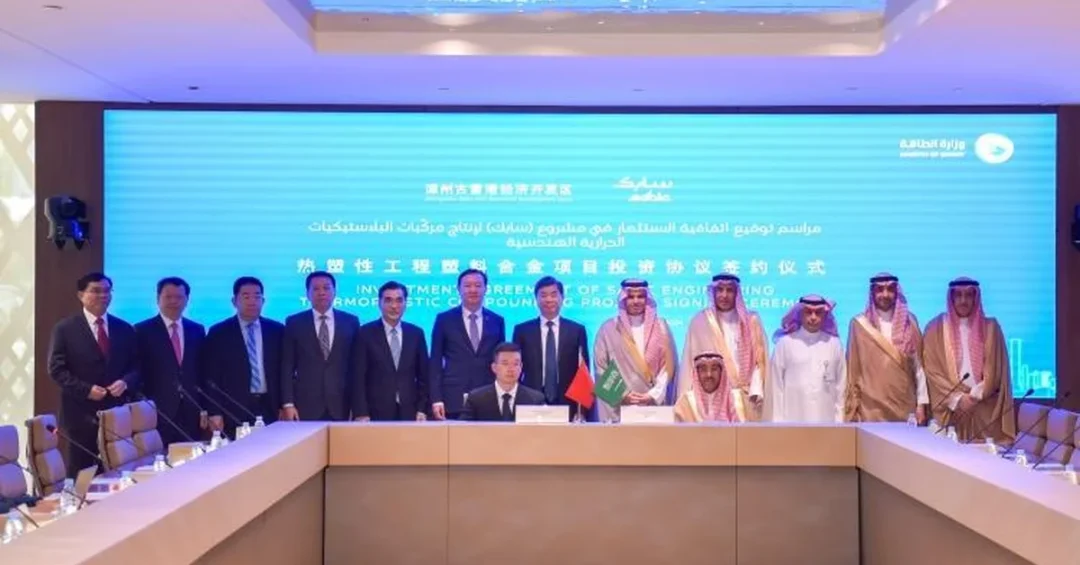
SABIC, a global leader in diversified chemicals, has signed a potential investment agreement with the Fujian provincial government to construct an engineering thermoplastics compounding plant in Fujian Province, China. The agreement, signed on August 1, 2024, under the auspices of Saudi Arabia’s Ministry of Energy, marks a strategic expansion of SABIC’s footprint in the Chinese market and reinforces the Kingdom’s commitment to fostering international industrial partnerships aligned with Vision 2030.
Context and Background
The signing ceremony took place at the Ministry of Energy in Riyadh, with key officials from both sides in attendance. Fujian Province Party Secretary Zhou Zuyi, Ministry of Energy Assistant Minister for Development and Excellence Sector Ahmed Al-Zahrani, and SABIC CEO Abdulrahman Al-Fageeh witnessed the event. SABIC Executive Vice President, Polymers Sami Al-Osaimi, and Fujian Zhangzhou Gulei Port Economic Development Zone Administration Committee Deputy Director Ma Changjian formally signed the agreement. This investment underscores SABIC’s ongoing efforts to meet the demand for differentiated, innovative solutions from its local customers in China while strengthening its roots in one of the world’s largest chemical markets.
Key Details of the Agreement
The planned plant will be located in the Gulei Port Economic Development Zone in Zhangzhou, Fujian Province. It will primarily produce pelletized LEXAN™ Polycarbonate (PC) and CYCOLOY™ PC/ABS blends, advanced materials tailored to industries including electrical and consumer electronics, automotive, and emerging sectors such as solar energy, electrification, and 5G. The facility will feature compounding lines, color development capabilities, and advanced equipment designed to enable SABIC to collaborate with customers and partners in creating new innovative solutions for engineering plastics.
Implications and Synergies
This new plant is expected to create synergies with SABIC’s two existing joint ventures — SINOPEC SABIC Tianjin Petrochemical Co. Ltd. (SSTPC) and SABIC FUJIAN Petrochemicals Co. Ltd. (SFPC) — in delivering differentiated solutions and products. SABIC CEO Abdulrahman Al-Fageeh highlighted the strategic importance of the investment, stating: “This investment agreement marks another significant milestone for SABIC’s growth in China and reflects our continued confidence in investing in the country. By creating synergy with upstream and downstream partners, the project aims to strengthen our supply capability in compounding products and serve this important strategic market with innovative and consistently high-quality material solutions.” SABIC already operates a technology center in Shanghai and compounding plants in Guangzhou, Shanghai, and Chongqing, with operations in 17 cities across Greater China.
Vision 2030 Alignment
This agreement demonstrates Saudi Arabia’s commitment to Vision 2030 by driving economic diversification, fostering global industrial partnerships, and advancing innovation-led growth in the chemical sector. By expanding its international manufacturing and supply capabilities, SABIC supports the Kingdom’s goal of becoming a global leader in advanced industries while contributing to sustainable development. The project exemplifies how Saudi companies leverage strategic investments abroad to strengthen domestic expertise, create value, and position the Kingdom as a hub for cutting-edge industrial solutions.
20 Questions
Q1. What is the purpose of the agreement signed between SABIC and the Fujian government?
A1. The agreement is a potential investment to build an engineering thermoplastics compounding plant in Fujian Province, China, aimed at producing advanced materials for various industries.
Q2. When and where was the agreement signed?
A2. The agreement was signed on August 1, 2024, during a ceremony at the Ministry of Energy in Riyadh, Saudi Arabia.
Q3. Who represented SABIC at the signing ceremony?
A3. SABIC Executive Vice President, Polymers Sami Al-Osaimi represented SABIC alongside CEO Abdulrahman Al-Fageeh, who attended as a witness.
Q4. Who represented the Fujian government at the signing?
A4. Fujian Zhangzhou Gulei Port Economic Development Zone Administration Committee Deputy Director Ma Changjian signed the agreement on behalf of the Fujian government.
Q5. Which Saudi ministry oversaw the signing of this agreement?
A5. The signing took place under the auspices of Saudi Arabia’s Ministry of Energy.
Q6. What products will the planned plant primarily produce?
A6. The plant will primarily produce pelletized LEXAN™ Polycarbonate (PC) and CYCOLOY™ PC/ABS blends for advanced material applications.
Q7. Where will the new plant be located?
A7. The plant will be located in the Gulei Port Economic Development Zone, Zhangzhou, Fujian Province, China.
Q8. What industries will benefit from the plant’s products?
A8. Industries benefiting include electrical and consumer electronics, automotive, solar energy, electrification, and 5G.
Q9. How does this investment align with SABIC’s strategy in China?
A9. It strengthens SABIC’s footprint in China by meeting local demand for innovative solutions and reinforcing its roots in the Chinese market.
Q10. What additional capabilities will the plant have?
A10. The site will include compounding lines, color development capabilities, and advanced equipment for creating new engineering plastic solutions.
Q11. What existing facilities does SABIC have in China?
A11. SABIC operates a technology center in Shanghai and compounding plants in Guangzhou, Shanghai, and Chongqing.
Q12. How many cities across Greater China does SABIC have operations in?
A12. SABIC has operations in 17 cities across Greater China.
Q13. What joint ventures does SABIC have in China?
A13. SABIC has joint ventures with SINOPEC: SSTPC in Tianjin and SFPC in Fujian.
Q14. What synergies are expected from the new plant?
A14. The plant is expected to create synergies with SSTPC and SFPC in delivering differentiated solutions and products.
Q15. Who is the CEO of SABIC?
A15. The CEO of SABIC is Abdulrahman Al-Fageeh.
Q16. What did SABIC’s CEO say about the agreement?
A16. He called it a significant milestone for SABIC’s growth in China and a reflection of continued confidence in investing in the country.
Q17. How does this project support Saudi Arabia’s Vision 2030?
A17. It supports Vision 2030 by driving economic diversification, fostering global industrial partnerships, and advancing innovation-led growth.
Q18. What is the role of the Ministry of Energy in this agreement?
A18. The Ministry of Energy provided auspices for the agreement, reflecting Saudi governmental support for international industrial cooperation.
Q19. What materials will be used in the plant’s production?
A19. The plant will produce advanced materials like LEXAN™ Polycarbonate and CYCOLOY™ PC/ABS blends for engineering plastics.
Q20. What is the expected impact of the plant on the chemical industry?
A20. The plant is expected to strengthen supply capabilities and contribute to sustainable development and innovation in the chemical industry globally.
Reader Feedback
We value your thoughts. Please share your feedback on this article.
Your feedback helps us improve our coverage.