


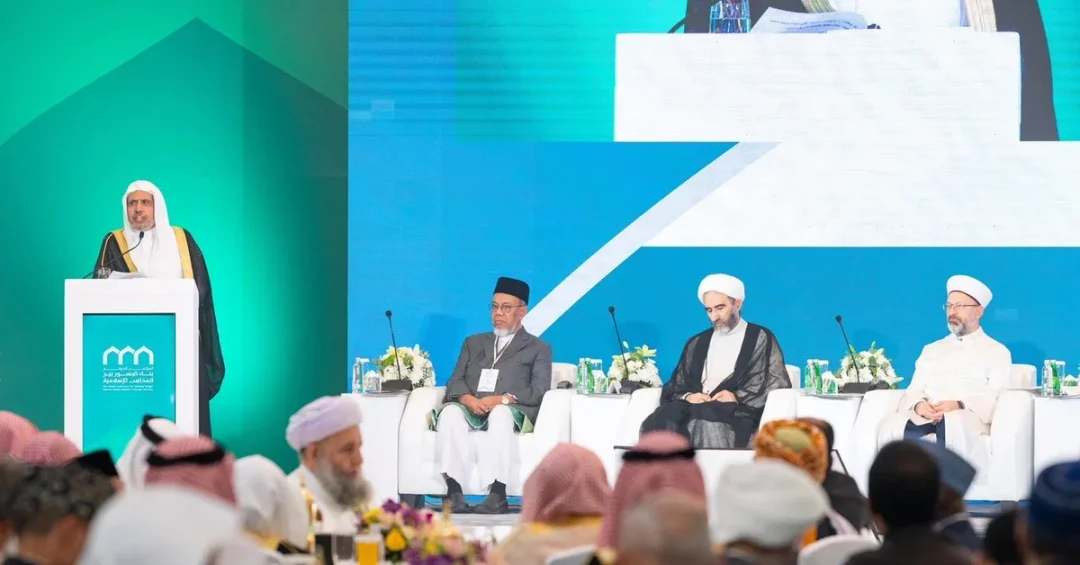
The Muslim World League (MWL), headquartered in Makkah, has released its periodic report detailing a broad spectrum of global initiatives and programs. The report, issued on August 6, 2024, via the Saudi Press Agency (SPA), outlines the organization’s recent achievements in fostering interfaith dialogue, combating extremism, and strengthening religious unity among Muslims worldwide. It underscores the MWL’s commitment to the principles enshrined in the ‘Charter of Makkah’ and the ‘Charter of Building Bridges between Islamic Schools of Thought and Sects’.
Context and Background
The Muslim World League, established in 1962, operates as a non-governmental Islamic organization with observer status at the United Nations. The release of this periodic report comes at a time of increasing global focus on religious tolerance and countering Islamophobia. The MWL, under the leadership of its Secretary-General, H.E. Sheikh Dr. Muhammad bin Abdulkarim Al-Issa, has positioned itself as a leading force for moderate Islam, promoting dialogue and understanding across different faiths and cultures. The report provides a structured overview of these ongoing efforts, which are closely aligned with the Kingdom of Saudi Arabia’s Vision 2030 goals of fostering a tolerant global community.
Key Initiatives and Achievements
The report highlights several significant institutional developments. Among them is the establishment of the Association of ASEAN Scholars, the Council of African Scholars, and the Council of Religious Leaders in North and South America and European countries. These bodies are designed to create structured platforms for scholars and religious leaders to collaborate on issues of mutual concern. Furthermore, the report details the MWL’s efforts to strengthen the role of the Islamic Fiqh Council, a body composed of senior muftis and Muslim scholars from around the world, which addresses contemporary jurisprudential challenges.
Implications for Global Religious Dialogue
The initiatives documented in the report have significant implications for international relations and religious harmony. The MWL’s work in confronting Islamophobia and extremism is particularly relevant in a climate of rising polarization. By engaging with major research centers and conducting intellectual international studies, the League seeks to clarify the Muslim perspective on critical global issues. The report emphasizes the MWL’s role in building bridges not only between different Islamic schools of thought but also with other religious communities, contributing to a more cohesive and peaceful global society.
Vision 2030 Alignment
The Muslim World League’s periodic report is a testament to the Kingdom of Saudi Arabia’s steadfast commitment to promoting peace, moderation, and constructive dialogue on the world stage. These initiatives directly support the goals of Vision 2030, which envisions a global role for the Kingdom as a hub for cultural exchange and a beacon of moderate Islam. By fostering understanding and cooperation among diverse religious and cultural groups, the MWL’s work helps build a foundation for a more stable and prosperous future, in line with Saudi Arabia’s long-term strategic vision.
20 Questions
Q1. What is the Muslim World League (MWL)?
A1. The Muslim World League (MWL) is a non-governmental Islamic organization headquartered in Makkah, Saudi Arabia. It works to promote Islamic unity, interfaith dialogue, and moderate Islamic values globally.
Q2. Where is the MWL headquartered?
A2. The Muslim World League is headquartered in the holy city of Makkah, Saudi Arabia, a central location for the global Muslim community.
Q3. On what date was the periodic report issued?
A3. The periodic report detailing the MWL’s initiatives and programs around the world was issued on August 6, 2024.
Q4. Which agency released the information about the report?
A4. The information about the Muslim World League’s periodic report was released by the official Saudi Press Agency (SPA).
Q5. What are the two key charters mentioned in the report?
A5. The report highlights compliance with the ‘Charter of Makkah’ and the ‘Charter of Building Bridges between Islamic Schools of Thought and Sects’.
Q6. What are the key councils established by the MWL?
A6. The MWL established the Association of ASEAN Scholars, the Council of African Scholars, and the Council of Religious Leaders in North and South America and European countries.
Q7. What is the role of the Islamic Fiqh Council?
A7. The Islamic Fiqh Council is a body of senior muftis and Muslim scholars that addresses contemporary jurisprudential challenges and provides guidance on Islamic law.
Q8. What global issue does the MWL work to confront?
A8. The MWL actively works to confront Islamophobia and extremism, promoting a message of peace and moderation.
Q9. How does the MWL engage with academic institutions?
A9. The MWL engages in dialogue with major research centers and conducts intellectual international studies to clarify the Muslim stand on important issues.
Q10. Who is the Secretary-General of the Muslim World League?
A10. H.E. Sheikh Dr. Muhammad bin Abdulkarim Al-Issa serves as the Secretary-General of the Muslim World League.
Q11. How does the MWL contribute to Islamic unity?
A11. The MWL strengthens the religious unity of Muslims through dialogue, cooperation between scholars, and initiatives that bridge different Islamic schools of thought.
Q12. What is the MWL’s status at the United Nations?
A12. The Muslim World League is a non-governmental organization that holds observer status at the United Nations.
Q13. What is the ‘Charter of Makkah’?
A13. The ‘Charter of Makkah’ is a landmark document endorsed by the MWL that promotes principles of peace, tolerance, and coexistence among people of all faiths.
Q14. Why is the Council of African Scholars significant?
A14. The Council of African Scholars provides a structured platform for Islamic scholars across Africa to collaborate on religious, social, and educational issues relevant to the continent.
Q15. Does the MWL work with non-Muslim organizations?
A15. Yes, the MWL actively builds bridges with other religious communities through its councils and initiatives, promoting interfaith harmony and dialogue.
Q16. What is the goal of the ‘Building Bridges’ charter?
A16. The ‘Charter of Building Bridges between Islamic Schools of Thought and Sects’ aims to foster mutual understanding and reduce sectarian tensions within the Muslim community.
Q17. How does the report align with Vision 2030?
A17. The MWL’s work supports Vision 2030 by promoting Saudi Arabia as a global center for moderation, dialogue, and cultural exchange.
Q18. What kind of studies does the MWL conduct?
A18. The MWL conducts intellectual international studies that seek to clarify the Muslim perspective on important contemporary global issues.
Q19. Is the MWL a government entity?
A19. No, the MWL is a non-governmental organization, although it enjoys the support of the Kingdom of Saudi Arabia and its initiatives align with Saudi values.
Q20. How does the report benefit the global community?
A20. The report provides a transparent account of efforts to promote peace, combat extremism, and foster international religious dialogue, contributing to a more harmonious global community.
Reader Feedback
We value your thoughts. Please share your feedback on this article.
Your feedback helps us improve our coverage.